I’ve been listening much more to Spotify lately. What’s most fun for me is making playlists, which reminds me of burning mix CDs when I was in college. Here’s one I made of songs that felt longing or wistful, including a lot of old favorites and others that just came up on shuffle.
I’ve been submitting a lot of stories lately, which slowed down progress on my novel but was a lot of fun. For some reason there’s a big market currently for short stories about evil mermaids, so I’ve written three in the last few months. One of them, “In the Nevergo,” was recently published in Dangerous Waters: Deadly Women of the Sea, an entire anthology of evil mermaid tales I was delighted to take part in. The others were a bit different in subject matter, and I hope to tell you more about them later.
I’ve also been dipping my toe back into poetry in the last year or so, with mixed results. I used to write poems quite a lot in high school, but they were very strange and I never shared them with anyone. Lately I wrote sets of poems for two different calls for submissions. None of them were accepted, but I’ll keep practicing.
Here are some very strange ones I’d forgotten I wrote last year. The project was called “The Unquiet Nursery,” with the idea being that each poem would be structurally based on a famous nursery rhyme but have much darker subject matter. About half of them were terrible, but I kind of liked these. I wonder if you can guess which nursery rhymes they’re based on.
1 I am not going to sleep. The lines have gone too deep. There’s whispering sin Upon my skin And something is starting to weep.
2 My little love Is up above, Pretending she is an angel. But in her wings, Unholy things Are burning like a candle.
3 My little dumpling Really is something, Sunning herself to sleep. She cannot be killed She cannot be held She only can rattle and weep.
4 Go to school, Little fool. See what they do Before they come for you. They’ll take your home and they’ll take your lands, They’ll crush your heart and they’ll cut off your hands. The strongest house is the one that stands, So go to school.
5 Something in the atmosphere Has made me very cold. The sun is full of cinders And the stars have all been sold. I cannot look away from it. I cannot break the spell That echoes in the twilight Like the tolling of a bell.
6 Into the dark! Into the night! Sing with the nightingales! Drink delight!
Out of the dark. Back from the night. Gone are the nightingales. All is quiet.
7 Mary Artless, Vain and heartless, How did you sink so low? The sons you should have cared about Are running like wolves in the snow.
8 First comes the matter of the monster, Next comes the matter of the nun, Then comes the matter of the long walk Into the valley of the sun, And last is the matter of the silver star And how the world was won.
9 Pretty little Mabel, Sitting at the table, Softly tells me, “Life is like a fable. But I don’t know the lesson I was meant to learn When I left my homeland, Never to return.”
I guess they’re basically doggerel. But so are the originals they’re based on. Anyway, it was fun writing them.
One more thing to tell you about: I have an upcoming publication in a friend’s anthology! My friend Sonya Lano has been working tirelessly on Slightly Sweetly, Slightly Creepy, an anthology of gothic romance, and the book will be out on April 29. My story, “The Wind Chimes,” is probably more “romantic gothic” than “gothic romance,” but I had a lot of fun writing it. The book is available for preorder here, and I’d love it if you checked it out.
Lots of love to all of you. I hope you’re doing well.
Stayed up late last night finishing edits on two stories, which I wanted to submit to two different anthologies both due the same day. Thanks to the feline ballet that started as soon as I got in bed, I got about four hours of sleep, but there was a very nice sense of accomplishment in getting those stories done and submitted. Of course, I received a very flippant rejection note only a few hours after sending one in, but at least it gave me the opportunity to slide the story under the wire for another submission call due today.
Back to work now on THE VOID AND THE RAVEN, my ongoing fantasy epic that was meant to be a single novel and is now looking at at least six parts. Two volumes are done. I could submit them for publication, but I’d rather get to the end and edit the whole series together for the sake of cohesion. I’ve been working on this story in different incarnations since about 2010, and I’m about three years into this particular try. I’m guessing at least another three to five years until the whole series is completed. (Of course, if someone wants to give me several hundred thousand dollars, I can stop doing other paid work and start writing full-time, which should speed up the process immensely.)
It snowed off and on all day today, which felt like a bit of a joke with all the flowers blooming. The Easter Market is set up in our square, and all the trees are covered in blossoms. I had a fairly busy day, but the kids weren’t too rambunctious, and Fran and Donut and I had a nice walk in the evening.
I’ve had the very pleasant problem of a thousand different projects to work on. I’ve been hard at work hammering out two different stories, both of which are due for submission on Thursday. These are open calls, so it’s a wait-and-see game once they’re turned in, but I’m pretty happy with both of them. The one I’m still drafting is a nautical fairy tale based on a sea shanty, and the other deals with ominous snowflakes.
Meanwhile, I’m still plotting the next scene of VOID, which has been startlingly complicated to manage: it’s essentially a long complication between two characters, but it’s unfolded some questions about the magical system that I never took the time to answer before, and I’ve spend weeks already just mulling them over in my head. I think I’ve got the answers more or less settled now, but chapter is still in the planning stage, and every turn of the planned conversation is surprising me. I’ve been working with these characters for more than three years (or thirteen, depending on how you count), and it’s lovely to settle into the world again after spending lots of time on other projects.
Fran and I have been watching Parks and Rec, and I’m trying to channel April and Andy just a bit more in my approach to life. It’s great to be a Leslie if you’re passionate about something, but devoting 100% of your energy to everything you do (and losing sleep in the process) is a quick way to make yourself sick. Taking more time for fun, couple time, and sleep is making me feel a lot better, and after I spent a few days trying to complete a “must-do checklist” of writing projects, I realized that if I tried to maintain a full-time writing schedule on top of all the other work I do I would never have time for anything else. And when you’re well rested, it’s much easier to work quickly and with full energy, so it’s a win-win situation in the end.
For a sample of what I’ve been working on, here’s a short clip from the sea-ballad story I’m writing:
“Have you ever thought of going to sea?” I said. “I’m first mate on the Golden Vanity—that lovely galleon there—and we’re leaving for Constantinople in the morning. We need a cabin boy, and you look like a likely fellow. What do you think of signing on with us?”
He tipped his head again, and for a moment there was no sound but the grind and squeak of his auger and the patter of shavings to the ground. I could see him measuring the Vanity with his gleaming gray eyes, judging and weighing it somehow, and in a way he looked much older than a child. Then, finally, he nodded.
It took me aback how easily he’d accepted, and I wasn’t sure he’d understood. “Better think carefully,” I said, “for it’ll be a long time before you see your home again. It’s possible you won’t come back at all. But there’s good pay, and plenty of room for advancement if you do your work well.”
He nodded again, almost impatiently, and beckoned, as if I were the servant and he the master. Well, I thought, I’ll teach him more deference than that if he signs articles. But I was curious, and I had a bit of time before I needed to see about the cargo, so I followed.
Hope you’re all well! Let me know what you’ve been up to in the comments. ❤
I wrote this for a flash fiction contest in 2021. It didn’t win, but it made the final round. : )
Please inform the Headmaster that he is not welcome at my son’s farewell.
The event will celebrate the life of a young man leaving Earth both bravely and too early. Tomorrow, when Hell’s emissaries return, those waiting should be Jeremy’s friends, mentors, and family. No one wishes to see the man who doomed him.
It is a deep shame to this Academy that the man entrusted with guarding the Stone Gate ‘yea unto his very death’ abandoned his post just when the Gate’s opening was imminent, leaving only a half-trained student in his place. Jeremy’s compact with Hell has saved the world, and history will look upon him as a hero. Though he is lost to us, we can still support him as he prepares to go where no living soul has gone.
We always knew our Jeremy was born to be a legend. He is young for this journey, but there are young explorers on every new frontier. We know his letters will be a wonder to the world, whenever the world is able to receive them.
As for the Headmaster, he may wish to consider who will guard the other portals now that his best new champion is leaving on Hell’s compact. The Stone Gate may close, but other emissaries are coming, and our family has already given all it can.
Thus, perhaps it is for the best that the Headmaster will not attend Jeremy’s send-off.
I’m working on a short story for an anthology my friend Sonya is putting together. It involves murder, ghosts and other spirits, romance, wind chimes, and a dark forest. I hope you’ll enjoy it when it comes out.
Anthologies are difficult in general. Some other friends and I were trying to put one together, but more than a year on it’s still in limbo because it was so difficult to allocate responsibility. I’m really proud of two stories of mine that were published in recentanthologies, but I’m not sure how they were received because neither book has gotten very many reviews. It can be a little discouraging. But then I realize that I myself haven’t read that many anthologies recently–I haven’t even finished reading the ones I was published in. So maybe everyone’s just busy.
Anyway, anthologies are an incredible way to discover new authors, and I haven’t been doing enough reading lately. Are there any collections you’d recommend?
On a completely different subject, I realized last night that the publication of “In the Nevergo” qualified me for an “Affiliate Writer” membership in the Horror Writers’ Association. I applied and was accepted today. I have a few more dark fantasy pieces in the works, so I’m hopeful that I might be able to upgrade to an “Active Writer” (i.e. full) membership before too long. I’ll see if there’s a badge or something I can put on my website. There aren’t a lot of concrete benefits to joining writers’ associations at this point in my career, but it’s a nice boost in a field where it’s hard to feel like a working professional.
(***I just checked and saw that under the updated membership requirements I also qualify for an Associate Membership in SFWA. I’m not quite ready to pay two sets of dues, though, so I’ll keep working towards a full membership there for now.)
This was another story written for my Seoul writers’ group (this one in February 2019). We used to use a random word app to generate a three-word prompt. The prompt for this one was “countryside, coast, autopsy.” It’s extremely weird and never got much attention, but I’ve always been fond of it.
Following the direction ping on her phone, Teresa turned off the highway onto a rutted lane that ran toward the cliffs. The van bumped and stumbled over gullies drawn by floodwater in last week’s heavy rain. The fields were deeply green, the sky rain-soaked. Most deaths requiring a medical examiner’s opinion happened on the highways or in the confines of lonely homes–nowhere this scenic.
After a mile, Teresa pulled up beside a pair of empty police cars and parked. Wind curled around her ears as she stepped out of the van, balmy air full of pine and clinging sea salt. Waves soughed below the cliff. There was no other sound but the soft tromping of Teresa’s bootie-clad feet on the muddy turf.
She murmured a greeting to the cops, and nodded to the coroner’s assistant. Hilbert was leaning against his own van, doing something on his phone. Teresa opened her mouth to greet him–then stopped, gaping, as she saw the body.
One of the cops grinned. “Fucked up, huh?”
The body was nude, male, and a bit round around the middle. It was also completely hairless, lacking even eyebrows. The face was calm, eyes closed. Every inch of skin was a deep, bright violet.
Teresa tried to process what she was seeing. “Is it… human?” she said. “It looks like a mannequin. Or something.”
“Nope, it’s human.” Hilbert crouched, pinching up a fold of skin on the corpse’s arm, showing its elasticity. “Just… something happened to it. Don’t know what. Out of my expertise.”
Teresa looked up from the rock-studded meadow and out over the sea. The horizon was dim, smudged in the distance with storm clouds. The crashing of surf below the cliff was louder here. “Are there any clothes? Any… artifacts, or anything?”
“Nothing. Looks like a body dump. A hiker found him this morning. Not many people come out this way, so who knows how long he’s actually been here. He doesn’t smell, but…” Hilbert nudged the body with the tip of his bootie-covered shoe. “He’s… solid.”
Teresa frowned. “Don’t do that.”
Hilbert withdrew his foot, looking amused. “Think it’s going to bother him?”
Teresa leaned down–then coughed, covering her nose with one gloved hand. A haze of perfume hung over the body, so strong it made her eyes water. “He does smell.” She moved back into clearer air. “Like someone dumped perfume all over him.”
Hilbert blinked. “Huh. I didn’t notice. Guess that’s why they pay you the big bucks. Ready to take him away?” He beckoned to his assistant, who came forward with a collapsed gurney. The three of them lifted the body onto the lowered frame. It was tremendously heavy, and oddly rigid.
“Where’s Albert?” Hilbert said, grunting with exertion as they ratcheted the cart back up. “Could really use his help.”
Teresa sighed. ”He retired last month. They haven’t okayed a replacement yet.”
Hilbert frowned. ”So you’re working without a diener?”
“For the moment, yeah.” Teresa stepped back, wiping her brow. “So please try to discourage anyone else from dying in mysterious circumstances till we get one.”
Hilbert hesitated. “Do you need help? I’m not really trained for it, but…”
“It’s all right,” she said. “I should be able to manage. I’ll let you know what turns up.”
As she wheeled the overloaded gurney back to the autopsy room in her tiny office, Teresa felt the roof closing over her. The tang of disinfectant pervaded the chilly air, and the echo of her footsteps and the gurney’s squeaky wheels quickly overshadowed the memory of her brief escape. Maybe it was time for a vacation. She thought wistfully of the windy green hills she’d left behind.
As Teresa unzipped the bag, a cloud of perfume rose up, making her choke. It was a woody odor, more reminiscent of incense than cologne. Quickly, she put on a mask, remembering the Gloria Ramirez case in the 1990s, where toxic fumes from a body had put several people in the hospital. Teresa had never heard of toxic fumes that smelled like perfume, but whatever this was, it probably wasn’t healthy.
She stepped back and surveyed the body. She couldn’t get over the color. It was pure, vibrant purple all over–an even tone, not the dull settling of livor mortis or the pale blue splodge of cyanosis. She thought briefly of argyria, remembering the effect of colloidal silver. But this wasn’t that blueberry shade, or the light tinge called “blue” or “purple” in other conditions. This was the color of boiled red cabbage.
She couldn’t lift the body by herself, and had to soap the examining table, heaving and sliding the rigid cadaver out of the bag and off the gurney. Each part of it crashed onto the steel table like a box of bricks. Teresa thought grimly that she ought to send Albert a fruit basket. She’d never appreciated the value of an autopsy tech as much as she did now that she had to do everything herself. This was going to take her all evening.
She measured the corpse, then heaved the wheeled cart over to the floor scale. She was stunned to see that the man, who wasn’t much taller than she was, weighed in at 400 pounds. At five-foot-eight, even as round as he was, he should have weighed closer to 200. Teresa checked the scale, wondering if she’d forgotten to zero it, but it seemed to be working fine. Where had the extra weight come from?
She dragged the cart back off the scale and over to the light. Routinely, she took fingerprints, and clipped a skin sample for DNA testing. She tried to open the eyes to check their color, but the eyelids were stuck shut–she’d have to cut them open later, or leave that part of the report blank.
She looked the corpse over more thoroughly. There was no sign of external injuries–no scratches or bruises that she could see, though bruises might not be noticeable under the purple. Beyond the color, and the lack of eyebrows, the face seemed undistorted. If someone came to identify this guy, they should be able to recognize him easily.
She set up her workspace and started the autopsy. She tried to get a block under the cadaver, but had to give up. Anyway, the body was so stiff that it probably wouldn’t have helped. Leaving him flat, Teresa took up her scalpel.
As she began the Y-incision, the cadaver’s odor got much stronger: woody, sweet, with a slight overtone of licorice. In that smell was not a trace of decay; were she not cutting through what was surely skin, Teresa would doubt that this was a human body at all. Only a trickle of thin, winelike blood ran from the incision, tinged purple like the skin. She swabbed up a sample and kept going.
The scalpel met resistance just beneath the epidermis–blade’s tip dragging across a surface hard as bone, causing the skin to slither disconcertingly. Teresa pulled back a flap from the incision. The lab lights gleamed on livid fuchsia tissues, barely touched with that dark blood. Tentatively, she knocked with gloved knuckles on the hardened dermis. It sounded hollow.
She put the scalpel down, not wanting to snap the blade. She tried again with the long knife, but the serrated blade snagged on the resin. Frowning, Teresa put on safety goggles and turned on the bone saw. Its whine was loud in the closed room. To Teresa’s relief, it cut smoothly through the petrified tissues.
When the incision was made, she used the hook of her hammer to pry open the edges. They parted with a dull crack like a split coconut. A spiky, lemony odor, like furniture polish, rose from the gap. Wrinkling her nose, Teresa set down her hammer and looked at what lay beneath the skin.
Everything in the thoracic cage was yellow: intercostals bright as turmeric stretched across golden ribs, with amber abdominals underneath. What must have been subcutaneous fat trailed over the muscles in smooth white clouds, hard and resinous as the rest. Running her fingertip across the intercostals, Teresa thought of the resin-soaked bandages of ancient mummies. Maybe this, too, was some form of mummification–an embalming experiment? She took time to photograph the strange landscape of the thoracic wall. Then, regretfully, she picked up her loppers and began to cut open the chestplate.
The ribs gave more resistance than they should have. The loppers creaked alarmingly with each cut. Teresa wondered if she should stop–bring someone to help, in case she hurt herself–but curiosity, and a sense of strange urgency, drove her on. In the end, the loppers survived, and she lifted out the chest plate, exposing heart and lungs.
The lungs were pale pink, with a tinge of lavender. The heart was brilliant red–veins, arteries and pericardium all one crimson mass. The pericardial sac seemed to have fused with the muscle; it didn’t shift at all when she touched it. Teresa cut open the pulmonary artery to check for obstructions, but found it dry, completely empty of blood. The opening stank of leather and roses.
She took a few more pictures, and then picked up her saw again. The abdominals were as rigid as the dermis, but she had the knack of cutting through this stuff now, and the incision was much faster. She pulled apart the severed muscles, and found a rainbow underneath.
There was no blood, no other fluids–just smooth forms nestled together among pearly clouds of petrified fat, like a life-size children’s anatomy model. The liver was emerald, the gallbladder lime-green, the spleen and pancreas different shades of orange. The large and small intestine were two shades of blue, and the stomach was a cheerful carnation pink. The perfumes that rose from the cavity were so strong that Teresa had to turn up the ventilation. She thought again of embalming–but what process could make this?
There was no point in tying off the empty arteries, so Teresa began removing the organ block. She freed the larynx and trachea first–delicate structures wrought in violet, not too different from their original forms. A soft whistle rose from the larynx as it passed through the air. Teresa shivered, thinking of flutes. She detached the diaphragm–its pale yellow ripples reminding her oddly of a cartoon jellyfish–and cut the organ block free.
She tried to lift it–then dropped it, gasping as it crashed back into place. The organs were heavy–the block weighed two or three times what it should have. Albert, who’d thrown around 200-pound cadavers like they were teddy bears, had always teased Teresa about her needing to exercise more. She wished she’d taken his advice. She’d have to remove the organs one by one.
The lungs actually weren’t that heavy–they felt brittle and porous, like the dried coral her mother kept on her dresser. When Teresa tried to take a sample, the tissue crumbled like dry earth under her saw, releasing a choking wave of cedar-balsam. Coughing, she turned up the ventilation again, hoping the fumes weren’t toxic. She packed the lungs away quickly, breathing through her mouth as she picked up the crumbling fragments.
The heart was as heavy as a cinnabar sculpture. It thunked loudlyon the dissection table. When Teresa tried to open it, she found no chambers, just a mass of deep red resin. The aorta and the other great blood vessels were hollow, though, and crumbled like the lungs had under Teresa’s saw. Not wanting to damage them further, she packed the heart away.
She decided to leave the larynx and trachea for later, not wanting to damage them. She packed them up gently, and moved on to the liver. The deep-green form came loose easily. It had a pleasant, almost piney scent, and weighed over four kilograms. Teresa shaved off a sample and dropped it in the save jar, watched the green lump bob in the formalin. She added a fragment of the crumbled lung, and a small wedge she’d taken from the heart. A sliver of gallbladder was next. It had a strong medicinal smell, and she put it away quickly. Then she moved on to the gut.
Here was a problem. The intestines were petrified, inflexible in their coils. Hosing them out would be almost impossible. Resolving to do her best, Teresa carefully cut the intestines free. They were immensely heavy, and she thought she’d have to get a cart to move them to the sink. Then she looked into the large intestine, and saw there was no need: the gut was as clean as the arteries.
She shined a penlight into the deep blue opening, but there was nothing to be seen. She had held her breath reflexively–the odors of “running the gut” would be stamped on her brain until she died–but the intestines had only a slight earthy scent, not even unpleasant. Disbelieving, she lugged them over to the scale. They weighed more than twelve kilograms together–over three times what they should have. She sealed them in her largest specimen tub and moved on to the stomach.
Unlike the other organs, the stomach was not unnaturally heavy. It weighed almost exactly two kilograms, which suggested it was mostly empty. Methodically, Teresa tipped it over a bin, but nothing came out–it, too, must be dry inside. But she thought she heard a faint rustle.
She set the stomach back on the table and ran her saw delicately around the outer edge. It felt strangely like cracking open a geode. At last, very carefully, she opened it.
Out of the stomach rose a puff of honey-scented air, which glowed rosy-gold for a second before dissipating. In the stomach, atop a nest of golden down, sat a bird.
Teresa put down her saw and stared. The bird was blue, and sparrow-sized–a fledgling, it looked like. Its black eyes glittered under the lamp. Cocking its head, it watched her.
Enchanted, she leaned closer. The bird’s throat swelled. After a second, it began to sing.
It began with a soft chirp, sweet as a flute. Then it rose, and rang like crystal in the empty room, rang in Teresa’s bones. It shifted to a run of smaller notes, tripping across a scale both alien and familiar.
Teresa suddenly remembered herself, an undergrad, sitting in a dim auditorium, watching a girl she loved rehearse a Vivaldi flute concerto. The melody still ran through her dreams. Closing her eyes, she let it wash over her. The song went on for a very long time.
At last the music stopped, leaving only Teresa’s breathing to fill the silence. For a long time she stood with her eyes closed. Her heartbeat slowed, grew stable. The tension she’d carried for many years–maybe her entire life–evaporated. The world had reoriented itself. Suddenly everything made sense.
When she opened her eyes, the bird was watching her again. “Do you want to come home with me?” Teresa said.
The bird tilted its head, but made no protest as Teresa carefully slid her fingers under its body. Its warm, downy weight settled trustingly into the curve of her hands as she lifted it from its nest. She cradled it to her heart, and looked for a way to take it home.
She needed something soft. Shifting the bird to one hand, she eyed the golden fluff that it had nested in. She took up a bit of the stuff and found it soft and formless, taking and losing shape like fiberglass or cotton candy. She collected it all into a little cardboard box that had once held test tubes, and then lowered the bird into the makeshift nest. On impulse, she took the two halves of the stomach to the sink and rinsed them out, wiping them dry to leave them as clean as the gut and arteries. Then she put all the organs in the fridge, and wrestled the half-dissected body into a drawer. Finally, she tucked the precious cardboard box into her tote bag, very conscious that she was now committing a federal crime.
In the lobby, she waved goodbye to the receptionist, murmuring excuses about a migraine. When she turned towards the door, Jeremy Hilbert stood in front of her.
“Dr. Bowen, there you are! Taking off for the day?” said Hilbert.
Teresa nodded, trying not to think too much about the box in her bag. “Yeah, I’m not feeling well. Think it might be the fumes. I’ll finish the autopsy tomorrow–it should be all right until then.”
Hilbert frowned. “Should we call an ambulance?”
“No,” said Teresa, “just need some fresh air. The body’s in drawer three if you need to see it.”
“How far did you get?” Hilbert said. “Anything concrete?”
Something about his tone made Teresa uncomfortable. “Um… got him mostly dissected,” she said. “Haven’t opened the cranium yet. Whatever has him looking like that should keep him pretty well preserved till I get back to him. We haven’t run the DNA, obviously, but the samples and prints are ready for pickup.”
Hilbert watched her for a long moment. She tried to look back steadily. Finally the coroner nodded. “I hope you feel better.”
She forced a smile. “Thanks. See you soon.” She hurried from the building, and felt his gaze on her back.
She tried to walk evenly across the parking lot. She didn’t know what the relevant laws were–she’d never before been tempted to break them–but leaving with autopsy specimens would at least get her fined, maybe fired. Maybe she would end up in jail.
But who would know? Why would anyone expect that a corpse’s stomach contained anything worth stealing? There were no security cameras in the autopsy room. As long as Teresa stayed calm, she should be fine.
A little thrill of triumph buoyed her to her car and out of the parking lot. After that, she was free.
She woke to dawn light and the soughing of a breeze–and the prick of tiny clawed feet on her shoulder.
Teresa opened her eyes. Somehow the bird had left the box on her nightstand and made it over to her bed. When it saw her watching, it chirped, and cocked its head expectantly.
Of course–it needed food. Though she hadn’t been able to identify it last night, her research had shown that at this age it should be eating about once an hour while the sun was up. Last night she’d stopped at a pet store and, after some rapid Googling, gotten a tub of mealworms and a bag of soft puppy chow. The bird had eaten both cheerfully, but had fallen asleep right afterwards. It must be starving by now. Teresa wondered how it had eaten in its nest of golden light, buried in its bizarre womb–but was quickly distracted when she looked around the room.
The air was cool, because a window was open. This should have been alarming–it had definitely been closed last night–but the screen was still in place. The sheer curtain undulated in the wind, the only motion in the quiet room.
Shivering, Teresa sat up, waiting for the bird to adjust its stance on her shoulder. The covers slid over her lap a little too smoothly. The blanket felt different–the dove-gray color was unchanged, but the fabric was richer and softer. Frowning, she flipped it back. The sheets crinkled, cool and crisp, a higher thread count than she could ever justify paying for. She ran her hands over and over them. “What the hell?”
At last she pushed back the covers and stood up, looking around in growing bewilderment. The carpet under her feet was deeper and softer than before. There were new slippers by the door, velvet mules with thick fleece lining. Teresa put them on and slipped on her robe–still her own, thankfully, the old purple terrycloth one she’d had since college. She resettled the bird on her shoulder and went out.
The mute shuffle of her feet on the thick hallway carpet was overlaid by soft music, though its source was unclear. The air was chilly out here. There must be other windows open, other cool breezes fluttering through other curtains. For some reason the thought didn’t bother Teresa much. She felt quite safe.
The living room smelled good–incense and potpourri, and a hint of the honey perfume from the bird’s strange nest. In a corner, a cut-glass vase that had always stood empty was full of long-stemmed roses. Teresa touched one, and found it damp with dew.
Other beautiful things lay scattered through the room: a woven silk throw on the back of the sofa, a crystal music box on the sideboard. A tiny bronze unicorn stood on top of the piano. Teresa picked it up and traced its contours with her finger: the age-brown metal, the whorled nostrils and neat-cut eyes, the perfect spiral of its dainty horn. She’d never seen it before.
She set the unicorn down with a soft clink. Half-dreaming, she walked to the kitchen–barely looking around, though more treasures filled the corners of her vision. She held her breath, not wanting to wake up.
She kicked her slippers off at the kitchen doorway, and walked barefoot across the red tile floor. She hadn’t swept in a while, but the tiles were clean. Here, too, were gifts from nowhere. The red cloth on the table looked hand-woven. On the windowsill stood a row of bright glass bottles–vinegars, she thought, infused with herbs and fruit. On the counter stood a plain brown bag of coffee. Opening it, Teresa found much better beans than she’d ever bought, with deep notes of fruit and chocolate.
In the refrigerator, Teresa’s aging vegetables had been replaced with new ones that looked fresh from the farmers’ market. The door held a row of interesting-looking microbrews. The dairy drawer was filled with fancy cheeses. Next to the milk stood a glass jug of what looked like fresh-squeezed orange juice.
She closed the door slowly. Deep in her head was a running list of everything that was wrong with this picture. Teresa ignored it. Whatever benevolent magic was at work here, she would enjoy it for as long as she could.
A chirp on her shoulder reminded her that the bird was hungry. “All right,” she said, “just let me find you something.” She looked around for the kibble, but the bird was already hopping down her arm towards the counter, beelining towards a bowl newly filled with fruit. Teresa supposed it knew what it was doing. She let it hop to the counter and began opening cupboards, setting out other things for it to try.
In one cupboard was a loaf of good bread. She scraped a few seeds from its crust onto a saucer (cobalt blue, exquisite). The bird pounced, devouring the seeds. Teresa added a few sesame seeds from the spice rack. Then she took a round green pear from the fruit bowl, cutting a sliver for the bird before slicing the rest for herself.
The fruit was as sweet and cold as the wind that blew in through the windows. The bird cooed as it ate, beak slicing neatly through crisp white flesh. Periodically it glanced at Teresa, and warbled, puffing its throat, as if pleased they were eating together.
When they finished eating, Teresa found her phone and called in sick to work. Then she found more groceries she hadn’t bought and made a real breakfast: toast, tomatoes, scrambled eggs. The coffee smelled even better brewing, wafting warm vapor through the house. Teresa started to pour a glass of orange juice–then, feeling extravagant, she took down a bottle of sparkling wine she’d been saving and made a mimosa instead.
It turned out the fledgling would eat almost anything. Throughout the day, it cheerfully accepted whatever Teresa gave it: bits of egg, fruit, wild bird seed from a bag she’d remembered in the garage. It even ate meat from her lunch and dinner. When it wasn’t eating, it followed Teresa, hopping and fluttering around the house. It looked almost ready to fly.
Late that afternoon, someone knocked on the door.
Teresa felt a stab of fear. She tiptoed to the window, keeping carefully out of sight, and peered through a gap in the curtains. Hilbert, the coroner, stood on the front stoop.
Teresa stayed frozen. She couldn’t imagine what Hilbert must have gathered from her notes, from the half-dissected body and the petrified organs. She didn’t want to talk to him. She had an irrational suspicion that he’d come to take the bird away.
She waited there a long time. Finally, Hilbert left.
She called out sick again the next day. Then, hesitating only briefly, she emailed a formal request for a full week of leave, citing a personal emergency. The resin man’s autopsy could wait. In this beautiful house, with company for once, Teresa found she had no interest in returning to the autopsy room–taking its permanent stink up her nose, immersing herself again in the problems of the dead. She hadn’t taken a vacation in years–she had plenty of time saved up. And the strange corpse seemed unlikely to decompose. If Hilbert wanted results faster, he’d just have to send the body to another lab.
The house grew more beautiful every day. Breezes blew through sunlit windows over vases of fresh flowers and dried herbs. The music remained, always just at the threshold of Teresa’s hearing. Most of the time she didn’t notice it, but it was always there when she listened. At every turn, she found more treasures: paintings and tapestries of unknown flowers and fairytale landscapes; shawls, figurines, china, new sheet music for the piano. There was a new rug on the living room floor, with a subtle pattern and aged patina suggesting it was handmade. All in all, it was the kind of house Teresa might have made for herself if she’d had many years to collect the artifacts. She felt sometimes as if she were invading another person’s house, or standing in the waiting room of Heaven.
She rarely went outside, irrationally fearing to leave the house unguarded. She hadn’t needed to buy groceries yet; she never seemed to run out of anything, and every day there were new delicacies in the kitchen. She slipped out occasionally, though, to catch crickets for the bird. On the internet’s advice, she fed them in a bin for a few days, then froze them and fed them to her charge. The bird ate them rapturously, downing each in a few greedy gulps.
It grew until it was the size of a robin. After that, it got heavier, more solid, taking on strength and density. Its song became more resonant. More real. Teresa kept trying to identify it, but no pictures matched. It definitely wasn’t a bluebird. It might resemble an indigo bunting, but with a black corvid beak like a jay’s. Teresa thought of taking it somewhere–a university? a wildlife center?–but didn’t like to take it from the house. In the end, she stayed home.
The bird often rode on her shoulder, a solid presence in the corner of her eye. She was used to the mutter of its chirping now, the soft scent of its feathers. When she wasn’t carrying it, it hopped along the counter, investigated the curtains, fluttered in a crystal dish of water. The thump and rustle of its movements became part of the background music of her life.
Even so, the house was too quiet. To keep herself company, she began talking to the bird–about herself, her work, the mysterious resin man. After a few days, she had moved to other subjects: her loneliness; the years it would take to pay off all her loans; how she still wasn’t sure she’d devoted her life to the right career.
The bird seemed to listen, black eyes glinting. At length, it began to talk back.
It started as a whisper, soft as the ambient music. At first she didn’t realize what she was hearing. Then the whisper grew louder, and Teresa began to hear the words.
Bread, she heard, in the kitchen one morning. Just a suggestion, something she might have thought of herself.
She uncovered the loaf, broke off a little corner, and gave it to the bird. “No more,” she said, as if the fledgling had really spoken. “I looked it up. Bread’s bad for birds. You can have a cricket, or some fruit, or I think there are some peppers in the fridge.”
The bird huffed, devouring the bread. When the morsel was gone, it cocked its head. Cricket.
The voice was clear this time. Shaken, Teresa took a tub of frozen crickets out of the freezer and laid one on a saucer to thaw. The bird watched it for a minute, then gulped it down.
Teresa held out her finger for the bird to jump up. “Are you talking?” she said slowly.
It cocked its head again. To you. Talking.
“You are.” She exhaled shakily. “All right. How?”
The bird ruffled its feathers. Talking. Apparently that was all the answer she was going to get.
She didn’t ask anything else for a while, not sure how she’d process the answer. Finally, sitting that night with a book in the light of a soft new lamp, she said, “How did you get here? Where did you come from?”
Summoned, said the bird on her shoulder. I was summoned.
Teresa remembered the field beside the cliffs, the resin man’s organs like carven ritual vessels. She shivered, and didn’t ask more.
Hilbert came by three more times. Each time he stayed longer, shuffling on the stoop, trying more and more obviously to look through the windows. Teresa knew hiding from him was childish, but something in her rebelled against letting him in. She didn’t want to hear his questions about the unfinished autopsy, the hastily stowed specimens, the empty stomach. She wondered if he’d sent the body on yet.
She kept thinking of how the body had been found–how lonely the site had been. A body dump, Hilbert had said–but who had dumped it? How had the man died? Without finishing the autopsy, there was no way to know. Perhaps Teresa should feel ashamed for abandoning her job, but for now she just wanted to hide in this nest, thinking of nothing.
Whatever happened, she could never reveal what she’d found in the resin man’s stomach. If anyone learned about the bird, Teresa would have to hand it over. That was impossible–the thought of losing her bird made her desperate. She couldn’t imagine living without the fledgling now. And she knew instinctively that, if she lost the bird, the spell would break. She didn’t know if she could take living in the real world again.
On the fifth day, Hilbert’s tone changed. “Teresa,” he yelled through the door. “I need to talk to you. Let me in.”
They have him now, whispered the bird from her shoulder
Teresa jumped. “What?” she hissed, easing back from the window.
They who summoned me. He is theirs. Wants to know what you know. What you took.
“You,” said Teresa. “I took you.”
The bird nuzzled her cheek. Good.
Hilbert pounded on the door. Wincing, Teresa hoped none of the neighbors were watching. “Let me in, Dr. Bowen!” Hilbert shouted. “This isn’t funny.”
Teresa thought of the phone she had ignored all week. Maybe she should get it, in case she needed to call the police. She started to move.
Be still, said the bird.Teresa froze.
Outside, Hilbert shuffled. Teresa sank to the floor and leaned her head against the wall, listening to the coroner pace around her porch. He stayed for almost an hour. Finally, after a long silence, he left.
Teresa was left with a feeling of deep foreboding. She remembered how Hilbert had stood above the resin man, playing with his phone. She wondered who the coroner might have been talking to. “Who was he?” she said, watching Hilbert drive off. “The… man. Where I found you.”
A murderer, said the bird. Don’t worry. Not for him. Deserved it.
“Deserved what?” Teresa said, queasy.
Transformation. The fledgling nuzzled her cheek. To create happiness. He became an egg.
Teresa shivered. There was something about this she shouldn’t condone–a darker and more frightening aspect to her new joy than she’d thought possible. But she still slept with the bird’s nest by her pillow each night, and each morning she woke to find the fledgling cuddled against her cheek.
On the seventh day, she woke to a whisper: They are outside.
“What?” She sat up, veins chilling. “Who?”
They who want me. We must go.
Teresa rolled out of bed and went to kneel beside the window. Through the gauze curtain she saw them, a long line of sleek black-clad figures, all heavily armed, standing in bushes or leaning against house walls. She craned her neck to see further out the window, picking them out one by one. They were ranged down both sides of the street, as far as she could see in both directions. They didn’t look like police or soldiers–they were too relaxed, too patient, as if they did this every day.
They were waiting for her to come outside, she realized suddenly. This was a siege.
She slumped to the floor, shaking. “Shit,” she whispered. “What am I going to do?
Go, said the bird. Or they will kill you, and take me. Go, and save us both.
But she couldn’t leave. They were surrounded. Heart pounding, she looked outside again, trying to count the dark figures. More appeared the longer she looked, a legion of shadows, armed and ready. She imagined the sound they must make–boots shuffling, shoulders shifting–ranks and ranks of half-seen soldiers, one more waiting for every one she could see. It would be impossible to get past them. There was no way out.
She was breathing too fast. She forced herself to calm down, stroking the bird’s feathers with shaking fingers.
Across the street, Hilbert stood in a neighbor’s driveway, glancing at the black-clad figures as if asking for instructions. All of them ignored him. At last, he strode across the street and stood in Teresa’s yard. When he spoke, his voice carried clearly through the window. “Dr. Bowen,” he said, rather pompously, “we know what you took. Bring it outside, or these people are going to have to come in and shoot you. You have twenty minutes.”
Teresa’s heart skipped. Not a siege, then. She hadn’t imagined, somehow, that they would come into her house. The walls of her sanctuary, last night so impenetrable, seemed to melt away. Would she be found dead tomorrow in a pool of blood–the bird gone, her home destroyed? She imagined someone else performing her autopsy tomorrow.
“How can I get out?” she whispered to the fledgling, barely managing to keep from hyperventilating. “They’ll catch me if I go out. I’m stuck.”
Go up, it said.
“On the roof?” Teresa said, confused. “I can’t. There’s no way up from the attic–no windows.”
Go up, the bird said again.
Not knowing what else to do, Teresa obeyed.
The attic smelled of old wood and the remnants of many summers’ rain. She never came up here–hadn’t collected enough possessions to make it more than a refuge for spiders. She turned on the light and scanned the empty plywood corners, trying not to despair.
Then she noticed the ventilation fan.
Her shoulders straightened. It would be hard, but maybe just possible. Running back downstairs, she found what tools she could in the kitchen drawers, and brought them and a stepstool back up to the attic. With a lot of cursing, and a bit of blood, she unscrewed the fan and dragged it from its moorings. It tumbled free with a loud shriek, and bruised her face and shoulders as it fell. She dropped it with a crash that must have been audible outside.
At that, she froze. “Won’t they know we’re up here?” she whispered to the bird, lifting it off of the beam where it was perching. “They’ll see us on the roof. How can we get down?”
Trust, said the bird. You have cared for me. Now trust.
Standing on the chair again, Teresa lifted the fledgling out through the gaping hole she’d made in the roof. Then she began to pull herself up.
It was the hardest thing she’d ever done, and it took a very long time. Her shoulders trembled–her arms spasmed–her core muscles tensed, shuddered, and failed, again and again. Time after time she let herself fall, thinking each time that this was it–she wouldn’t make it. But the bird was outside by itself, and it had never flown yet–if she didn’t protect it, it could easily be caught–and so each time she lifted herself up again and kept trying. Finally, remembering a movie she’d seen, Teresa began to swing her legs, building momentum with every swing. Eventually she managed to hook one elbow out through the hole, and then the other, dragging herself up and out until at last she collapsed across the roof.
For a long time she clung to the warm shingles, breathing raggedly, absorbing the sun’s heat from above and below. She didn’t know when she’d be able to move again. If they came after her now, she’d be helpless.
When she opened her eyes, the bird was staring at her.
Stand up, it said.
Teresa couldn’t. But she did. Heaving herself to her knees, she lifted the bird onto her shoulder. Then she struggled to her feet, careful of her footing on the steep plane of the roof.
The sky was a deep, flawless blue. The sunshine dazzled her. Blinking, Teresa looked around at the nearby rooftops, the neat patchwork gardens tended by neighbors she’d never met. She regretted that, but it faded. There was no point being sad now.
Below her, the shadows waited, still in the silence of her neighborhood. She felt their gazes in her bones. At first she wondered why they didn’t shoot. Then she realized they wouldn’t risk hitting the bird. Whatever they needed it for was important enough to let Teresa stand free a little longer.
She closed her eyes and stood quietly for a long time, breathing in the summer wind and the soft fragrance of her charge’s feathers. A deep quiet came over her. She found that she was entirely calm. Finally, opening her eyes, she turned to look at the fledgling, and stroked its belly gently with her fingertip. “Shall we go?”
Go, said the bird. It began to flap its wings.
A great wind rose. It came from everywhere at once, rippling through the trees and bushes, catching her clothes, whipping her hair. It smelled heavily of balsam. The smell didn’t sicken her now. She breathed it in, giddy, until it seemed to fill all of her, as if she were a balloon about to rise.
She seemed to be much higher than before. A pleasant vertigo made her sway as she looked at the people far below her. Sunlight glinted on the guns’ black barrels–irrelevant, like details in the backdrop of a play. They were nothing to do with her, nothing to worry about.
The wind grew, billowing, enveloping her body and buoying her upward. Her bare feet lifted from the roof. She grew lighter and lighter, until the wind caught her like a scrap of paper and whipped her into the sky. Alarmed shouts rang out below. She heard gunshots, but didn’t look. She was done with all that now.
She rose into a cloudless sky, so clear and blue she had to close her eyes against its perfection. The bird on her shoulder was singing, a deeper, brighter song than before. They rose up through cold, through ice, through something that sizzled like lightning. And then the air grew warm, and they entered a veil of perfume. Rose-tinged sunlight beat against Teresa’s eyelids. She heard bells chiming, and opened her eyes to a vision of gold.
My dad died yesterday. We hadn’t spoken in ten years, and there were very solid reasons for that, but it still feels weird. Taking the day off to process.
This was one of my first sales. I suddenly realized it was way past its exclusivity period and I could publish it here.
When I was eighteen or twenty, I had a very vivid dream one night about a woman on a beach at night sculpting an angel from the falling snow. I tried three or four times to write a story about it, and never quite captured it, but this was pretty close.
An angel’s gaze can stir armies to war. For Ori, Sara would have fought wars alone.
When she first found him, on the beach below her house, she thought him dead. He lay on the sand. She thought he was a sailor, drowned and tossed up on the shore. It wasn’t till she stepped closer, peering at him through the fading afternoon light, that she knew him as one of Heaven’s bright children, somehow fallen down to Earth.
She knew no more about angels than anyone. She’d often seen them from a distance, arcing across the sky on missions from the Queen of Heaven, but they had little to do with anyone on the Isle of Gulls. No one in living memory had seen one–not up close. They were said to visit the mainland sometimes, demanding tribute or information, but this island was too poor for them to bother, too isolated to concern them. Now, faced with one, Sara didn’t know what to do.
She was afraid to touch him–but then he opened his green eyes, and she saw he was alive. She padded softly across the sand. “My lord,” she said.
He groaned. He was wounded–a slash across his chest, parting his robes and skin from hip to shoulder. His blood splashed startling red across the sand. In legends, angels bled gold.
His eyes were like trap wires–predator’s eyes. He was taller than any man Sara had met (though she hadn’t met so many). Each of his hands could have circled both her wrists. His face was long and mournful.
She shivered. “My lord, if I can assist you…”
The angel’s eyes narrowed. He studied her. She imagined how she must look to him: small, rough-haired, clad in her father’s old jacket and boots. Not worth talking to, for him.
At last, he cleared his throat. “What isle is this?” His voice was low, softer than she’d expected.
Sara curtsied awkwardly, tugging at her trousers. “The Isle of Gulls, my lord. In the North Sea.”
He groaned. “I fell so far…”
“My lord, you’re wounded,” Sara ventured. “Should we… call your people?” She didn’t know how they could do that, but perhaps he knew.
The angel shook his head. “No matter. If this body dies, she’ll call me back.” Then he groaned, pressing a hand to his wound. “But if you’d sew me up, I’d much appreciate it.”
“Oh.” Sara faltered. She should take him to the village, but she knew the people there would be afraid to touch him. “I… suppose I can. But I’ll have to go and get some things, my lord.”
“Take your time.” He turned and looked out at the ocean. In moments, he seemed to forget that she was there.
—
Pulling a needle through his flesh was very different from sewing canvas. Fortunately, the angel didn’t bleed much. His skin was stronger, and more resilient, than a man’s, with a satiny texture like fine-grained wood. He smelled like silk. He lay still as she worked, though the stitches must have been agony. Soon her waxed thread had left a neat seam on his chest. She covered him with a blanket, and wondered how to get him up the cliff.
Eventually, she loaded him into a handcart. It was easier than she expected. Legend said that angels’ bones were made from balsa wood. Sara didn’t think so, but this one was as light as if he had been. An odd picture they must have made–his vast wings jutting from the cart as she pushed and puffed him up the cliff like the old woman in the story. Light though he was, she stopped many times to rest.
They spoke little, at first. Each time Sara stopped, the angel closed his eyes, seeming to fall into a trance. Above them, deep in the sky, Heaven’s Eye watched the sea. As daylight faded, the blaze of sunlight on the great bronze was replaced by the light of a thousand thousand torches. Sara wondered if the sentinels there could see their fallen warrior. Perhaps she should light a fire.
“Will they send for you soon?” she said at last. Surely Heaven wouldn’t leave its fallen soldier long. Someone must come for him, unless the battle had gone very badly.
He sighed, like a gust of wind across the moor. “It may take a while. Many of us fell last night. No doubt they think me dead.”
“Who were you fighting?” They heard little here of the Sovereigns’ battles–only brief dispatches, months out of date, embellished by mainland scribes.
“The Demons of the Western Shore,” he said. “We’ve faced them dozens of times now–I should never have caught this wound.” The angel smiled ruefully. “I must be getting careless.”
Sara nodded, as if this meant anything to her. The Queen of Heaven seemed always to be fighting some new enemy, but from what Sara could see there was no real effect. Life on the Isle of Gulls, at least, remained the same.
Seeing her incomprehension, he took pity. “Shall I tell you about it? I’m feeling better now.”
“If it pleases you, my lord,” said Sara, surprised.
He coughed, and then began to speak in a low, singsong voice. “At the crest of morning, our heralds called out word of new attacks on our western strongholds, beneath the great watchtowers of Choir Mountain…”
Sara listened, enthralled, as he told of places she would never see–the silver cities of the Western Isles, their green mountains, their deep lagoons–and over them all, the angels massed in glittering ranks across the sky. He spoke till they came to the top of the cliff. Then his voice trailed off.
Moonlight fell over them, and a wind of wildflowers swept over the moor. Looking down, Sara saw the angel’s eyes had closed. The long planes of his great mournful face were painted bright with moonlight.
She’d stolen him, she realized suddenly. She should have taken him down into the village, where someone could light a signal fire or send a message to the mainland. It should have occurred to her to do that.
She told herself that it would be all right. He could rest here tonight. Then, when they came for him, he’d go back home. Hopefully Heaven wouldn’t be angry. Sara would take the best care of him she could.
She steered them gently to the house, raising her face under the starlight.
—
Her highborn guest seemed happy in her little house. She’d installed him in the bedroom, and he slept and rested there; but he often came out to speak with her, peering around him, as if everything in human life was fascinating. Often he interrupted her with questions–asked about pumps, woodstoves, wells, things Sara would never have thought to explain.
For her part, she couldn’t stop watching him. Every few seconds she averted her eyes so he wouldn’t catch her staring. Besides his beauty, his strangeness, and his great size, he was the most company Sara had ever had these last ten years.
“What is all this?” he said one day, gesturing at the sculptures and pottery that covered her front room. “Is it an art collection?”
“In a way,” said Sara. “I’m a sculptor. And… a potter, a wood-carver–any kind of handicraft, I’ll do, really, but I mostly work with clay.”
He looked impressed. “There are sculptors here?”
Sara realized, then, how poor her work must be beside what he had seen. “Not as you have them, my lord. But we do our best,” she said.
The angel studied a series of sculptures of Sara’s old dog Brown, whom she missed almost as much as she did her father. “And this is all your work?” he said.
“Yes, my lord,” she said, self-consciously. “Though it must be nothing next to what you’ve seen.” She’d studied as much as she could–ordered books from the mainland at great expense, treasured the library her father and grandfather had collected, refined her craft as well as she could alone. With no other artists around, though, and no teacher but her father, who’d died when Sara was eighteen, her education had been sadly limited.
“No,” he said. “I like it.” He picked up a small carving of a gull, held it to the light. “It’s simple, but lively. I’d like to see these cast in bronze.” Setting down the gull, he picked up a clay bust of Sara’s grandfather–sculpted from her vaguest childhood memories, with help from a drawing her father had made, which still hung in the studio. The angel stared into the statue’s eyes. Then he set it down, and turned, giving Sara a strange look. “Don’t call me ‘my lord,’” he said. “My name is Ori.”
Sara started. “I should… call you by your name, sir?”
“Of course,” he said dismissively. “Why not?”
“Isn’t it… a bit disrespectful, sir?”
He shook his head. “It’s a name. Just like any other. More disrespectful for you, I think, to call me titles that mean nothing to you.”
She tried to see his logic. “All right. Ah… Ori.”
He nodded. “Good.” Then he waited. When Sara didn’t speak, he prompted, “And your name, my good host?”
“Oh. Ah… Sara, sir.”
He smiled, and bowed slightly. “Thank you, Sara, for bringing me into your home.”
“It was my honor, sir,” she said. “And my duty, of course.”
“But I appreciate it.” The angel looked around. He frowned. “Why do you live alone? Most mortals live in groups, I think–but I’ve seen no one since you brought me here.“
“It’s only me,” said Sara, shrugging. “I’ve been alone since my father died. I have no other family.”
“You support yourself?”
She nodded. “I throw pots, bake tiles, whatever the village needs. I do repairs sometimes, but they don’t need it much. Anyway, I earn enough for what I need. That plus fishing, gardening, gathering–food’s not a problem. And you couldn’t ask for a better view.” She gestured to the moor above the cliffs, its windswept cottongrass stained golden by the sun.
He followed her gaze. “It seems… pleasant,” he said uncertainly. “But wouldn’t you rather have companions?”
She shrugged again. “We can’t have all we want. You’ve got to do the best you can, be satisfied with what you have–or so I’m told. Could be worse, anyway.” There were places where Sovereigns were more demanding. The Queen of Heaven had little to do with mortals–even on the mainland, her people were left alone to scrape their way as they always had. In other places, though, the Heavenly Legions fought their battles over open land, and mortals burned in rains of fire–the angels’ weapons did not always fly true. It was said that in some places,whole populations worked their lives away in mines, bringing up ores to forge the Legions’ weapons. Luckily, the Isle of Gulls had nothing more than chalk, and not enough of that to quarry.
Ori soon dropped the subject, but after that he stayed much closer to her. He helped in the garden and about the house, fetching and carrying, making conversation, till Sara could hardly remember life without him. She knew she shouldn’t get too used to him–but no one had come yet to reclaim him. Heaven seemed almost to have forgotten their lost soldier.
—
Walking the cliff’s edge with Ori at sunset, one cool evening late in fall, Sara was struck suddenly by the angel’s perfect grace. No mortal man was so perfectly in tune. Every element of Ori’s body was quietly efficient–his gestures elegant, his posture like a deer’s. No artist could conceive such perfect beauty.
“How are you… as you are?” she said, unthinking.
He turned his eyes from the dusk horizon. “I am as I was made,” he said. His curious smile forbade closer inquiry.
Sara blushed, but asked a different question. “Are other angels… like you?”
“All of us are different.” Ori seemed suddenly weary of the subject, though Sara had never brought it up before. “We are all unique, like the waves of the ocean. But there are… similarities.”
Sara tried to imagine other angels. She’d seen paintings–stained glass windows in the church–one treasured statue in the vicar’s house. But all of them looked like humans, just with wings, and lacked the wild power that made Ori so compelling. She couldn’t imagine any other being could be as lovely as he was.
“What would they think,” she said, “if they knew that you were with me–that you didn’t die in battle?”
His face grew distant. “Some might envy me,” he said. “Others would resent it. And… my Lady…” He grimaced. “She will not approve.”
“Even though it’s not your fault?” said Sara. “Even though you can’t get back?”
“Even so,” said Ori evasively.
Then Sara realized Ori had… recovered. He’d shown no sign of pain in weeks–she’d forgotten, in fact, that he was ever injured. She’d never seen him fly, but suspected that he could–might even have the power to go back home, if he so chose. But he had not–and Sara, certainly, would not send him away.
—
One day, two months into his convalescence, Ori came into Sara’s studio. “I’ve noticed,” he said, almost diffidently, “that there’s only one bed, in this house.”
Sara smiled. “I have a couch.” She pointed at her ancient leather sofa. “We used to have two beds, but I sold one when Dad died.”
Her angel frowned. “Then I should sleep in here.”
Sara suppressed a laugh. She’d kept the larger bed, but Ori barely fit it; he’d never fit his whole self on the couch. “It’s all right,” she said. “I’m quite comfortable. Half the time I sleep here, anyway.”
He fidgeted. “I still don’t think it’s right.”
“Well, you’re not fitting on the couch, my lord,” said Sara briskly, “and I won’t have you on the floor, so there’s no other way.” She grinned. “Unless you want to share the bed.”
It was a joke–but possibility suddenly stretched between them. They eyed each other. “Is that,” he said carefully, “an invitation?”
Meeting his eyes, she nodded.
They shared the bed, from then on.
—
Sara was soon besotted.
Ori was sunlight in a life of clouds. She basked in him, soaked him in, filled herself to the brim with desperate love. Often she was overswept with jealous adoration, imagining she’d do anything to keep him–petition the Queen herself, in her hallowed hall with the angels all around her, for Ori to be set free. If denied, she felt she could take on Heaven itself, and fight–or die–to win him.
Then sense returned, and Sara knew she had no hope. When they came for Ori, she’d have to let him go.
She tried to record him–furtively at first; then, when she saw he didn’t mind, she studied him more openly. She made clay sculptures, shaping with her hands the curves and contours her fingers followed each night. Then she made wood carvings, watercolors–scrabbling for at part of him to keep, something to hold onto.
One night, after a long day’s work, she came out to the moor and found him seated in the grass, looking up into the dark, starred reaches of late-autumn sky. The great curves of his wings cast his face in deep shadow, though the backs of them blazed moonlight.
Though it was cold, Sara sat beside him and leaned against his shoulder. He tucked one wing around her, and they watched the stars in silence. At last, Sara nudged him gently. “Do the stars look different when you’re up there?”
“A little,” he said. “They’re colder, but clearer. You see the colors better–reds and blues.” His gaze fell to the largest star–not a star at all. Grimly, he stared at Heaven’s Eye. “We have an excellent watchtower,” he said. “My lady is ever-watchful, after all.”
Sara shivered. “She hasn’t sent for you,” she felt compelled to say.
“No.” Ori looked pensive. “Caught up in other things, perhaps. But she’ll gather us soon. She loves a winter campaign.” He laughed bitterly. “I’m sure she’ll have much to say to me for dallying so long here.”
“It wasn’t your fault,” said Sara.
“It was,” he said. “ But it doesn’t matter. I’d rather not think about it.” Smiling, he kissed her, covering them with his wings.
Sara let the kiss linger. When it ended, she squeezed his hand. “Could you stay?” she said. “What would happen if you did?”
He shook his head. ”She’s bound us, body and soul. If she calls me, I must go. We all must go and fight again, till we’ve conquered all the world… or are destroyed.”
Sara shivered. After a pause, she ventured, “Were you different? Before she bound you?”
Ori considered. “Lighter,” he said finally. “Happier, I think.” He shrugged. “But everything changes. You’ve changed, surely, since you were younger. What does it matter what I was like before?”
She bit her lip. “How did she bind you?”
“She called me by name–she conjured me. She’s a powerful sorceress–I could only obey.”
“A sorceress?” said Sara, startled. “You mean…”
He snorted. “Not a god. No. Human–or human once. Immortal now–as far above humans as…” He paused.
“As you are,” Sara finished.
Ori looked away.
“How did she call you?” Sara persisted. It seemed important she should know.
He hesitated a long time. Then, at last, he said, “‘Ori. Shining one. Child of light, spirit of air, come and enter this body I’ve made for you.’”
She let the echoes wash over her, memorizing the summons. When the sound faded, she said, “And you had to go?”
Ori nodded. “I’m a spirit, after all. Any strong sorcerer can conjure and bind us. The Heavens are full of them–our Queen, all the others. Which is why,” he said dryly, “we are always at war.”
The wars had gone on since before there were angels. More Sovereigns had risen and fallen than Sara could have named. “Do you think,” she said, “that the wars will ever stop?”
He watched the sky. “No… I don’t suppose they will.”
“I’m sorry.” She held his hand. There were no more words to say.
Ori stared at the stars as if into a void. “I’ve slain so many. Been slain so many times–and raised up, and sent to fight again.” Looking at Sara, he sighed. “I’m so very, very tired.”
She did not know how to comfort him.
—
Late one night, the two of them sat ensconced in golden light, warm against the darkness of the icy moor outside. Sara had drawn the drapes, but Ori kept opening them and looking out. She wondered what he was looking for.
Over the months, they’d learned each other’s moods, and now their silence was perfectly companionable. Sara had set up a table by the woodstove. By lamplight and candlelight, she worked on a small articulated model of an angel’s wing. She was using all her best materials: resin, copper wire, steel gears, downy feathers. She’d told Ori she needed the model for reference–but it was an art piece, a tribute to her life’s light and center.
Now Ori passed behind her, leaning close. His silk-scented skin made his presence unmistakable, though his footsteps were soft as snow. She shivered, as always, as his cool breath brushed her cheek. The motion of his wings sent kaleidoscope shadows dancing around the room.
“Making good progress?” he murmured. His voice was teasing.
Extending the wing, Sara showed the model’s motion. “I’m doing my best,” she said. “You’re not as like a bird as I thought. I’ve modeled birds’ wings before, but your anatomy is different. I think you angels are a form apart.”
He laughed. “It’s worse: we’re all totally unique. If you met Korban, or Gemara, you’d find their wings completely different–and Ruah has no wings at all. You’ll never model us all, my dear.”
She sighed in mock frustration. “At least I can blame my failure on something besides my own poor skills.”
Ori stole her screwdriver and kissed her. “Your skills are rich and varied,” he said against her mouth. “I appreciate them deeply.”
She laughed, and batted him away. “Angling for another nude study, are you? I’ve done enough… but I suppose I could be persuaded to do one more.” She wrapped her arms around him. For a while, they did not speak.
At last, Ori withdrew. He looked at the model again, and his face sobered. “Keep that hidden,” he said, easing Sara back onto her chair. “If anyone knew you’d modeled it from life… things could go badly for you.”
Sara snorted. “If they knew that, they’d know more–and then things would go badly for us both, I think.” She stroked his feathers, and grinned as he shivered. “Sculpting your lovely wings, darling, is the least of my sins by now.”
He still looked troubled. Setting the screwdriver down, he paced to the window, staring out onto the moonlit moor.
He was restless tonight, thought Sara, uneasy. He’d been like this since afternoon, pacing and fretting as the shadows deepened and the moon rose. His movements were stiff today, almost rheumatic, though she didn’t think angels suffered from such ailments. She couldn’t imagine Ori growing old, aging and dying as mortals did on Earth’s corrupted soil. Soon he must rally, and rise to the sky, whole and perfect and ready to fight once more.
The thought sent thrills of panic down her spine. “Come away from the window,” she said, standing. “Heaven’s Eye is too bright tonight. They’ll see you if they’re looking.”
Ori smiled wearily. “They won’t need to. If she calls me, they won’t have to look at all.”
___
They made love with desperate thoroughness that night. For hours afterward, they clung together in the darkness of Sara’s quiet room.
“Will you really leave me?” Sara said. “Can Heaven really miss just one soldier?”
“They will.” Ori sighed. “She always finds us, in the end. I think I’m only free because she’s been busy.”
“You’ve died a thousand times,” said Sara, growing angry. “You deserve rest–and she has other soldiers.”
He shook his head. “She wants us all. A mother knows if her children are missing–and we are, in a way, her children.”
“Her children?” said Sara. “or her slaves?”
Ori shushed her, glancing at the curtained window. “Don’t be unwise, my dear. There’s nothing to be done about it. When the Queen calls her fallen–I must go.”
They both fell silent.
Below the cliffs, surf pounded shore, and the world went round as it always had. Inside, they seemed to rest in their own world, a tiny island in an angry sea.
“Do you miss it?” Sara said abruptly. “I’ve heard it’s… beautiful.”
In stories, Heaven’s Eye was known as the loveliest city ever made, its marble halls and crystal windows draped with gold and bronze and silver. Fountains glittered in all the courtyards, sweetening the air. There were hanging gardens, libraries, menageries, galleries that shamed humanity’s best efforts. The citizens were mighty angels–proud and stern, lovely as stars, clad in garments Sara couldn’t buy with a hundred years’ work. And over it all, the Queen of Heaven presided: star-crowned, radiant, her voice a trumpet, her eyes all-seeing. Heaven’s bright Sovereign–Queen of the Western Seas… she must be wondering where her soldier was.
Ori hesitated. At last, he shook his head. “I’m only a soldier there–a servant. The beauty of the place can’t change that. I’m much happier here beside my love.” He kissed the top of Sara’s head.
Sara smiled weakly. “Would she ever let you leave?” She huddled closer, wrapping herself around him. “If we begged her, would she ever let you stay?”
She knew it was a fantasy. If the Queen of Heaven knew what they had done, Sara would be lucky to live, much less see Ori. She should reconcile herself to losing him while she still had time to get used to the idea.
But with him so close–his skin so fragrant–the shadow of his wings so warm–it seemed impossible that he should ever go.
Ori stroked her hair. “My lady is a jealous mistress. She’d be furious to know that you’ve ensnared me with your charms.”
Sara laughed. “Poor charms, beside an angel.”
He took her hands. His voice grew serious. “You’re more precious to me, Sara, than are all the realms of Heaven. Life with you is always paradise. I’d stay here forever if I could.”
His eyes were strangely urgent. Sara’s smile fell. “Is everything all right?” she said.
“I need you to know this,” Ori said tightly. “If you forget all else, Sara, remember I love you. If I were free, I’d never leave. Remember.”
“I will,” she said.
He kissed her, long and gentle. Then, wrapping his wings around her, he pulled the blankets close. “Sleep, darling. It’s getting cold outside.”
The words made no sense, but Sara soon slept.
—
When she woke, the room was dark and cold. Gray light filtered in, casting blue shadows on the floor. The bed beside her was empty.
Sara rose, wrapping in a blanket. The house was silent, the moor bare of silhouettes. An icy wind was rising beneath a clouding sky. She felt a snowstorm coming.
Fighting dread, Sara dressed, pulling on coat and boots. She went out again and scanned the sky, wondering if she’d see him flying, but saw only the clouds that swept across the moon–and Heaven’s Eye, gleamed balefully below them. Sara stared at it, wondering if they could see her–if they saw her out looking for their lost soldier. It was said they saw everything that happened on Earth, when they wanted to. She wondered what they’d thought of these last months.
Instinct took over. She started down the frozen trail, heading to the beach. Though she’d come this way a thousand times, the landscape seemed suddenly more lonely, as if some vital part of life had left it. She’d lived here all her life–would never leave. The thought had never depressed her, but now it struck Sara with deep melancholy–as if every good thing had been taken from the world and she’d never find another.
Strange how a place could change from day to night.
At the bottom of the cliff, she stopped. She stood a long time, breathing quietly. Then, bracing herself, she stepped onto the beach.
Ori lay as before, stretched out across the sand–his body still, limbs spread like a drowned man’s.
This time, he was dead
She edged closer, choking back nausea. Ori was rotting. His body had shrunk in on itself. Cavities had opened in his skin, showing delicate bones beneath. He was a wreck–a worm-eaten ruin–a remnant.
His feathers were scattered around him like foam, fallen from loosened wings. Sara remembered their paper touch, their softness.
His face…
There were gaps in his cheeks. His eyes were empty sockets. She hoped they’d just disintegrated–returned to ether. The thought of scavengers touching Ori’s bones made her want to scream–to dissolve into a bloody mist, like the mermaid in the story.
Heaven’s Eye flashed in the snow-clouded sky. He’d said he must return someday.
But she’d thought he meant duty. She’d imagined a tearful goodbye, a last embrace on the doorstep–Ori winging heavenward, herself sinking back into meaningless life. In the worst case, she’d imagined him in chains–great winged soldiers dragging him off disgraced. Maybe she would have fought, then. Maybe they would have killed her. She’d known her life could end from this–that she might not live beyond Ori. Certainly she’d rather die than live without him, now that she knew what having him was like.
It had never once occurred to her that he could die.
And just hours ago she’d held him. He must have left so that Sara wouldn’t see his death–retreated here alone to die quietly as Sara slept peacefully in her house above the cliff. Not wanting to taint her house, perhaps, with the memories of his death.
His body was rotting quickly–his face almost a skull. If Sara hadn’t found him, he’d have fallen to dust here–she’d never have known what happened. Maybe Ori had wanted it that way.
It made sense, in retrospect. Why would Heaven take back an Earth-corrupted body, when it could so easily provide a new one? They said the Queen of Heaven built all her soldiers just like clockwork, putting them together from whatever was at hand. Ori had been silk, wood, emeralds, blaze-white feathers, precious metals. Maybe other angels had other elements. Did they all fall to pieces when they died? Maybe Earth’s beaches were littered with the dust of angels who’d rotted before they could be found.
She moved closer. His body had no smell–it might have been driftwood. Kneeling, she reached to touch his face–but couldn’t. How could this dead, dusty thing be her love, whose eyes had been so deep and kind, whose face so keen?
Sara tried to be dispassionate. There was nothing of Ori left in this husk–it was only a form, nothing to do with the spirit who’d held it. A shell, rotting on the beach.
She realized, now, that she’d let herself hope they might get away with it somehow–carve out a bit of happiness for themselves, and live forgotten in the margins of time and place. Heaven had so many soldiers. It could have spared this one.
By the time she realized snow was falling, it was thick in the air–a veil across the landscape. It fell on what remained of Ori’s skin, and into the great cavities of his body–hiding his ruined face, filling his emptiness, burying the wings that had been like snow themselves. When it melted, he would be gone–there would be no trace of him.
Absently, Sara started scooping drifts together. She’d never seen snow drift so quickly. Her hands shaped it without much thought. The cold of it was bracing.
On the mound she’d gathered, she began to draw a face: two simple eyes in a soft white plane. The eyes became Ori’s. She drew a mouth next; that was his, too. It took so little to invoke him. He was wind and starlight, lovely as the moon–his voice a lover’s heartbeat, his breath the songs of a thousand lost nations. Angels, it was said, remembered all that came before–all the long history of humankind. Sara wondered if Ori would remember her, when he awoke again.
And suddenly, she could not let him leave her.
Working with purpose now, she began a new sculpture: head and face more definitely his, with eyes closed and mouth serene. Her hands knew his features perfectly, shaped them quickly. His body–she knew that better than anyone. She traced his chest and shoulders, arms and legs, down and down in more detail, making a perfect replica of him. She ignored the other body now. It was nothing–just a container that once held something valuable. Ori’s eternal essence was… elsewhere.
Still the snow fell. It seemed almost to leap into the places where she wanted it, forming the outlines almost without asking. The sculpture was almost finished.
She made her model perfect, made it real. She couldn’t match a Sovereign’s handiwork–but Sara was an artist, too, and she loved her subject better than Heaven ever could.
She saved the wings for last, not sure how best to make them. Gathering feathers from his corpse seemed wrong–but there were no others on the beach, and she didn’t dare risk fetching more. Finally, she realized Ori didn’t need wings. A spirit of air, he was light as snow already. She simply sketched vague outlines in the snow, gesturing feathers with her fingertips.
Then she looked up, and scanned the heavens… and saw him.
A spark of light rose slowly towards the great distant beacon of Heaven’s Eye. It might have been a fallen star, called somehow back out of the sea. It burned steadfastly, and Sara knew it as she knew herself.
She fixed her eyes on it. “Come back, Ori.” She willed him to hear her. If he were as distant as the stars themselves, she knew he’d hear her. “Don’t go back to her. Come back. Come to me.”
She felt her voice go out to him across the snow-filled sky. Over the sea, the rising star came slowly to a halt. It hung suspended, as if trapped between two worlds.
Breathing deep, Sara finished. “Ori,” she said. “Shining one. Child of light–soldier of Heaven–love and anchor of my soul–come and enter the body I’ve made for you.”
The star fell.
It fell like a comet, gathering speed till she almost heard its motion. Inside her head, something was singing–a homecoming song, loving and joyful. Sara opened her arms, and the star passed through her, setting her soul ablaze.
And then he was there. Invisible, he filled the beach, waiting for his rebirth. Potential hung like lightning in the air. Slowly, it gathered–condensed itself, so small and bright that Sara could hardly bear the tension. She closed her eyes, and felt it pass–and felt it born.
Beneath her, the snow drew breath.
She opened her eyes, and found him watching her, looking up with white eyes–snow on snow, but shaped like his, expressive as his were.His. His bloodless, perfect lips began to smile. His body shivered, as beneath a wind, and then sat upright. Behind him hovered a mere suggestion of wings–dancing snow-flurries that cast kaleidoscope shadows on the sand.
He held out his arms, and Sara crept into them.
Ice embraced her. Ori kissed her. His lips, though cold, were smooth and supple.
Sara’s cheeks were wet. She turned so her tears wouldn’t wound his soft new skin. “Ori,” she whispered.
“Sara,” he said. His voice was soft as snow, but in the quiet she heard it. “Sara. I’m here. Don’t cry anymore.”
“I thought you were gone,” she said. “I thought I’d never see you again.”
Ori gazed up at Heaven’s Eye, dimmed by the tumbling snow. “I was…” He frowned. “I think… But I was going back. You stopped…” His white eyes widened. “Sara! You brought me back!” He looked down at his hands, his stark white body, and smiled again. “It’s beautiful. How did you do it?”
“I called you,” she said. “The words she said to you–I said them, too.” Then she froze, horrified by sudden realization. “Ori… I bound you.” She clutched his icy hand. “I bound you like she did. Ori–”
“Shh.” His icy fingers on her cheek brought Sara back to herself. “You did right. If I’d even known it was possible…” He sighed. “But… darling… I can only say goodbye. I have to leave soon–this body won’t last long, and she–”
As if in answer, a lurid beacon swept across the sea, red and yellow flashing on the waves. An eerie blast of trumpets split the sky–the Queen of Heaven calling for her lost soldier, angry at his absence. Soon, the Legions would come down looking for him.
Fury traced Ori’s features. He stared up at the golden satellite, his face hardening in rebellion and resolve. “I’ll get away somehow. She’s bound me long enough.” He clutched Sara’s hands with freezing fingers. “And when I escape, I’ll find you..”
Hope thrilled in Sara’s heart. “You’ll come away?”
“I’ll find some way,” he said. “Somehow, I’m going to escape again. I won’t give you up again–not after this. I’ll come away, no matter how she binds me.”
“And I’ll wait for you,” said Sara, breathless. “I’ll make better bodies–make them last longer…” She stroked his snow-sculpted face, which even now was beginning to crumble. “With better materials, we’ll find one that works. I’ll get started right away.”
“And I’ll seek allies,” Ori said. “There must be others who must crave freedom as I do. I’ll find them, bring them in…”
Sara shivered. This was pure rebellion–not only against their Queen, but against all the other Sovereigns of Heaven. There would be no safety for them in the world once this started.
She thought of her warm house above the cliff–its bedroom and kitchen and kiln, her workshop and tools, her work and her treasures. A very easy target, once she was noticed. “I may have to run,” she said. “Now, or someday. But I’ll call you when I’m safe.”
“And I’ll answer,” Ori said. “Wherever you are, I’ll come to you. It might take years, but someday I will be there.”
Above them, the trumpets blared again. “Go,” said Sara. “Don’t make her suspicious–not now.”
He caressed her face. His icy touch reassured her: even the winter winds, she remembered, seemed to be on their side. “I’ll come back soon,” he said. “I love you.” “I love you,” she said. She couldn’t say goodbye, and so she only waved, watching Ori rise into the sky. She saw his body scatter into snow. Then that faded, and only a spark remained. She watched it rise until it met Heaven’s Eye and disappeared there, merging with all the light and power of the Queen of Heaven.
I’ve tried to rework this piece several times, because I think it has strong bones, but it needs a lot more worldbuilding to really make it work and I’ve kind of moved on to other projects now. I still like it, though.
She’d hoped to go outside again before the beginning of Inspiration Season. Conditions had held good—relatively clear skies, normal oxygen levels, few hallucinations among the perimeter guards. All the labs were trying to squeeze in last-minute projects before the change of season, which meant lots of work for interns.
But now the meters showed the atmosphere shifting, oxygen levels trending downwards. The tula-trees were darkening, stretching towards the sky. Soon their great fleshy yellow blooms would open, sucking the remaining oxygen from the air.
It might take days—even weeks—before the levels got too low to breathe. Even then, you could take an oxygen tank. But it didn’t matter. No one went outside during Inspiration Season. That was asking to come back to the Bubble altered, or not at all.
It was still unclear why the Beyond was so much more dangerous in the months when the tula-trees inhaled oxygen like animals, but the atmospheric changes definitely correlated with an uptick in strange, often fatal accidents outside the Bubble. New complications appeared every year. Even if you guarded against every danger you knew, a new one could get you. People had disappeared in full view of entire departments—gone a few steps into the tula-tree forest and vanished forever. An entire expedition was once found comatose just outside the perimeter, and though they’d been sent home, they still hadn’t awakened. For a whole week last year, enormous pink flowers had bloomed in ten different sites around the Bubble, exhaling thick clouds of black spores, which had eaten through biohazard suits and caused horrible respiratory infections.
Most concerning were the people taken by the Haze. At least ten had disappeared so far after encountering the deep purple clouds, with no traces ever found again. And the Haze grew more aggressive every year, drifting towards unsecured doors as if it could sense breaches in the Bubble’s seal—which perhaps it could. No one had ever gotten close to it without being taken, so no one knew quite how it worked.
Thus, when oxygen levels began to drop, no teams were sent out unless absolutely necessary, which meant no interns were sent out at all. And from what Miranda could see, Inspiration Season was just about to start.
She turned unhappily back to the task at hand: a rack of tula-tree samples with unusual spotting, which Dr. Hobok thought might have been caused by some kind of pathogen. The project technically wasn’t complicated: check the affected areas under a microscope for signs of cellular deterioration. The problem was that every single tula-tree was unique on a cellular level, so it was hard to know which variations—discoloration, deformed or missing organelles, precancerous-looking growths—were disease-related, and which were normal. Every anomaly had to be checked against a huge reference gallery, and anything new required exhaustive documentation. The job took intense focus, and would keep her busy for many hours; she’d already been working on it all day. Even if she stayed the whole night, she probably wouldn’t finish.
But she’d been falling behind—depressed to be trapped inside, weighed down by an odd ennui that never seemed to leave her these days. No matter how much extra time Miranda spent in the lab, her work kept piling up. Worse: she was making stupid mistakes, errors that could jeopardize entire experiments, things that would embarrass a first-year biology student.
Jordan, her supervisor, hadn’t said anything yet, but she’d seen his disapproving frowns. If she couldn’t pull herself together, she was going to be in pretty serious trouble.
He’d be checking her progress tomorrow. She had to process at least thirty more slides tonight—fifty would be better. A bad report could mean Miranda’s contract wouldn’t be renewed when it came up—internships in the Bubble were in high demand, and she could easily be replaced.
But the task was mind-numbing. Tula-tree skin had lost its alien appeal long before she’d finished processing her first lot of 800 slides. And Miranda had been up late last night, reading accounts of the first explorers’ forays through the Rip into the Beyond, trying to recapture her old excitement. She was exhausted. She needed coffee—music—a break.
But those would all be distractions. What she really needed was to keep working. If she could go an hour and a half without stopping, that might be fifteen slides…
And then Emmanuel walked in, and her distraction level skyrocketed.
Even if Miranda hadn’t known him—even if he’d just been some random tech—he would have been distracting. He was so long and lanky that his head nearly brushed the doorframe as he walked in. His untrimmed hair twisted around his face and neck, brushing across the collar of his orange Facilities jumpsuit. Small handmade charms hung from bracelets around his wrists, organic objects faded to faintness by time. There was something a little uncanny about Emmanuel.
And also something very human. His eyes shone; his smile was a touch too earnest. He also needed a shave. Dork, thought Miranda, grinning. “Hello,” she said.
Emmanuel smiled brightly back. “Hello.” Advancing to a table by the window, he set down his case and began pulling out tools and chemicals. “Lovely surprise seeing you here,” he said. “Why so late?”
Miranda indicated the samples. “The usual. What are you working on?”
He rolled his eyes. “Some of those new windows downstairs didn’t get sealed right after that diamond storm last year. There are some drafts coming in—nothing big, but it could be a problem later, so I’m supposed to check the whole building and make sure there are no leaks anywhere else.” He shrugged. “It’s a little time-consuming. Do you mind if I’m here a while?”
“Of course not,” said Miranda quickly. “I could use some company.” Of course, she knew that with him in the room she wasn’t going to accomplish anything at all.
They worked quietly—for a given value of “work,” at least on Miranda’s part. Emmanuel, as always, was quick and competent. There were few enough maintenance techs here that she’d met him many times already: thanks to the randomizing effects of the Beyond, things broke down at the Bubble much more often than in other labs. Emmanuel was popular with everyone, but Miranda liked to think he paid her more attention than others.
She wanted to talk to him. It wasn’t as if she were accomplishing anything—she was so distracted she was having to recheck every sample twice. But Emmanuel was deeply involved in his work, so she just watched him as discreetly as she could: the graceful lines of his back and shoulders, his face silhouetted against the evening sky. He hummed softly, perhaps thinking she wasn’t listening.
After a long time, as if there’d been no pause, Emmanuel said, “Have you been outside lately?”
It took her a moment to understand. “Outside the Bubble?
“Of course.” He smiled. “You’re always talking about it. Everyone does, of course—they only hire… what, planetophiles? Xenophiles? To work here… but you especially seem to love the place.”
“I’ve only gone outside a couple of times,” said Miranda regretfully, “and not recently.”
He frowned. “That’s a shame. You should try to go out more.”
“Sure.” Miranda eyed him sidelong, wondering how he expected her to do that, when there were no more assignments coming up anytime soon. “What about you?” Maintenance technicians only went out when the Bubble wall or something on the grounds was damaged, and they usually went in teams, just long enough to complete the repair.
But Emmanuel surprised her by saying, “Sometimes.” He set down his tool and began running his hands around the window frame. “It’s why we’re here, right? Everyone goes outside sometimes.”
Miranda stared at him. “Everyone? Like, regularly?” Was she somehow the only one not getting the benefit of living in the Bubble?
“Sure! I mean, it’s not technically allowed, but everybody in maintenance and catering definitely goes. Probably your coworkers do, too. There are lots of really good places to explore pretty close by—I could take you tonight, if you want.”
She almost dropped her slides and took him up on it right there and then, but managed to restrain herself. “Wish I could,” she said, “damn, do I wish I could… but I’ve got to get this done.”
Emmanuel pouted. “Not even for a little bit? We could watch the sunset—what there is of it.” His tone was light, but Miranda sensed that the offer would be serious if she chose to take it that way.
She thought about it—tempted by the offer, the company, the prospect of finally exploring the alien landscape she’d come through the Rip to see. Emmanuel wasn’t quite what she’d call a friend, but he was as close as they usually got in a place where people came and went so fast. If they did go outside, she had a feeling she could trust him as a guide.
But she couldn’t.
“Sorry,” she said, “but I really can’t tonight. Rain check?”
Emmanuel’s face fell slightly. “Inspiration Season’s starting. Technically it’s probably still all right to go out, but later… it would be too dangerous.”
“Oh, said Miranda, quelled. “I guess it would have to be some other time, then.”
Emmanuel looked thoughtful. “I’m just sorry you won’t be able to go outside. But… how about a walk around the Bubble? It wouldn’t take as long, but you’d still get a bit of a break.”
Tempted, Miranda glanced at the work piled on her table. “I really need to get at least half of these done. Ideally two-thirds.”
“Maybe I could help you?” Emmanuel suggested. At Miranda’s surprised look, he added, “I’ve actually had a lot of Bio classes. I’m pretty good with stuff like this. If you wanted a break…”
She glanced up at the security camera. What would happen if she let someone else help her with her work? Best case, no one would care; the Bubble didn’t stand on much ceremony. Worst case, she’d get into huge trouble and be fired.
Assuming anyone checked the footage. But why would they? If there was no problem with the work, there would be no reason to check up on her—and with Emmanuel as smart as he was, Miranda was sure the work would be well done.
“All right,” she said, heart fluttering. It had been ages since she’d had anything resembling a date. “Sure. A walk sounds nice.”
Emmanuel’s eyes lit up. “Let’s go get something to eat first.” He began cleaning up his supplies. “Then we can see where our feet take us, shall we? Here, I’ll help you clean those up.”
Cleaning her workstation took only minutes. She worked faster with the prospect of a break. Maybe she needed one. She might be more efficient after some food and good conversation, a little time away from the lab. She smiled gratefully at Emmanuel, happy he’d had the foresight to interrupt her.
As Miranda started towards the door, Emmanuel froze. “Look.” He pointed out the window towards the tula-trees. “Look at the Haze.”
Miranda followed his gaze. Dozens of small purple clouds passed like phantoms between the tula-trees. Trails of deep color followed in their wake, staining the forest floor: not the pink-violet of iodine gas, but a much darker shade. The clouds passed and met and paused, undulating gently, as if exchanging brief greetings. Miranda had never seen so many in one place before.
She looked up at the gray sky, then back down at the Haze. They’d never gotten a sample—people couldn’t be risked going near it, and drones malfunctioned if they got anywhere close—but the Haze had been scanned repeatedly with every ranged technology available. Spectrographically, the clouds read as water vapor—just clouds, nothing unusual but their color. But they stayed on the ground, and they moved as if self-guided.
And they ate people.
“They usually stay deeper in the trees, don’t they?” she said. “They don’t usually this close.” As she spoke, a tiny cloudlet left the forest, rolling down the hill towards the Bubble.
Emmanuel nodded slowly. “Hope nobody left a window open. Come on, let’s go.”
For convenience, they went to the cafeteria. Though it was off-shift, the place was still half full, people meeting friends or taking breaks from their own overtime. Miranda recognized most of them. It was both an advantage and a disadvantage of working here: on one hand, you knew everyone; on the other hand, everyone knew you.
Several people glanced curiously at her and Emmanuel as they entered. Emmanuel, for his part, smiled unselfconsciously, waving to a group who must have been his friends. Miranda knew she was blushing. There was no reason to be ashamed, exactly, but she knew the conventional wisdom about workplace romances, and knew they’d be whispered about later.
Suppressing her discomfort, she followed Emmanuel down the line, choosing from what the machines had laid out. She saw the fungus that Hobok’s department had studied last year—unpoetically named ‘Collier’s tree-ear’ by its discoverer—as the topping on some kind of sushi. It was too brightly purple-and-white to pass for fish, or anything Earth-born. Its rippling edges seemed to writhe on what might have rice or might have been something else.
Miranda took two pieces anyway, along with a salad of the “grass” that grew under the tula-trees. The catering staff seemed to have decided that, if the native ingredients they’d been using hadn’t hurt anyone yet, they must be safe enough for now. They might be right. The tree-ear fungus, at least, had the same basic nutrient profile as an edible mushroom, and contained no known toxins or carcinogens. If if turned out later to have been dangerous… well, people would probably die. Maybe that was what science was all about? Anyway, Miranda had tasted what the cafeteria produced when it ran low on supplies from Earth, and so was willing to risk a few exotic ingredients.
Emmanuel loaded his tray with five pieces of the sushi and two of the little plates of salad and looked around for more. Miranda moved aside so he could take a dish of chocolate pudding (dusted with dried purple seaweed no one had yet managed to taxonomize). “Hungry?” she said jokingly.
He grinned. “Starving.” He plucked another dish of pudding from the counter and put it on Miranda’s tray, then led the way to a relatively secluded corner. Miranda still sensed people watching, but ignored them. She felt nervous, half as if this were a job interview, and half as if she wanted to skip dinner and drag Emmanuel off to a closet somewhere. It had really been too long since she’d been on a date.
“So,” he said, after they’d taken a few bites. “How’s work?”
Miranda laughed, startled by the prosaic question, and answered a bit more honestly than she’d intended. “I’m going to get fired. There’s too much to do. I feel like we’re working nonstop, but not really producing anything… and I feel like I’m the only one who can’t keep up.“
“Would getting fired be that bad?” Emmanuel sounded genuinely curious. As Miranda spluttered, he added, “You clearly don’t enjoy the work. If your passion isn’t in it, why stay?”
“For the Beyond,” said Miranda miserably. “If I get sent home, I’m never going to see it again.”
“Really? You’d just give up? Why not get a different job?”
“What, like—“ Miranda stopped herself from saying, like mopping floors? She remembered, blushing, that Emmanuel was essentially a custodian.
He gave her a sideways look, but shrugged. “Why not? Nothing wrong with maintenance. It isn’t glamorous, but it gets you here if you need to be here. Same goes for catering. And there’s supply management, admin, commissary sales…”
“Yeah, I guess so,” said Miranda. “But I’d be stuck inside all the time! I don’t get to go out that much now, but I’ve been a couple of times, and at least I get to work with what we bring back.”
Emmanuel grinned. “I told you, there are ways out. Honestly, sometimes I’ll just slip out for a little break—won’t even wear a suit. It feels better to just breathe the air with no plastic over your face.”
“But that’s—“ Miranda realized that clearly his outings hadn’t hurt him any. “I can’t believe you,” she said instead. “You just go outside? What if you run into something you’re not able to deal with?”
“People do,” he said seriously. “Not all those disappearances were from field expeditions. Someone stays out a little too long, looks the wrong thing in the face, never comes back… But it’s pretty safe close to the Bubble—as long as it isn’t Inspiration Season.”
Miranda shivered. “Have you ever seen the Haze up close? I’ve only seen it from the windows.”
“Once,” Emmanuel said, “when I was out by the fence having a smoke. Sometimes it shows up a little before before the numbers tick over, but it usually doesn’t come that close… I saw it coming through the trees, right towards me. I booked it, obviously, but it’s way faster than you’d think. A few more seconds and I wouldn’t have made it.”
Miranda shook her head, horrified. “You know, you’re the reason we keep having all those seminars about wearing protective gear and staying away from local wildlife,” she joked. “You’re going to get eaten if you’re not careful.”
Emmanuel laughed. “I don’t think the Haze actually eats people… but it’s definitely unnerving to watch. When it’s close… there’s this sense like something else just walked through your head. Can’t describe it. Just… eerie.”
Miranda leaned closer, intrigued. “How many people has it gotten now—ten? Eleven? They never found any bodies. Theory is they were dissolved.”
Emmanuel winced. “Ugh, nasty. Do you… ” He glanced at her as if gauging something. “Are you one of the people who thinks the Haze is intelligent?”
Miranda opened her mouth to say no. The approved theory was that the Haze was just a byproduct of tula-tree respiration, moved by wind, and possibly by magnetism or some other still-unmeasured force—just an unusual cloud formation with a few unidentified chemical components.
But Miranda—like everyone—had always been fascinated by the idea of intelligent clouds, beings so alien they didn’t even have bodies. She didn’t believe the Haze was a lifeless vapor, and she doubted Emmanuel did either. “I think it is intelligent,” she said, leaning forward. “I think it’s self-directed. I think it would have gotten you that time, if you hadn’t run. And I think we’re damn lucky it can’t get in here.”
“I think so, too,” said Emmanuel, and the last awkwardness between them disappeared.
After dinner they went to the commissary for chocolates and wine. Emmanuel wrapped his arm around Miranda’s shoulders as they left. They wandered the Bubble’s outer curve, looking out the windows. The setting sun—never quite visible—cast a milky golden glow through the eternal gloom of the sky. Beyond the perimeter, the rising crowns of the tula-trees stood out in stark relief against the sky.
“What first got you interested in the Beyond?” asked Emmanuel, stopping by a large sunward window.
Miranda considered. “I was in middle school when the Rip first opened. We heard about all the expeditions disappearing, the animals wandering in, you know, all the international teams coming to study it. My friends thought it was all kind of creepy. All of us were interested, of course, but they were happy to just follow it online.”
“Not you?”
She shook her head. “I always loved adventure stories. I used to read all those explorers’ memoirs, you know? I had this daydream that I’d go to see the Rip, get sucked in, and just have all these adventures…”
“Me, too!” said Emmanuel, grinning. “But it was more the nature side that interested me. I wanted to be where you are, working with all the specimens. I couldn’t afford school, though, so I just moved close to the Rip and started looking for help-wanted ads. Even the Bubble needs janitors.”
“Yeah,” said Miranda, at a loss. “Wow… I feel like a real asshole now, complaining about my job…”
“No need to feel bad,” Emmanuel said. “I’m here—that’s what matters.” He turned. “Come on, I know where we can have our wine, if you don’t mind walking a little.”
There wasn’t time for wine—Miranda needed to cut this date short or risk being empty-handed tomorrow. But Emmanuel’s smile was so bright, the curve of his arm so warm… Another hour wouldn’t matter. She would never catch up, anyway—and he’d promised he would help her, so in the end she might actually save time. Anyway, she knew she wouldn’t be able to make herself say no. Smiling, she gestured for him to lead the way.
But he stopped abruptly at the next window. “Look.”
Looking outside, Miranda gasped. The largest Haze cloud she’d ever seen was wrapped around the Bubble’s base like a vaporous purple slug. One end of it ranged back towards the forest; the other trailed out of sight along the wall. The thing must have been at least thirty meters long. “What the hell?” Miranda said. “Looks like it’s trying to get in.”
“Glad I sealed all the downstairs windows,” Emmanuel said. “I hope it can’t climb walls.”
“I don’t think it can,” said Miranda slowly. “It usually stays low, right?” She made a mental note to check with Jordan later. “Shall we go?”
Hi gaze lingered on the window. “Yeah,” he said finally. “Let’s go.”
Their destination turned out to be a small supply closet near the currently-empty B-Section labs. They met no one going up. The deeper they got into the dim, silent corridors of the empty sector, the more uncertain Miranda felt. What was she doing? She’d planned to spend the night working… But it seemed silly to back out now, and she didn’t really want to. Glancing at Emmanuel, she felt a little better when she saw him looking equally uncertain.
He stopped at a nondescript door and laid his hand on the knob. They stared at each other.
She cleared her throat. “Shall we?”
Emmanuel opened the door with a relieved smile. “After you.”
After a moment’s hesitation, Miranda slipped inside. The dark closet was oddly soundless. There was carpet underfoot. Reaching out, Miranda felt thick cloth insulation on the walls. “What’s with this place?” The words dropped echoless from her mouth.
Emmanuel followed her in and pulled the door to. “A lot of the equipment they use up here is calibrated really finely. Even footsteps outside can mess it up, so they insulate the closets. Totally soundproof.”
Miranda looked nervously at the thin crack of light around the door. “Do you have a light?”
He rustled in his pockets. Suddenly his hands were full of light—a dozen tiny, golden-white LEDs. He laid them out on the floor, a circle of fairy torches. “Have to get behind the walls a lot,” he said, “so I keep some of these on me.” He added the wine and chocolates to the circle, and the closet looked almost festive.
Miranda closed the door all the way, shivering pleasantly as lights and shadows closed around them. “I didn’t think about bringing a bottle opener. You have one?”
“Naturally.” He held up a utility keychain. “Forgot about cups, though. Did you happen to grab any?”
She shook her head. “We’ll have to pass the bottle back and forth.”
Emmanuel took her hand and helped her to sit down. “Sounds lovely,” he said, smiling. “Let’s get started.”
Leaning her head against Emmanuel’s chest, Miranda sighed—heard and felt his answering sigh, as contented as her own. She wrapped her hands in his and smiled. Finding out that her crush on him was reciprocated had been the best thing to happen to her all year.
She wanted to stay here all night. Could they get away with it? This sector would probably be empty for at least another six months, so no one should have any reason to be watching it. They could sleep here, leave in the morning, and then—
She remembered the slides.
”Emmanuel.” She whispered his name against his skin. “I have to go. Did you still want to…”
Emmanuel stirred slowly, as if waking, though his eyes had been open. “Of course.” His voice was a faint rumble, pitched as if to let Miranda herself sleep. She couldn’t believe how much she liked him. “Let’s get dressed,” he said, “and we’ll go get started. Then…” He helped her sit up, looking almost hesitantly at her face. “After that, we could maybe get breakfast, if you’ve got time? Or go back to mine and grab a nap?” He winked, and passed her her shirt.
Miranda smiled. “Breakfast sounds lovely.” They dressed and helped each other stand.
But when they opened the door, a shrieking klaxon flooded the room—a buzzing, screaming, pulsing whoop that went on and on and on. They stumbled back, taking scant shelter from the onslaught in the closet.
“What the hell is that?” Miranda hissed.
Emmanuel paled. He stared out into the hallway as if he were looking at the end of the world. “It’s he breach alarm,” he said. “Something’s gotten into the building.”
The klaxon continued for fifteen or twenty seconds, and then it stopped. A voice message played.
“This is a repeated warning. All personnel are to evacuate the facility immediately. If no exits are accessible from your location, please find a secure location and remain there until this alert has lifted. This is a repeated message. This message will repeat in five minutes.”
They stared at each other in mirrored shock. “What the hell?” Miranda said again. “What happened?”
“I don’t know.” Emmanuel took out his phone and scanned the newsfeed. “There are no details, just the same announcement posted like twenty times.”
“Why wouldn’t they say?” She edged out of the closet and started down the hall, wincing against the noise, all her nerves alert. The gate to the Rip was in the basement, a long twisting way from here.
Emmanuel followed quickly. “Maybe they didn’t have time. Come on.”
The siren cut off before they got to the stairwell, leaving the hallway eerily silent. Rubbing her ears, Miranda wondered how long the alert had been playing. They’d been in the closet for… she checked her phone… about four hours. Everyone must be long gone by now.
“We need to find the command center for this floor,” she said. “It should have some hard-copy maps, maybe an emergency kit—and maybe we can check the security feed.”
Emmanuel shook his head. “We have to get to the Rip. It’s too dangerous to stay here.” He paused. “But…”
“But the gate’s probably sealed by now.” It was protocol to seal off access to the Rip after an evacuation. Miranda was sure her expression was as grim as Emmanuel’s. “Should we try anyway, or try to find someplace to hide?
He started to answer, but then froze, staring down the hall. Turning, Miranda saw the Haze.
It filled the hall—a massive wall of billowing purple fog, gliding steadily towards them. There was no way to see beyond it.
“How did it get in?” said Miranda faintly.
Emmanuel looked stricken. “It must have come through one the windows upstairs. Guess it can climb walls after all,” he said numbly. “If I’d—“
“No time to worry about it,” said Miranda. “Let’s get out of here.”
“This way.” Emmanuel tugged her back the way they’d come. “We can cut through the next hallway and get behind it.“
They ran.
The Haze followed, stately as the sun. It was odorless, silent—but it radiated chill. Miranda imagined that cold burning into her skin, wondered how long it would take to die that way.
Her steps faltered as they passed the closet. “Maybe we should—“
“No.” Emmanuel pulled her on. “If it seeped through the windows, it could seep under the door. We’d be—“ He jerked to a stop.
Stumbling to a halt, Miranda followed his gaze. At the end of the hallway, a second bank of Haze approached. They were completely cut off.
Paralyzed, she stared into the new wall of fog. Emmanuel’s fingers tightened on hers. “Oh,” he said softly, sounding more baffled than upset. “It…”
“The closet,” Miranda said. No other choice now.
But when they turned back, it was too late. The first bank of Haze had already crossed the closet door. They were trapped.
“We’re going to die.” Miranda’s voice sounded blank and strange in her ears. “We can’t get away.”
The cloud was only paces away. Now Miranda could see the vapors painting the walls, layer after layer of deep violet seeping into every surface they touched. The Haze rolled over and through itself, recycled and expanded, growing larger with every centimeter of ground it gained.
“I wonder if life insurance will kick in,” Miranda said dully. “You think this counts as death by workplace hazard?” Her mind was oddly numb. Time seemed to be slowing. This was apparently how she was going to die. She hadn’t predicted anything like this, didn’t know how to feel.
Emmanuel stared at her bleakly. “I’m so, so sorry,” he said. He stroked her hair, looking down at her as if she were a treasure on the verge of destruction, a painting threatened by wildfire. “If I had done my job…”
“It’s all right,” Miranda said shakily. “At least everyone else got out. Anyway, it was my fault, too. I was the one distracting you.” She smiled crookedly up at him. “We fucked up together.”
Emmanuel laughed humorlessly. “Go team.” He shook his head, eyes brimming. “I shouldn’t have asked you to come,” he said. “If you hadn’t been with me, you would have evacuated with everybody else… no, if I hadn’t… if I’d just done my job, it never…”
“It doesn’t matter now.” Miranda was surprised by how calm she sounded. She took Emmanuel’s hand and kissed it. “We knew it was risky just coming through the Rip—and I did come to see things like this.” She smiled. “Anyway, it was a great last night.” Emmanuel still looked stricken, so Miranda leaned up and kissed him as the Haze rolled over them.
Darkness surrounded them, and moisture, and cold. They both tensed, wrapping their arms around each other as they broke the kiss. Miranda wanted to scream—but it would mean opening her mouth, letting go of her last breath of untainted air. She kept silent, pressing herself against Emmanuel.
The Haze was cool and damp against her skin, like forest air after a night of rain. No poisonous tingling yet.
Emmanuel shifted, shielding her more with his body. Miranda folded against him, eyes still tightly closed. If she opened them, she’d only see the Haze. That was the worst part—that there was no end to it, that she wouldn’t see clear air again until she died.
Could they have run? If they’d had goggles or safety equipment—if they hadn’t panicked—could they possibly have escaped? Maybe they should be trying even now—running blind through the Haze, feeling for untainted space. Were they even now wasting their last chance to survive?
Miranda trembled. Her heartbeat quickened—her last breath grew toxic in her lungs. She leaned against Emmanuel, trying to remember his face clearly enough that it would be the last thing her mind’s eye saw. Anything would be better than that purple fog.
Still there was no pain—only damp, cool air.
Finally, her breath ran out. She exhaled as slowly as she could. Then, when she had no other option, she drew a tiny bit of the cloud into her lungs.
It felt like breathing fog—nothing worse.
She heard Emmanuel take a small breath, then felt him relax. No pain for him, either, then.
She had an odd feeling of gnosis, as if the mist were imparting something to her that she would never have thought to look for. It seemed important—but whatever it was, it was so alien that Miranda had only a vague echo of it in her mind, some poor translation of an original message.
Emmanuel was quiet. Perhaps he was receiving the same message. Probably he was better prepared for it than she was.
Finally, gathering her courage, Miranda opened her eyes. The air around them was clear. The Haze was pulling back.
“Look.” She tugged at Emmanuel’s sleeve. Her voice sounded a little richer, a little more resonant.
Emmanuel opened his eyes and drew a sharp breath, staring at the retreating fog.
The Haze fell from the walls and ceiling, wandering off in both directions, as if searching for any space it hadn’t covered. It retreated down the hall, leaving everything in its path a deep and vibrant purple.
“Look,” said Emmanuel suddenly. “Look at us.”
Turning, Miranda saw that he, too, was purple—his skin, his hair, his clothes. The whites of his eyes gleamed like enamel in his deep-violet face
“We match.” Emmanuel grinned, teeth flashing.
Miranda looked down at herself. She looked like she’d been painted. Lifting the neckline of her shirt, she found that the Haze had soaked through the thin fabric, staining her skin.
Physically, she felt unaltered—she felt great, actually. Emotionally, though—spiritually, maybe—she knew that she was changed. She felt as if she’d woken from some dream of perfect enlightenment that she couldn’t remember. Emmanuel’s face suggested he was having similar feelings.
“Well.” Leaning over, Miranda pressed her lips gently to his. He deepened the kiss enthusiastically, as if swallowing down all the fear and anxiety of the last few minutes. They’d survived—nothing could frighten them now.
Finally, Miranda broke away. They really should discuss what had just happened—they really should start to react to it. She didn’t want to, though.
Emmanuel released her reluctantly, still holding her hand. “Do you think it will come off?” He tipped her hand back and forth, smiling at her new coloration. “I kind of like it.”
“It’s certainly different.” They should be running for chemical showers, first aid kits—but the relief she felt was so intense, the strange sense of gnosis still so strong, that Miranda couldn’t muster any urgency. She wasn’t ready for the world to start again.
She was about to make some terrible joke about couples in matching colors when she realized, quite late, that they should be trying to send back word to Earth that they were alive. They must be listed as missing by now. “We’ve got to report in.” She moved towards the nearest wall console, wondering if it would still work.
Emmanuel followed, face sobering. He would be in a lot of trouble, Miranda realized suddenly, for not sealing all the windows. It would be a stretch to blame everything on him—for the Haze to have entered so quickly, there must have been other leaks somewhere—but people always looked for scapegoats in situations like this. At best, Emmanuel would be fired. At worst…
She stood by the console, uncertain. Eventually Emmanuel said, “Could we maybe just… rest, for a second?”
She turned gladly. “I don’t want to call. I just… I want…” She hesitated. What she wanted would sound crazy.
“I feel it, too,” said Emmanuel, nodding. “The calling.”
“Calling,” Miranda murmured. She couldn’t hear anything—but when she focused, the feeling was undeniable: something coming from the wilds of the Beyond, far outside the Bubble.
It was strange—not anything as concrete as intelligence, per se, but something seemed to be aware of them. The Bubble’s air, always stale, now felt almost stifling. Miranda wanted to be outside, in the wide new world she’d dreamed of for so long, the new world she was born to see. Out there, delicious mists curled over the landscape—beings waited, as different from her as she was from the Haze, as akin to her as she now was to Emmanuel. Her veins shivered like twigs in a rising wind.
“This must be what happened,” Miranda said suddenly. “The people who disappeared—the Haze didn’t eat them. They left. They’re out there somewhere.”
Emmanuel read her thoughts. “And we need to be out there, too.” He stared down the hall after the retreating Haze, visibly longing.
“We shouldn’t,” Miranda said, trying mostly to convince herself. “We’re not in our right minds right now. This stuff could really be slow-acting poison.” She looked again at her violet arms. She should be more upset, she thought, but felt only slowly rising excitement.
“Miranda.” Emmanuel’s smile was teasing, cajoling. “Come outside. Come walk in the Beyond.”
“We’re aware this is a terrible idea, right?” Miranda started towards the door. “We definitely should not go out there.”
“Definitely not.” Emmanuel followed, smiling.
“It’s Inspiration Season. Who knows what could happen?”
“Anything.” He took her hand, and hand in hand they went.
This story is almost six years old and was definitely inspired by the year I spent working at Borders Books after university. Let me know what you think. : )
Life as a cashier stretched long before him. His break was over. Lunch wasn’t for another hour. Jeremy wanted to do something strange—maybe dance?—but he lacked the energy.
Mark drifted by, looking as detached and bored as Jeremy felt. “Did you get those DVDs tagged?” he muttered to his coffee.
Jeremy pointed to the pile of stickered DVDs on the counter.
“Good. Call all the special orders?”
“Mm-hmm.”
“All right. Um, clean up, get things neat…” Mark glanced at the counter, found some clutter to point at: a roll of tape, a few unsorted returns. “Call if you need any help.”
“Thanks,” Jeremy said, and knew Mark wouldn’t notice the sarcasm.
Nodding vaguely, Mark started toward the cafe to scold the baristas for talking.
What would it be like to just walk out—drive home, never come back? He could stand for a while under the summer sun, feel warmth for once instead of the curdled air conditioning of the bookstore. He actually considered it for a while.
But he couldn’t quite do it. If he did leave, he’d be fired within the hour. Then what? Hard enough getting this job—there wasn’t a lot Jeremy was qualified to do with half a college degree and a drug offense on his record. If he left, he’d end up working at Wal-Mart, and he had enough trouble paying the bills as it was.
So he stayed, counting minutes, and waited for people to buy books.
A young woman entered after a while, face stormy. She looked like the sort of person Jeremy would like to talk to: black bob, chain jewelry, chunky boots. He opened his mouth to ask if she needed help—anything for a conversation. Just then another customer appeared to distract him, though, and the woman kept walking. He didn’t see her again for several minutes.
When she returned from the back, she held a book—a thin, flat hardcover, dark-red velvet—under one arm. It was one of the ones from the bargain bin—a blank book, or one of the schmaltzy poetry collections no one ever bought. She carried it oddly, though, half-hidden, and after far too long Jeremy realized she meant to steal it.
The woman saw him watching, clearly realized he knew what she was doing. Now she’d turn around, put the book back, because it definitely wasn’t worth anyone’s time to call the police over stupid shit like this.
But she kept going, still watching him, as if she couldn’t stop. As if she had to take this book.
Jeremy shifted so that he could see her path clear to the door. It only counted as shoplifting if she actually took the book outside. If she did, then he’d have to call the police.
She was almost to the gates now. It didn’t look like she was going to stop.
He opened his mouth to call her back. He didn’t want her to get arrested, not over something like this.
But then… he didn’t call, didn’t follow, didn’t watch her take the book outside. Instead, he walked to the other end of the counter, turned his back on the door, and began clearing up. What did it matter if someone stole something—stole anything? The store was about to go out of business. Soon everything would end up remaindered, and it wouldn’t really matter what anyone took. The woman was just getting an early start.
When he turned back, she was gone.
The store was almost empty. There probably wouldn’t be more than twenty more sales tonight. Maybe Mark would bite the bullet and close early. It would be nice to go home a little early, though Jeremy couldn’t really afford the hours.
Suddenly, a tingle ran through the air. Ozone flickered across the back of Jeremy’s tongue. A storm? But the weather was clear, earlier—no storms had been predicted. He craned his neck, trying to see the doors.
Mark ran past, then, coffee abandoned. “You’re in charge, Jeremy!” he shouted, and went outside.
Jeremy abandoned the register and followed.
The woman stood in the middle of the parking lot, book open in her hands. She looked at the scattered shoppers as if she’d rather not be watched, but then lowered her head and began to read.
“Excuse me,” said Mark, approaching. “Miss. I’m going to have to ask you to—“
The woman kept reading, raising her voice to drown him out.
Jeremy couldn’t understand a word. It was… a poem, maybe, but not in any language he’d ever heard. But he felt like he should understand it, if he could just hear a little better. He started to move—then stopped, as a tingle of electricity ran across his skin.
The woman read on.
Clouds gathered. How had they formed so quickly out of a clear sky? One—enormous, and almost spherical—began to pulse, as if something could burst from it at any second.
Mark had stopped talking. He kept making little abortive motions, as if to grab the book, but never quite managed.
Jeremy hovered at the edge of the crowd. (Day or night, city or suburb, there’s always a crowd.)
The woman read on, voice rising and rising, until the great cloud opened and the dragons spilled out.
Like a swarm of bees, a vast colony of bats, they flowed towards the earth, descending to the streets and shopping centers—blue, silver, scarlet, all different colors, settling to the ground as graceful as the folds of evening gowns.
The woman lowered the book and squinted upwards.
The dragon that landed before her was the deep, rusting red of venous blood. Red-tinged shadows fell from its wings over the girl and the ground where she stood.
She raised her face, beatific.
The dragon lowered its sedan-sized head to nuzzle her cheek. Between its wings was something that, on any other animal, might have been called a saddle.
Two other dragons had landed here, too. One, sinuous, crouched by the Home Goods. It was gold mottled with red, an unsettling asymmetrical pattern like the spots on an alley cat.
The other, much closer to Jeremy, was almost as large as the bookstore, very solid. Its skin was a deep and satisfying black, like the tiny onyx beetles he’d played with as a child. Its head was shaped like a snapping turtle’s, less refined than the others’—but Jeremy liked it more. Somehow, Jeremy had barely noticed it land, but now it sat with its wings neatly folded, as if it had been there for hours.
It, too, had a saddle between its wings.
The mottled dragon surged to its feet and sauntered towards the store. Its gait was lazy, awkward—like a Komodo dragon, actually. Its wings stayed poised as if ready to take off.
The door of Home Goods was covered by a knot of screaming people—maybe barricaded by equally frightened people inside. Jeremy watched, mesmerized, knowing he was about to see violence but with no way to intervene. The woman by the red dragon watched, too. Her face was impassive, no more readable than the dragon’s.
The black dragon was watching him intensely. Its eyes were a deep, bloody crimson. They seemed to expect something, though he couldn’t tell what. Faintly, he could smell the dry odor of snakes, bitter herbs, cinnamon.
The yellow dragon was almost at the door. It lowered its head, as if to assault the building—maybe to assault the people. Jeremy couldn’t look away. Would it break down the door, rip it from the hinges—
Before the dragon could move, the door flew open. A young man ran out—tall and thin, stylish, with dark skin and a golden pompadour. He shoved past the screeching people and threw himself at the dragon.
The dragon froze drew back its neck and froze, oddly birdlike.
The man stood for long moments with his arms held open, as if he were barely restraining himself from hugging the creature around the neck. Finally, he stepped forward.
Someone grabbed his arm. Mark. Mark, who tried and failed to prevent the summoning, was trying to prevent whatever was going to happen next. Jeremy couldn’t hear what he was saying, but the gestures were clear: back away—dangerous—go inside. Jeremy wanted to laugh—trust Mark to bring a bit of the aggravated middle-manager into this event.
Then he looked again at the stranger. The laugh died.
The man watched the dragon as if transfixed—like a parent who’d just seen their child for the first time, or someone who’d just fallen in love. He lifted a hand, and the creature that had looked so fierce a moment ago nuzzled it like a giant cat.
The man curved his body towards the dragon. It leaned in, cuddling like a much smaller creature. They seemed bonded already, as if they were cementing some connection that had already been there before.
Jeremy couldn’t keep watching—the sympathetic emotions that were rising in him were getting overwhelming. He turned back to look at the other two dragons.
The red dragon appeared… bored, if anything. The woman, who had climbed onto the saddle, appeared to want to be gone. She would be gone soon—Jeremy was sure this summons was forever. Woman and dragon already looked like a unit—two parts of one being, inseparable.
That left the black one.
Jeremy turned back to the black dragon with… trepidation? Excitement? It was watching him as if he were the only person in the world. If the other two riders were chosen already, then the black dragon’s rider must be… Jeremy.
It felt like hours before he was brave enough to approach. Just as he started walking, a hand closed on his arm.
“Jeremy.” Mark’s voice, hoarse but recognizable—Mark’s average, muted manager voice. He stood at Jeremy’s shoulder, and clearly meant to keep Jeremy from leaving if he could.
Jeremy shook off his hand. The dragon watched solemnly, perhaps with a touch of humor. It must have seen many Marks throughout however long its time had been, would surely see many more.
“It’s dangerous.” Mark’s voice was hesitant, as if Jeremy had been compromised somehow and must be handled carefully. “There’s, like… some kind of spell on you, I think. You need to stay away… they’re too big…”
Jeremy started walking again.
The dragon inclined its head, as if it were a king greeting an honored guest or a welcome supplicant. Jeremy nodded back.
It was as hot here as under a blazing sun, though the day had been mild until the dragons came. The odors of snakes, herbs, and cinnamon grew stronger, along with a touch of brimstone now. Did they really breathe fire?
Mark made a sound of protest, but fell back. His protection apparently didn’t extend into the dragon’s shadow.
Jeremy walked until he stood between the curved, table-sized talons, and then looked up. The terrifying eyes were fixed on him.
He bowed. “I’m here to talk to you,” he said.
The dragon didn’t speak. Could it? In some stories they could. Maybe it would speak to him when it was ready.
“Are you here for me?” He knew the answer.
The dragon nodded once.
“I’m supposed to go with you.”
Another nod.
“Where?”
The dragon tipped its head—what was Jeremy doing standing, asking questions, when he could be on its back waiting to be taken away? And he wanted to go up there. Mostly. But he couldn’t leap without looking.
“Will we come back?” he said, after a brief silence. The lot was quiet; if anyone was speaking or moving, he didn’t hear. Nothing mattered in the world except this conversation.
The dragon cocked its head the other way.
This moment would define Jeremy. Would he go back in—go back to retail? Or would he sit between a dragon’s wings and be carried into the clouds? He felt that he could almost fly himself just knowing there was such wonder in the world.
But, thinking of his parents, he had to hesitate. Could he just leave without saying goodbye? They had always treated him well, supported him even now, although he’d disappointed them. And who would take care of his cat, if he left? He couldn’t just leave her. Of course, his parents would step in, but she was his responsibility. If he left on dragonback, he’d never see her again.
But it was a dragon.
As he considered, there was an odd dry huff across the parking lot, a scrape of talons on cement. When he looked up, the yellow dragon was bounding towards him. The rider, face hard and cool now, sat like a jewel between its shoulders. Like the woman, he seemed a part of his dragon, not an individual any longer. It was the most frightening thing Jeremy had ever seen.
He almost ran—but the black dragon wasn’t reacting, looked completely unimpressed, so it would be silly for Jeremy to panic. Still, it was hard to keep still, waiting for the yellow dragon to pass or kill him.
At the last second, the yellow dragon threw itself fluidly aloft, wings pumping down a hurricane wind below. Around the lot, people screamed and took pictures.
Next, the red dragon stretched, bowing nearly to the ground, back sloping upward like the side of a cliff. The woman gripped its shoulders almost absently. With a single beat of its wings, the red dragon flashed into the sky.
Then it was only Jeremy and the black dragon. Time to take his place, ride into the sky.
He couldn’t move.
The dragon leaned forward until its face was only inches from his. Its breath scorched him, but it felt comforting. The scent was everywhere—he breathed it in, and it seemed to spill out through his pores again, until he thought it would be a part of him permanently.
He leaned into the warmth. Slowly, feeling immensely shy, he laid one hand on the dragon’s snout.
The skin was bumpy, pliant, very hot. From that bare touch, Jeremy already felt a deep and subtle connection beginning to grow between them. He felt sure that if he didn’t back away now, he would never be able to.
The dragon head followed his hand with its head, quite delicately for something that size, as he tried to withdraw. Finally he pulled his arm away and hid it behind his back. The dragon lowered its jaw, great red eyes sorrowful as an abandoned dog’s.
“I have family.” With considerable difficulty, he stopped himself from reaching out again. “Parents. I have a cat.”
It looked at him as if he were insane. He probably was.
“Can I join you later?” It seemed unlikely, but he had to ask.
The dragon’s look was unreadable.
“I’m sorry.” Jeremy’s voice was rough. “I just can’t.”
He couldn’t bring himself to leave, and couldn’t bear for the dragon to leave, either. He wanted to touch it again, to feel that connection growing, but it wouldn’t be fair—they’d miss each other forever.
He almost begged the dragon to stay, but managed not to. If he couldn’t leave his family, make in a second a decision that would affect his entire life, he couldn’t ask it of the being that would have been his companion. And certainly he couldn’t ask the dragon to live here on earth—it couldn’t thrive here. Still, stepping back was one of the hardest things he’d ever done.
“Goodbye for now, I guess.” Jeremy held his hands forcibly at his sides. “Good luck.”
The dragon’s look was deep and sorrowful, full of unreadable meanings. It turned and bounded away, surprisingly light, almost silent, and leapt into the air.
Instantly, Jeremy knew he’d chosen wrong. He started running, through the crowd of spectators (of which he was one, once again), past Mark (who tried to stop him), past the stricken, crying friends of the yellow dragon’s rider—waved his arms, hoped the dragon would somehow see him and return, take back his stupid decision. “Come back!” He knew it couldn’t hear him, but he yelled as loudly as he could. “Please. I was wrong. Please. I want to go, too!”
But the dragon flew on, joining its companions, and the lines of dragons, dozens and hundreds of them, rising from all the places where they’d landed, most with riders on their backs though a few without, converged on the spherical cloud that was now closing like a flower at sunset. Then all of them folded into it like shadows, and at last the cloud was only a cloud.
He wanted to curl into a ball and die—go lie in bed, never get up again.
Mark was touching his shoulder.
“Yes?” Jeremy managed to say. Was he somehow still on duty?
Mark seemed embarrassed, like he didn’t have the words to talk about what had just happened. “You made the right choice,” he said, more compassionately than Jeremy would have expected. “I’m glad you’re still here. Are you all right?”
“Fine. Thanks.”
“Listen, uh…” Mark scratched his head. Though considerably older than Jeremy, he seemed much more confused and wrong-footed by the situation (though much less grief-stricken as well).
“I’m going to go.” Jeremy took a step back. He needed to find some place where no one had heard of him, sit down for a year or ten and figure out what had just happened. “Is that okay? I can’t work any more today.”
“What? Oh…” Mark clearly wanted to keep talking, but to his credit said quickly, “Of course, sure. Ah, take tomorrow, too, if you need to.”
“Thanks.” No knowing what else to say, after a moment Jeremy left. Mark didn’t call him back.
A few people tried to stop him. He ignored them. They had no connection to him anymore. He’d never come back here again—every time he saw the place he’d remember… could it be called disappointment if you could blame only yourself? Heartbreak, certainly.
Jeremy was halfway across the parking lot, and was considering walking home, when his foot struck something on the ground. He stopped.
On the asphalt, surprisingly clean and undamaged, was a cheap-looking book—flat with a dark red velvet cover.
It was in his hand in seconds. He began to open it—then stopped, aware of the crowd, wanting to keep this piece of magic to himself. He glanced around to see if anyone had noticed him pick it up. Some people were watching him, but that didn’t mean anything: they’d been watching him him since the dragons left, probably long before.
Holding the book firmly closed, Jeremy began to run—out of the parking lot, across the street, past the bank where his paychecks were deposited, past the grocery store. There were people here, too, many more than usual at this time of day, all talking and pointing at the cloud (indistinguishable now from the others, maybe not the original cloud at all). There had been dragons here, too. Jeremy wondered if they’d taken anyone.
He ignored everyone in the lot. They ignored him, too. He was no one special here, just some kid late to work in one of the shops.
He ran around to the back of the strip and found a quiet space behind the pharmacy. He sat down and held the book a long time.
He had to open it—find whatever the girl had read, read it out loud, bring them back—but what if… what if it wasn’t there? Maybe this book would turn out to be nothing—some other thing, “Poems About My Mother” or a blank diary or something? What if it could no more call dragons than he could on his own?
“Just open it,” he muttered. He took a deep breath and opened the book.
Immediately, he was disappointed: the book was in English. He was sure the girl had spoken a different language, so this couldn’t be it. But as he kept turning the pages, he realized that the poems inside were very unusual.
“The Lay of the Mermaid.” “Under a Cursed Tree at Midnight.” “The King Approaches.” “May the Spirits of the Damned Soon Fall Upon Your Enemies.” All were different; some weren’t poems at all. Some—“History of a Lost City and All That Tragically Befell It”—were walls of text, pages and pages that his eyes skimmed over without absorbing anything. Others were extremely short. One, “Awakening,” had only two lines.
Here and there Jeremy paused, suffused with the urge to read aloud—but he wanted the first poem he spoke, if he spoke any, to be the right one.
And there it was: “To Summon Dragons from the Sky.”
It was two pages, lines laid out neatly like the couplets in Beowulf. It looked approachable—would take only minutes to read. He could choose the perfect place and time, say goodbye to everyone, find a home for the cat…
But as he stared down at the page, he found that his resolve had wavered.
With a twinge of guilt, he turned to the next poem. “Lullaby for an Elfin Child Found Sleeping in a Bower.” He was careful not to read too much of it, feeling that too much attention could unlock the magic early—but it looked like a beautiful poem, very tender, full of starlight and sentiment.
He turned to another poem. “A Song to Breathe Underwater.” Deep echoes bubbled through his mind, and he felt that someone was calling to him.
Carefully, Jeremy closed the book and smoothed his fingers over the cover. There was time to decide. He’d look at them all—beginning to end—before reading anything aloud. He wouldn’t waste this choice. He had time.
Tucking the book under his shirt, Jeremy started towards home.


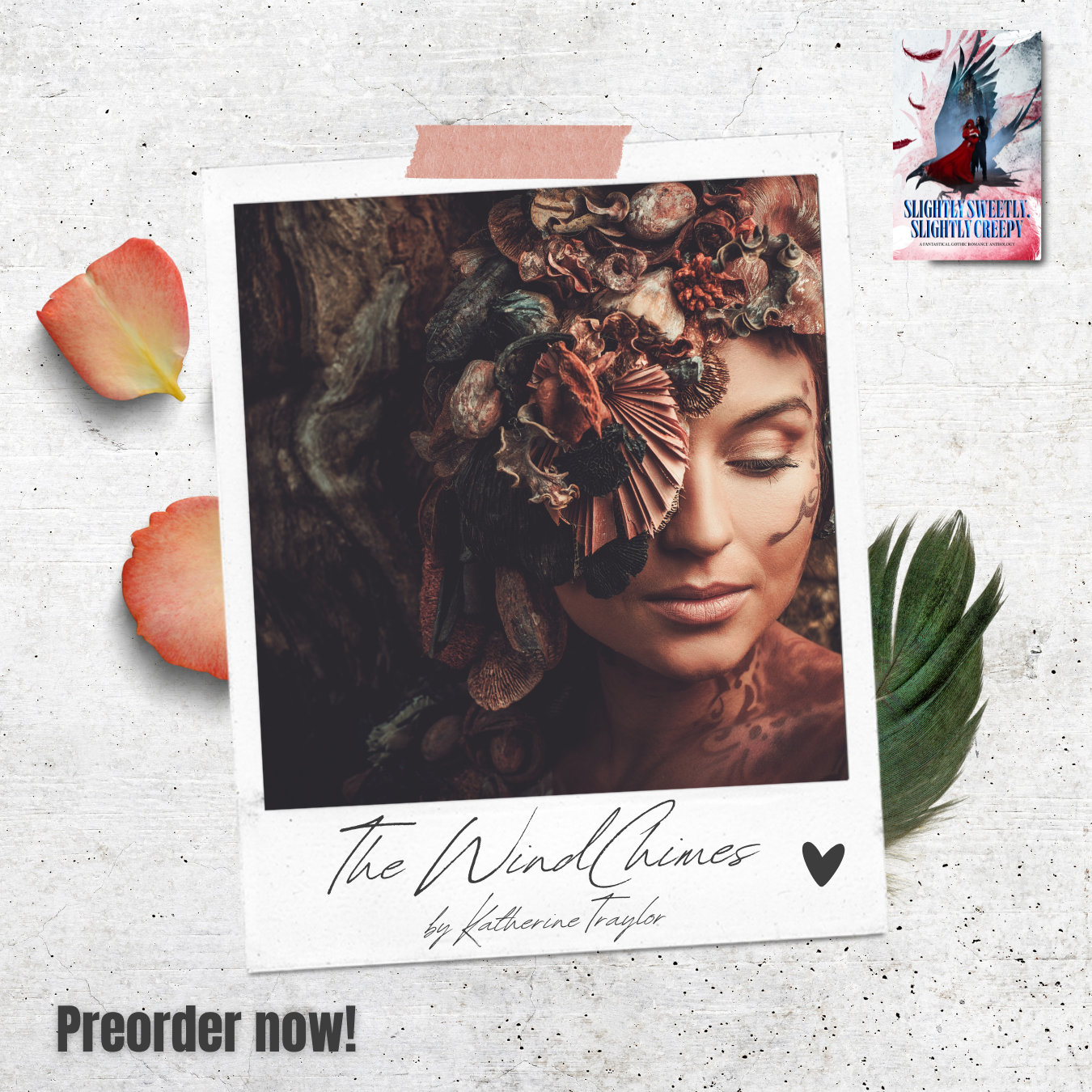


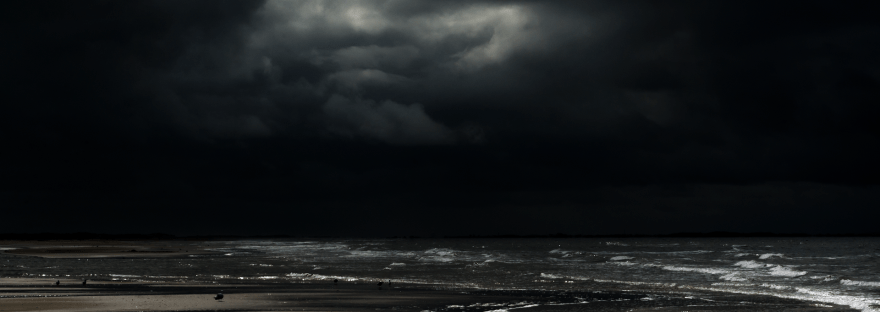



 Katherine Traylor