Hello, all! I’m happy to report that after three years, our collaborative anthology, The Ceaseless Way, is now on sale in ebook and paperback formats. A lot of work has gone into this project, and though there have been bumps in the road, we’re really proud of the project we came out with.
This is a speculative fiction anthology (mostly science fiction and fantasy, with a little bit of horror), and each of the participating writers contributed two stories. Besides myself, the writers involved are Fraser Sherman, Ada Milenkovic Brown, Secily Luker, Allegra Gulino, Arden Brooks, and Rich Matrunick. “Wandering Grove Press” is the name we’ve given to what’s essentially an online writing co-op. The book is self-published, but a lot of time and work went into it.
The paperback version will be on sale for $9.99 until the new year, at which point it will go up to $12.99, so if you’re interested in purchasing a hard copy this is the best time to do it. The ebook version will remain at $5.99. If you’d like to follow our group for updates, you can find us on Facebook here or on Bluesky here.
I’m a little behind on my publicity posts, but check this space for the next couple of weeks for interviews with some fellow authors and a couple of insights into my own stories in the antho, “We Go Hiking” and “Jenny and the Fairy Queen.”
Cover image by GetCovers; original cover concept by Arden Brooks.
It snowed off and on all day today, which felt like a bit of a joke with all the flowers blooming. The Easter Market is set up in our square, and all the trees are covered in blossoms. I had a fairly busy day, but the kids weren’t too rambunctious, and Fran and Donut and I had a nice walk in the evening.
I’ve had the very pleasant problem of a thousand different projects to work on. I’ve been hard at work hammering out two different stories, both of which are due for submission on Thursday. These are open calls, so it’s a wait-and-see game once they’re turned in, but I’m pretty happy with both of them. The one I’m still drafting is a nautical fairy tale based on a sea shanty, and the other deals with ominous snowflakes.
Meanwhile, I’m still plotting the next scene of VOID, which has been startlingly complicated to manage: it’s essentially a long complication between two characters, but it’s unfolded some questions about the magical system that I never took the time to answer before, and I’ve spend weeks already just mulling them over in my head. I think I’ve got the answers more or less settled now, but chapter is still in the planning stage, and every turn of the planned conversation is surprising me. I’ve been working with these characters for more than three years (or thirteen, depending on how you count), and it’s lovely to settle into the world again after spending lots of time on other projects.
Fran and I have been watching Parks and Rec, and I’m trying to channel April and Andy just a bit more in my approach to life. It’s great to be a Leslie if you’re passionate about something, but devoting 100% of your energy to everything you do (and losing sleep in the process) is a quick way to make yourself sick. Taking more time for fun, couple time, and sleep is making me feel a lot better, and after I spent a few days trying to complete a “must-do checklist” of writing projects, I realized that if I tried to maintain a full-time writing schedule on top of all the other work I do I would never have time for anything else. And when you’re well rested, it’s much easier to work quickly and with full energy, so it’s a win-win situation in the end.
For a sample of what I’ve been working on, here’s a short clip from the sea-ballad story I’m writing:
“Have you ever thought of going to sea?” I said. “I’m first mate on the Golden Vanity—that lovely galleon there—and we’re leaving for Constantinople in the morning. We need a cabin boy, and you look like a likely fellow. What do you think of signing on with us?”
He tipped his head again, and for a moment there was no sound but the grind and squeak of his auger and the patter of shavings to the ground. I could see him measuring the Vanity with his gleaming gray eyes, judging and weighing it somehow, and in a way he looked much older than a child. Then, finally, he nodded.
It took me aback how easily he’d accepted, and I wasn’t sure he’d understood. “Better think carefully,” I said, “for it’ll be a long time before you see your home again. It’s possible you won’t come back at all. But there’s good pay, and plenty of room for advancement if you do your work well.”
He nodded again, almost impatiently, and beckoned, as if I were the servant and he the master. Well, I thought, I’ll teach him more deference than that if he signs articles. But I was curious, and I had a bit of time before I needed to see about the cargo, so I followed.
Hope you’re all well! Let me know what you’ve been up to in the comments. ❤
This is one of the ones that never got much attention. It’s a quiet story, and most of the action is internal, but it meant a lot to me when I was writing it. I think the ending is a little ambiguous, so I’d be interested to know what you think will happen.
The shutters in the hearth room were already drawn. A bright fire had been laid, filling the round room with shadows and chinaberry smoke.
Bas stood by the hearth, chewing on a grass stalk. He looked up when Amir came in, then back at the fire. His face shone with sweat; he’d been out running, or pacing.
Amir crossed to the sofa and sank into the joint of its two halves. He leaned his face against the cool, cracked leather. “I’m nervous,” he said, surprising himself with the admission. A tight knot had grown in his stomach for days. He’d barely eaten anything at supper, though it had only been herbs and lentils—a simple meal meant for contemplation. Traditional on century nights.
His cousin laughed. “Don’t worry. You’re very clever; I’m sure great things are ahead of you.”
“Lots of people are clever,” said Amir glumly. “Mother’s brother was clever. A horse kicked him, and he lost half his wits. One-Eyed Ahmad was clever, and he was a muck-hauler. What if I’m a muck-hauler?” His breath was speeding up, but he couldn’t slow it. “We don’t know what any of us will see.”
Bas inhaled sharply. Before Amir could try to reorder his words into something more positive, his cousin stalked from the room.
He thought of following, but didn’t. Bas would be unapproachable until this was over. In the unlikely event that the fruit didn’t send him after Isra, he’d leave tomorrow anyway. He’d only stayed this long because he hoped that the century fruit would give him a direction to start in.
He stood and walked, running his hands over the old furniture, the hangings, the pottery. Here and there were crude objects made by generations of the family’s children. A clay figurine of an old traveler with a bird on his pack had been Amir’s gift to Grandmother three years before. Beside it was a lopsided coil-pot Aunt Gili had made when she was five or six, painted with wobbly olive branches under its cracked glaze. Other things were so old no one knew their stories. How many people had left this house over the centuries and never returned?
The adults still lingered over their tea in the kitchen. The mint was a cool thread under the tang of woodsmoke. He could hear Mother’s voice, quick and strident, rising over the rest. Again she said that this was all too sudden, too breathtaking. She’d wanted to put off cutting the fruit, at least till tomorrow, but Aunt Gili had gently reminded her that it would rot after just a day off the tree. Bas had found it this morning. If they didn’t eat it tonight, they might go another century without guidance.
He sat back down, inhaled again the familiar scent of old leather. It seemed harsh, almost crude, for all of them to eat the fruit where they could see each other’s faces. Kinder if they could take their visions in their rooms, their private spaces. He thought of the fig tree outside the kitchen, where he could sit in fragrant breezes as the sun set over the desert. He’d rather process his fate alone.
Was it fate that they would see? Mother insisted they could ignore the visions if they didn’t like them. Father said she wanted them all to stay within calling distance, but Amir was sure Adi, at least, would go farther.
He slouched down in his seat. He wasn’t sure he wanted to try the fruit at all. His family probably wouldn’t push if he refused, though they’d be disappointed. Twelve was young. But though a full century didn’t always pass between one fruit and the next—once it had supposedly only taken 20 years—he probably wouldn’t see another in his lifetime.
His muscles were tensing up. He eased them deliberately, though his heart still raced. Which would be worse: to see a vision, and have to leave the farm—or pass it up, and stay here forever?
Hani stomped in then from the kitchen, scowling. Amir straightened. “Hey, little. What’s wrong?”
His brother climbed up next to him, sliding down on his first attempt. “I’m angry,” he announced, glaring at the fire. His face looked sticky from the honey pear he’d had for dessert. At five, Hani had nothing to contemplate.
Amir smiled, but lacked the energy he usually had to entertain his brother. “Because you don’t get to try the fruit?”
Hani kicked his heels back against the sofa, nodding. His lip trembled.
“I’ll tell you what,” said Amir after a moment. “Tomorrow, when our chores are done, we can go for a long walk. All the way to the west field, if you like. Maybe we’ll find some flowers for Mother.” The adults generally preferred that the children not wander to the west end of the farm, as it bordered the desert and was mostly unguarded, but they would probably make an exception.
Hani looked marginally cheered by that idea, but his face soon clouded again. “Why do you get to eat it?” he said, kicking his heels again.
I don’t know. Amir drew his knees up to his chest. It was a lot of pressure for someone who’d never been farther than the city—to know that in a few years he would either leave forever, maybe for someplace he’d never heard of, or settle in for the rest of his life.
Then Shani and Shai came arm in arm through the curtain to the back wing, trailing a cool cloud of perfume. Shani was whispering, Shai giggling. Fais followed, smiling. Amir shifted to make space for him, but Fais followed his sisters to the bench by the hearth, and sat closer to them than he usually would.
They might be gone tomorrow, Amir realized suddenly. Both his girl cousins were seventeen. The visions were said to fade quickly, and it was best to start as soon as possible if your path lay elsewhere, especially if details were unclear. Amir might wait three or four years, until he was better prepared, but even that was risky.
And Adi… His sister appeared then, a silhouetted against the warm light of the kitchen doorway. It was still startling to see the abbreviated outline of her hair. All the other women in the family kept theirs long, but Adi had seen something in a magazine that made her chop hers off at chin level.
She was wearing the new outfit Father had brought her from the city. To Amir, she looked very sophisticated—shoulders bare under the cropped blouse Mother hated, full silk trousers swishing as she walked. He had expected Mother to scold her for wearing something so frivolous tonight, but Mother had only sighed, and looked at Adi with a sort of desperate fondness.
Adi, too, would probably waste no time in leaving.
What would that be like? They’d never been particularly close, but Amir supposed they loved each other as much as siblings usually did. He would miss her if she left. He thought she would miss him, too, at least when she remembered to.
The adults filed in from the kitchen: Father, Mother, Grandmother, Aunt Dar, Aunt Gili, Uncle Rabi. Lutfi and Siva came hand-in-hand, whispering. They sat in the shadows a little apart from Lutfi’s sisters.
Grandfather came last of all. In his hands was the covered silver dish he’d brought out and polished that afternoon.
As the adults all sat on the couches, Bas slouched back in. He leaned against the wall by the doorway, not looking at anyone, as far from everyone else as he could stand without leaving the room.
Everyone stared at the dish Grandfather had balanced on his knees. He was running his hands along its edges, uncharacteristically hesitant.
Father cleared his throat and clapped Grandfather on the shoulder. “Here we all are.” He’d dressed especially well tonight—formal silk, beard neatly trimmed. He seemed to expect good news.
“Here we are.” Grandfather glanced at Father. Father removed his hand.
Hani slid from the sofa and ran to Grandfather’s knee. “May I open it, please?”
Grandfather hesitated, and then held the dish out so Hani could reach it. “Go ahead,” he said.
Hani’s fingers smudged the silver as he groped for the handle. At last he got hold and opened it.
The fruit might never have fallen at all, especially from a tree as high as a century tree. Its burnt-golden skin was flawless. It had a flattened spherical base with a little dome on top where the stem was. Strange. As it ripened, it had been a fig-sized green lump, high in the branches. Now his hands wouldn’t have circled it.
Hani reached for the fruit, but Grandfather shook his head. “You’ve helped enough, dear. Go sit with your brother.” Hani obviously wanted to protest, but even he wouldn’t argue with Grandfather.
Grandfather’s wrinkled hand sagged under the fruit’s weight as he lifted it from the dish. He offered it to Grandmother. “Well, my dove.” He cleared his throat. “Why don’t you cut it?”
Grandmother had laid out a plate, a fruit knife, and a pewter saucer on a tray. She took the fruit and looked around, moving her lips as she did when she counted. “Fifteen, then,” she muttered. Setting the fruit on the plate, she picked up the knife and began to cut.
Mother shifted. Always calm and reasonable, she’d been unusually agitated about all this. Father watched her, but didn’t move or speak. They hadn’t spoken much lately, and today they’d hardly looked at each other. Father, uncharacteristically quiet, had mostly sat alone in his courtyard, writing materials untouched beside him.
Bas fidgeted, shuffling and tugging at his clothes. He was sweating again.
Everyone else was rapt and quiet. Adi watched the fruit as if it were the only thing in the world. Aunt Gili and Uncle Rabi held hands.
Grandmother cut precisely, methodically. The sound was shht, shht, shht, shht, like eastern pears when you cut them. Drops of juice flew out from the blade as it sawed. Some landed on her spotted knuckles, but she ignored them.
A strong perfume floated out: apple, honey, something floral. Pears, too? He couldn’t tell.
The knife reached the bottom. Grandmother began another cut. Shht, shht, shht, shht.
The first segment finally fell away. The flesh was brilliantly white: whiter than apples with their green overlays, or pears with their brown shadows. Would it be tart like apples? Sweet like pears? Grandmother sliced away the core, coaxed out the black seeds with the point of her knife, dropped them into the saucer. Plink, plink. She offered the section to Grandfather.
He shook his head. “Cut the rest, dear, and we’ll all eat together,” he said. “I think it’s best, don’t you?”
Grandmother set the section on the plate and began cutting again. She worked so slowly, pausing each time to cut away the core, to drop the seeds into the saucer. Plink, plink…
Amir’s mind wandered. What would he see? The city? He’d been there once. It was interesting, but smelly— manure and smoke and bodies, all familiar but too concentrated. Too much dirt, too much traffic, even at night—no quiet time when the ground could rest. He didn’t think he could stay there for long.
Maybe a distant village. Even another country—Masra? The fruit was supposed to keep the family from entrenching too deeply in any one place. They had to send out their own seeds, find new soil in other places. It was said that they had kin in every village, every city—even across the border in Ardunh, and in other countries, too. Wherever he was sent, some of those scattered kinsfolk might be there.
But after so long, it was unlikely they’d recognize him. He certainly wouldn’t recognize them. Long ago it was said that the family had carried tokens to identify each other, but those were long gone; only the trees, and tradition, remained.
Maybe he would be told to stay on the farm. It was a good place. He’d always been happy heree, and his family loved him. Of course, many of them might be gone tomorrow, but… some would surely stay.
In the stories, someone always stayed. Grandfather, of course, was from a branch that had. The century grove by the western fields was said to be 800 years old. Someone had to tend it. It wouldn’t be so bad, to be that person. It was an important duty.
Grandmother stopped. After a moment, Amir realized she’d finished. She offered the plate to Grandfather, and this time he took a slice.
The plate went around the room. No one spoke. Amir turned to make sure that Hani wouldn’t take a slice after all. Incredibly, his brother was asleep.
He studied the little boy’s round face, long eyelashes, grubby hands. Hani didn’t realize, yet, that Amir might be leaving home soon. To a five-year-old, “three or four years” is the same as “forever.” But even if he stayed awhile, Amir thought knowing he was to leave must somehow alter their relationship. Who would take care of Hani, if he left? If Adi and Bas left? If all the other cousins left, and only Hani remained?
He brushed a few curls from Hani’s face, and reached to gather him up, carry him to their room as he’d done so many times—but now the plate was beside him.
It was Father who held it. He smiled nervously at Amir, as if seeking reassurance. Amir smiled weakly back, took one of the two remaining sections of fruit, and gave the plate back to Grandmother. She took the last piece, set the plate down, and nodded to Grandfather.
Grandfather closed his eyes. “May we all be blessed, whatever our futures hold. Let us partake.”
Amir lifted the fruit to his mouth. He still couldn’t trace the fragrance. Had he imagined that it was like an apple’s? It was more delicate, like a cucumber or a winter melon, like nothing in particular. Then it came back, strong as honey. Like honey—and then a tang of citrus, and then an amber scent. Then those went away, and he smelled apples again.
Everyone was waiting, eyes darting to each other’s faces. No one wanted to do this all together—everyone wanted to see their fortunes alone. The juice was sticky on his fingers. He wanted to throw the fruit away, bury it, give his share to someone else.
But he was a son of this house. As he had been privileged to grow up here, now he was bound to face his future bravely. He put the fruit into his mouth.
Juice pooled in his mouth as he bit down. The fruit was crisp, grainy, sweet and tart. He closed his eyes.
He didn’t know at first that the vision had started. He began to feel hot, firelight scorching his face, though he was far from the hearth. There was an odd mix of smells—tar, salt, rotting fish, something frying nearby.
He opened his eyes. A broad stretch of white sand… leading… to the sea.
It had to be. He’d never a lake so vast, so alive. Blue-green, rolling in white foam onto the shore.
A few ships rocked in the shallows, lazy in the sunlight. Men were loading them with crates and bags.
His shoulder ached under the weight of a heavy sack. His clothes were light and crisp. He felt full, happy. Spiced milk lingered on his tongue.
Men called to him from the nearest ship.
Blinking, Amir saw the fire, smelled chinaberry smoke, heard his family’s hushed breaths. Shutters creaked as the wind swept the desert. He could still taste the fruit, but he must have swallowed it; his mouth was empty, drawn by the tartness of the juice.
Could that have been it? Everyone else was blinking, shifting. Had they waited a century for so little?
Details were already fading. He tried to fix them in his head. White sand, blue-green sea—the shape of the shore, the brief line of ships. Smells… spiced milk… a blue sky, a punishing sun. Men shouting. He’d been a little taller, though not a man. There had been the sense that everything he owned had been in the bag he held on this shoulder.
How could he base his life on… that? Search without stopping, until he saw that scene exactly? It was said that some looked for years, even decades.
He’d never heard of anyone failing entirely. But he only knew of his ancestors, who had succeeded—who had, at least, planted their seeds, started a farm. The remains of the old farmhouse were still by the grove. The skeleton was almost full of sand, but you could see it. Eight hundred years ago, they’d come. And it was a good place.
Probably others had died before finding anything. Or—
“I’m going abroad!” Adi crowed.
Everyone looked annoyed. He knew he did, too. Couldn’t she have kept still a few seconds longer?
But the spell was fading, so he listened.
“I think so, at least,” she said. “I’m almost sure. It was night. We were in someone’s house. There was a big fire, and we were eating some sort of sweet on little plates. There were glasses of… I don’t know, it was gold, and full of bubbles. Everyone was wearing these beautiful clothes, like in a magazine. I didn’t know the language we were speaking, but it did sound familiar. My flute was in my lap, like I was going to play, or had played already. And I had this gorgeous dress…” She rubbed at her trousers.
Amir turned to see how his parents were taking this. Mother was looking at her hands, mouth tightly closed. Father smiled, but it looked forced. “Well… ah, that’s wonderful. I…” His smile faded. He looked at his own hands, then raised his eyes to Amir. “And what about you, Amir?”
Amir’s mind went blank. “Ah… what about you?” He was sure Grandfather would scold him for impudence, but Grandfather didn’t seem to have heard.
Father’s forced smile returned. “I’ll be here, of course. Playing the fool as usual. Here, forever.”
Amir wondered what Father had expected to see. Though it wasn’t respectful, he’d always thought of his father as… unfinished, somehow. Childlike. It was sad to think of him sitting in his courtyard forever, writing his rare poems, entertaining his friends with pipes and backgammon. He’d never been as close to Father as he was to Mother, but he loved him. If he left, he might not see Father again for… ever.
Now Shani said, “Shai and I are going to the city! Right, Shai?”
“Right.” Shai’s smile, strangely, was a bit sad. “It looked like a shop. I don’t know if we worked there, or…“
“Oh, you saw the shop, too?” Shani squeezed her sister’s hand. “Maybe we’ll own it. And we’ll be close enough to visit…“
“And I’ll be there, too!” Fais broke in, grabbing his sisters by the shoulders. “Isn’t it great? Probably I’ll come later—I was grown up. I think I was a student.” He turned to Mother. “Maybe I’ll be at the University, Aunt Mor. You’ll tell me about it, right?”
Mother nodded, but didn’t look up.
Abruptly, Bas straightened, crossed the room, and knelt by Grandmother. He whispered something in her ear. She murmured, and touched his forehead.
Bas bowed his head, took Grandmother’s hands, and kissed them. Then he took a seed from the pewter saucer and left the room.
The first seed. Bas would plant it, someday, if he reached his destination. He’d probably leave tomorrow.
And he hadn’t looked at Aunt Dar, or at Grandfather.
“Well.” Aunt Dar’s voice was bitter. She stared after Bas with a look of angry satisfaction, as if she’d seen exactly what she’d expected. “There goes my son. I’ll be lucky to see him again.”
Mother looked up suddenly. Amir thought she would snap at Dar—but her face was stricken, almost gray. Her eyes darted around the room—landed first on Adi, then on Hani, then on him. They looked so tortured he lost his breath. She lowered her face again before he caught it.
“Elder sister,” said Aunt Gili, formally. “You knew from the beginning that this could happen—“
“And who are you to speak?” snapped Aunt Dar. “You’ll barely be separated from your children—the city is only two days’ ride from here. I may never see my son again.”
And whose fault would that be? Amir couldn’t help thinking. Aunt Dar had disapproved violently of Isra, had been just as active as Grandfather in blocking the marriage. She and Bas had rarely spoken since.
But maybe having Bas not there to not-speak-to would be different. It already hurt Amir to think about losing his cousin. If he thought about it much more, he’d probably cry.
“Let’s try to think more positively,” said Aunt Gili, more gently. “What did you see, elder sister?”
Aunt Dar hesitated. “Lahm. I’ve been considering…” She looked around as if she felt the need to explain herself. Her voice took on an appealing tone. “My friend’s husband died. She has a farm, and… I can be useful there.” She turned to Grandmother and Grandfather. “Mother, Father,” she said earnestly, “I would never disrespect the memory of my dear husband— I will miss him until I die— but—“
Grandfather roused from his trance to smile vaguely at Aunt Dar. “You honor his memory. I am sure our son smiles on you from Heaven. And now, since you have had a vision, you must go. We will bless your path as you travel.”
Aunt Dar bowed, but then looked away, as if unnerved. There was an odd blankness in Grandfather’s expression that had not been there before he’d eaten the fruit. Grandmother looked at him, and they shared a long glance, in the way they did that seemed more intimate than holding hands.
Amir remembered suddenly that the century fruit also gave visions of death.
Aunt Gili cleared her throat. “Ah… Lutfi…” She turned to her eldest son. “I don’t want to pry, but…”
Lutfi and Siva had been smiling blissfully at each other all this time. Now they turned their smiles on Aunt Gili.
“We’re staying.” Lutfi said. “Just a few miles out, not even to the edge of the farm. The mountains were the same. And…” He looked at his wife.
“We’ll be parents.” Siva laid a hand over her stomach, as if the vision had somehow placed a child there already. “A girl. And others, too—two or three, at least.”
Lutfi’s parents were beside them in seconds, pressing their hands and patting their cheeks. Aunt Gili seemed already to be giving them advice. Uncle Rabi just smiled, though his eyes were strangely melancholy.
In the wake of all this, Amir stood, and went to look down at the saucer on Grandmother’s tray. Grandmother watched him.
Eight seeds remained: black-brown, glistening. He could take one and go, or kneel and ask for a blessing as Bas had done—or he could sit down again, and pretend he’d never stood.
Father watched him, eyes wide. Amir’s hand hovered above the saucer.
Grandmother waited.
Amir looked at Mother.
She sat hunched over, arms wrapped around herself, head bowed. A hank of her long hair covered one cheek. Her eyes were tightly closed, but there were tears in her eyelashes.
Amir bit his lip. Still his hand hovered over the seeds. When everyone who was leaving had taken one, however many remained would be planted in the century grove. No matter how many trees grew, there was never more than one fruit at a time. One tree, more or less, wouldn’t make any difference.
Mother would be all right. She had to have known, marrying Father, that this might happen. She must have known her children might leave.
He reached for a seed.
Hani shifted in his sleep.
Amir’s heart stuttered. Could he leave, never to see his little brother grow—maybe never to see him again?
With Bas gone, Lutfi would probably inherit the farm; Hani was too young. But Grandfather had considered Amir, too, especially after falling out with Bas. To live here, run things, marry and have children like Lutfi—that wouldn’t be so bad.
He thought of the sea, the rocking ships, the sailors’ voices.
Mother’s shoulders were shaking.
Amir let his hand drop. Swallowing, he smiled at Grandmother. “I’m staying here.”
Grandmother blinked, but nodded. Impossible to know what she was thinking. Amir hoped she hadn’t guessed what he’d just done.
Grandfather didn’t seem to have heard. He was looking around the room, as if seeing it for the first time, with something like fear or wonder in his face.
Shivering, Amir looked at Mother, who hadn’t responded. He thought she hadn’t heard, but finally she lifted her head, and gave him a strange, cloudy smile. “That’s good, Amir. It’ll be a good home for you, all your life.”
All your life. It wasn’t the response he’d expected. He looked around. He would be as old as Grandfather one day, might never travel as far as the sea—might never go beyond the city. He would live in this house all his life. Become an old man, and die here.
All his life.
Father was watching them with a mix of alarm and disappointment. Though Mother was smiling, it was obvious from the quality of her smile that she wasn’t the least bit happy.
Amir knew that he had miscalculated somehow. “I’m going to bed,” he said, at a loss for what to do. “Good night, everyone.”
He heard Mother stand, but didn’t turn as he left. He didn’t want to hear what she might have to say.
Bas stood outside the door, watching Amir with obvious disgust.
“What?” Amir muttered, though he suspected Bas knew exactly what he’d done.
Before Bas could speak, there was a gasp in the room behind them. Whirling, Amir saw his mother standing in the center of the room, fists clenched. Father was behind her, one arm outstretched, as if he’d tried and failed to catch her.
Mother saw Amir watching, and gave him that strange smile again. She turned one hand over, and opened her slender scholar’s fingers. In her palm lay a century seed.
Our anthology ‘Once Upon a Wicked Heart’ is launching today! Join us at https://www.facebook.com/groups/clcannon for our launch party. You’ll get some sneak-peaks at the book and a chance to win some fairy-tale swag and other prizes.
When I was little, I spent a lot of time reading the books my mother had kept from her childhood. One of them was an abridged version of Andrew Lang’s Blue Fairy Book illustrated by Grace Dallas Clarke.
The book was illustrated in a colorful 1950s style (I don’t have a copy now, but you can see some illustrations here.) I read the book multiple times, but my favorite stories in it were “Felicia and the Pot of Pinks,” “The Princess on the Glass Hill,” and “Diamonds and Toads.”
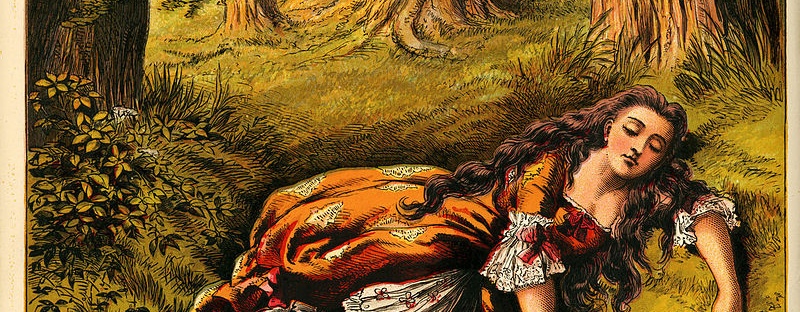
For some reason I have a strong memory of reading this book on an airplane, though I would have been young and I’m not sure where we would have been going. Anyway, I had lots of time to pore over the illustrations. “Diamonds and Toads” particularly stuck with me. I can see the glitter of the falling diamonds from one sister’s mouth, the other sister’s sassy expression, her hands on her hips. Later, cursed for her rudeness, she looks bewildered and ashamed, turning away defensively as snakes and toads fall from her mouth.
“Diamonds and Toads” is a “good sister/bad sister” story, a motif so common in world literature that you could fill a decent-sized book just with versions of Cinderella. Lately I’m starting to think more about the bad sisters in these stories than the good ones. Some of them are cruel, but their cardinal sins are usually greed, laziness, rudeness, and pride. In return, they’re often maimed or killed. Cinderellas’ stepsisters lose their eyes in some versions of the story, and “The Two Caskets” ends with the stepsister (along with her mother) being burned alive. Sure, she was rude and lazy, but isn’t that a bit harsh?
“Diamonds and Toads” is a classic example of this story. There are two sisters–one pretty and good, one ugly and bad–and their mother, who is also ugly and bad and thus favors the girl who resembles her. She and her daughter are cruel to the pretty sister, making her do all the work and fetch the water every day at the well. (I made the sister a little more sympathetic in my story, but I hope I still captured the spirit of the original.) At the well, the good girl meets and is nice to a fairy, and is rewarded with a shower of diamonds and flowers falling from her mouth whenever she speaks. The bad sister is rude to the fairy, so she’s punished: for the rest of her life, toads and snakes will fall from her mouth whenever she speaks. Eventually “even the widow was sickened by her older daughter, and drove her out, and she died alone and miserable in the woods.”
When my friend Sonya Lano told me that Fiction-Atlas Press was calling for submissions for an anthology about fairy-tale villains getting their own happily-ever-after, my mind immediately went to “Diamonds and Toads.” I can get a bit gloomy, but I’m not a dark fantasy writer: I wasn’t sure I could write a romance about a child-murdering witch or any other serious villain. But everyone’s said something they regretted, and something about this story has always spoken to me. Plus, snakes are cool. So I decided to try it out.
Next, I needed to find a romance for my protagonist. My first idea was to have her meet up with the girl from “The Two Caskets”–terribly scarred from the fire, but still alive–and have them hit it off. But that seemed a bit too complicated for a short story or novelette, so I needed something simpler. Fortunately, Sonya suggested another possibility that was right up my alley, and I got really interested in the project. But in order for this fairy tale to work, I’d need to get my heroine on a more equal footing with her love interest, and that’s what this story is about.
“Serpents” is a novelette of about 10,700 words that follows Fan’s adventures after she’s kicked out of her family home. (The original character’s name is Fanchon, short for Francoise, so Fanny would be a more natural translation, but for obvious reasons I decided not to go with that. Frannie is my partner’s name, which would have been weird, and Fancy and Frances didn’t seem quite the vibe, so Fan it was.) Once I had the idea straight in my mind, the writing process was pretty straightforward because I was happy with the story and how it played out. I’m still happy with it, and I had a lot of fun with it, so I hope you’ll feel the same
Once Upon a Wicked Heart is a collaborative anthology from Fiction-Atlas Press. There are twelve total stories in the book, most quite a bit darker than mine from what I’ve heard but a few with happy endings. Sonya has a story there, too–a dark (less dark? haha) retelling of “The Juniper Tree”–and all the others look really interesting. There’s a universal buy page here where you can check it out, or you can look us up on Goodreads. We’re doing a pre-release sale price of 99 cents (the full price will be $2.99), so it’s a good idea to preorder if you’re interested. You can also visit us online at the anthology release party on November 19 (that’s this Saturday) on the group’s Facebook page. Sonya and I will be posting from 11 a.m. to 1 p.m. EST that day, so drop by and see us.
There are lots of other fairy tales I’d like to explore in more depth, so I hope to do more projects like this later. Is there any story that really stuck with you?




 Katherine Traylor