anthology, books, collaboration, daily life, politics, prague, professional life, reading, Uncategorized, updates, wandering grove press, writing

Letters from Sunday: Muffins, Gloom, and a New Anthology

Public-domain image of a hand holding a pen, apparently writing, at a sunlit desk with papers and a white coffee mug on it. The sleeve of a cozy gray sweater is visible.

(Thought I’d try writing here today. Maybe it would help to have a day to do it?)

It’s damp and chilly here in Prague. We breakfasted on English muffins with lemon curd, both bought from Marks & Spencer (I’m not sure, in retrospect, that lemon curd goes well with English muffins). We were at Václavské náměstí, where Marks & Spencer is, on an attempt to see Lucy and Selam at the National Museum. Tickets were unfortunately sold out, so we’ll have to go another day. We did pick up two shiny black pumpkin mugs, two Magic the Gathering packs, and a copy of Mona Awad’s Rouge, which I read about a year ago and have been thinking about.

Things are slipping back into their school-year usual. I was sick a couple of weeks ago and had to spend a few days at home, which seems like it will be the norm; I take public transit everywhere, and clients always bring something back with them from summer vacation. I’m trying to get a bit more writing done in the gaps between lessons, but the siren song of YouTube ghost stories is always very strong. (I’ve been enjoying Into the Fog with Peter Laws lately. I think I most enjoy the storytime videos, though, where people talk about being haunted by mimics or seeing phantom hands outside their windows.) I have no interest in inviting spooky things into my house, but I love hearing about the spooky things in other people’s houses.

News from home is, obviously, a horror show. It’s hard not to give up on the whole country in disgust. I never thought this could happen this easily in the USA. I thought there were at least a few more people in leadership positions who would be guided by their consciences to do the right thing, but it feels like the entire government is full of cowards. It would feel different if the whole country had been occupied by a foreign power: then, at least, you’d know that most people wanted them gone. It’s the ignorance and malice that get to me: so many people, it seems, have bellies full of hate. I’ve been trying not to post about it too much on social media, because I can see that hate growing in myself, too: I feel so much disgust and anger that it’s coming out my ears. I guess the only safe response to evil is compassionate resolution, because fear, disgust, and despair will twist you into someone you don’t want to be. Anyway, just take it as read, if I’m not posting about politics, that these feelings are all there, bubbling.

On a lighter subject, our antho collective, Wandering Grove Press, is starting work on our second anthology! My piece is a supervillain caper my sister described as a cross between Dr. Horrible and The Tick. I’ve been working on it all summer and am excited to see what others think (and I hope they’ll forgive me for going 40% over the word-count limit). (If you missed our first anthology, The Ceaseless Way, you can find it here. 😉 ) Now that that story’s done, I’m back to working on THE VOID AND THE RAVEN, my fantasy epic. This will be the penultimate chapter of book 2, and I’m really looking forward to it. I’m also working on expanding and editing a short story I wrote back in 2020, which is very… COVID… but in a fantasy way. Hopefully enough time has passed that people can stomach quarantine stories now.

It’s October now, and my mood has been a little quiet. I’ve been tooling with a personal reinterpretation of the seasons based loosely on the Wheel of the Year. It’s Hallows now. The weather is gray and sad, and the trees are folding up to sleep for the winter. There’s not a lot of “spooky, scary Halloween fun” here in the Czech Republic; things are just gloomy and cold. This is the time to stay close to your loved ones, cuddle up, and batten yourself against the coming winter.

Take care, and stay warm,
KT
anthology, books, collaboration, fantasy, fiction, long stories, reading, science fiction, short stories, wandering grove press, writing

Interview with Ceaseless Way contributor Allegra Gulino

Hello, all! Here’s one more interview with another contributor to our collaborative anthology, Allegra Gulino. Remember, The Ceaseless Way: An Anthology of Wanderers’ Tales is still on sale in paperback for a few more days, so if you’re looking for something to read while you’re home for the holidays, this is a great time to check it out! The paperback version is available here, and the ebook version can be found on a number of platforms here. (If you want to learn more about our collaboration group, Wandering Grove Press, you can join our Facebook group here or follow us on Bluesky here.)

If you missed my previous interviews with Fraser Sherman and Ada Milenkovic Brown, you can check them out here and here.


1.   Do you think your two stories are a good representation of your usual style and subject matter? Is there anything about them that’s unusual for you?

My stories in Ceaseless Way are a good representation of my usual style and subject matter because they’re excerpts from my novel,  Monsters Unbound, which I’ve been working on for about two years. This project has become my world, and its tone is a culmination of a lot of my previous work.

2.   What’s one style or plot element you’d like to “steal” from another contributor?

If I were to ‘steal’ from any other contributor here – which I don’t condone doing – I’d probably take Ada Milenkovic Brown’s folkloric elements, Fraser Sherman’s brevity and quick action, Katherine Trayler’s dreamy atmosphere, Rich Matrunick’s sense of peril, Secily Sluker’s metaphysical vision and Arden Brook’s whimsey.

3.   Are there any anthologies or collections you’ve really enjoyed reading lately?

I recently subscribed to the classic Fantasy and Science-Fiction magazine. While it’s not officially an anthology, its collection of short stories, one or two poems and a few pages of book reviews do feel like one. So far, I’ve enjoyed diving into a diverse variety of writing styles, genres and themes within its pages (yes, it’s a physical magazine). I always find tales to admire, be intrigued by and sometimes, to figure out – I’m not the best at parsing hard Science-Fiction.

4.   What writers have had the greatest influence on you throughout your writing journey?

There are a plethora of author influences for me, starting with YA classics, The Lion, The Witch and The Wardrobe series by C.S. Lewis, and A Wrinkle In Time trilogy by Madeline L’Engle. I cannot remember which came first, those two, or when I picked up J.R.R. Tolkien’s The Hobbit, but I was instantly hooked by the wonderful journeys that all three authors illustrate. In High School, I fell in love with Frank Herbert’s Dune series, and Stephen R. Donaldson’s Chronicles of Thomas Covenant. In class I was awed by Flowers for Algernon by Daniel Keyes, A Separate Peace by John Knowles and Jayne Eyre by Charlotte Bronte. In college, my English Literature major steered me toward classical literature. I came to favor the works of Virginia Woolf, William Faulkner, Lawrence Sterne, William Blake, John Donne, Emily Dickinson, James Joyce and D.H. Lawrence. More recently, I’ve come to love Ursula Le Guin, Emile Zola, Salman Rushdie, Margaret Atwood, Thomas Pynchon, and Marcel Proust. Over the years I’ve learned about writing craft (and continue to do so) and also about the attributes that I admire in books, so my reading standards have risen. Though my writing is grouped under the umbrella of Speculative Fiction, I’ve always read widely.

5.   What is your editing process like? How long does it take you to bring a story from start to finish?

I edit while I write, instead of throwing the words down quickly and then going back to edit. This is because when I write, my vision for the scene is keen – I feel a sense of urgency about getting it as close to how I picture it as possible before I move on to the next section. Therefore, I’m not a fast writer, so focusing on daily word counts would only frustrate me because they’re usually not very high.  I spend lots of time refining and reworking, not just on typing more words, However, once I’m satisfied with a chapter or section of the piece – it’s very polished and I don’t need to revisit it often. Then I can tackle what comes next.

6.   Do you have any hobbies that aren’t related to reading or writing?

I love to sing – usually karaoke singing, though I was a community choir member for twelve years. I also love music and to dance – nothing professional. I frequently perform at No Shame Theatre events. Aside from that, I’m a consummate lap swimmer and gym goer. I also love to hike and to travel. When not out and about, I enjoy staying at our home in the woods, by a creek, where I give attention to our three darling rescue cats, a sixty gallon aquarium, house plants and garden.
|

7.   Are there any songs or pieces of artwork that capture the “vibe” of your stories (or of other stories in the anthology)?

I have a playlist that I’ve used for writing Monsters Unbound. It’s instrumental music from classics like Mozart, Franz Liszt, Beethovan, Chopin and Vivaldi, to more recent composers such as Satie, Leonard Bernstein and Leos Janacek, Igor Stravinsky. I also enjoy global pieces from South America, Africa, India, Romani culture and so on. I love composers like Andreas Vollenweider or the Silk Road Ensemble, that have multicultural instruments, rhythms and tunes. That playlist also includes soundtracks, from Bram Stoker’s Dracula, to Merchant and Ivory films, to Frida, to the Lord of the Rings and the Hannibal series. I love music that takes me on a journey, full of pathos, drama, or tenderness, but usually with at least a hint of darkness.

8.   Are there any real-world places that inspired your two stories?

Absolutely, for Monsters Unbound. To inform and inspire my book, we went to Romania for two weeks last summer to collect information, imbibe atmospheres and explore historical sites. It was a fantastic trip and I want to go back! However, while my two stories in Ceaseless Way are set in real places – environments that I researched – they are not specific locations within that backdrop.

9.   What would be the ideal place and time to enjoy each of your stories? What snacks and drinks would pair well with your stories?

A fascinating question. For Demon, He Called Me, it would add to the atmosphere if you could read it on a dock, by a river or on a boat, so you can hear the water lapping.  As far as what to eat, I have two suggestions. The more luxurious would be a caramel/chocolate confection with sea salt, and a port wine. Or a nitty gritty option –  sardines or anchovies and water to drink. For The Ortega Wolves Migrate North, some good Mexican fare, like pozole or chalupas, with sangria, consumed in a desert environment or at least near some cacti in a sunroom.


Thank you, Allegra! Happy holidays, everyone. I hope these interviews have inspired you to check out the book! : )


Cover image by GetCovers; original cover concept by Arden Brooks.

anthology, books, collaboration, fantasy, fiction, horror, long stories, professional life, reading, science fiction, short stories, wandering grove press, writing

Interview with Ceaseless Way contributor Ada Milenkovic Brown

Hello, all! Here’s another long-belated publicity post for our new collaborative anthology (The Ceaseless Way: An Anthology of Wanderers’ Tales). This week, contributor Ada Milenkovic Brown talks about her two stories in the anthology and what led her to write them.

Again, if you’re interested in picking up a copy of this book, this is a great week to do so. The paperback version will remain on sale for $9.99 USD until January (at which point it will return to the normal price of $12.99). If you prefer ebook, it’s available on a number of platforms for $5.99 and will remain at that price. If you want to learn more about our collaboration group, Wandering Grove Press, you can join our Facebook group here or follow us on Bluesky here.

If you missed my previous interview with Fraser Sherman, you can check it out here. One more interview with contributor Allegra Gulino should be up in a couple of days.

(Ada also interviewed me, Fraser, and Allegra for this promotional mini-tour, so please check out those interviews as well!)


Headshot of Ada Milenkovic Brown
  1. Do you think your two stories are a good representation of your usual style and subject matter? Is there anything about them that’s unusual for you? 

    I think In Valleys is absolutely spot on the sort of thing I usually write, including the love story elements.  

    I was actually intending to write something more fantasy based for my Bigfoot story, Nnn’s Children, but it just came out more realistically than I expected. Other than that, it is my style to write as plausibly as possible within the framework of the story world. So maybe it is in my usual style too.

  2. What’s one style or plot element you’d like to “steal” from another contributor?

    If I could bottle Rich Matrunick’s tone/mood/voice in Fading, I would bathe in it, metaphorically speaking. Other than that, I envy everyone else’s apparent ease with getting their stories to arc in a satisfying way. It is so so hard for me to find that in the initial stages of writing my fiction.

  3. Are there any anthologies or collections you’ve really enjoyed reading lately?

    I loved and learned a lot about what makes stories work from Charlie Jane Anders’ collection Ever Greater Mistakes.


  4. What writers have had the greatest influence on you throughout your writing journey?

    When it comes to writers I’ve read, it’s Zenna Henderson, Ray Bradbury, N. K. Jemisin, and Jeffrey Ford. I would say the writers who’ve had the greatest influence on me as teachers were Octavia Butler, Andy Duncan, Walter Jon Williams, and Nancy Kress.


  5. What is your editing process like? How long does it take you to bring a story from start to finish?

    Sometimes it takes me weeks, sometimes it takes me years. For the regular editing, I just pick away at it, like a painter adding a dab of paint here and there, until I can make it different, but I can’t make it better.  My real pitfall is plot holes and endings.  These are what take me a long time sometimes to find the inspiration to realize where the story needs to go. But I’ve gotten better at that over the years.


  6. Do you have any hobbies that aren’t related to reading or writing?

    Singing. I’m a lyric soprano and have sung solos in performances with choirs and at weddings and funerals. I tend to get asked to sing more funerals than weddings. I don’t know what that says.

    I’m also an oboist.

    Acting, although a case could be made that figuring out how to portray a character onstage is very akin to writing a character.

    Hiking and cycling, but I sometimes get story ideas while I’m moving around out in nature, so maybe that’s related to writing too.

    I do origami to relax.


  7. Are there any songs or pieces of artwork that capture the “vibe” of your stories (or of other stories in the anthology)?

    I vibe with surrealist paintings for the most part, such as: Paul Delvaux’s The Village of the Mermaids and just about any painting by Leonora Carrington. In fact, Leonora Carrington’s work could fit with our entire anthology.


  8. Are there any real-world places that inspired your two stories?

    Because five of my published stories take place in particular spots in North Carolina, I decided to continue writing a collection made up entirely of stories based in particular places in that state (where I live).  Littleton, NC and Medoc Mountain State Park nearby have had Bigfoot sightings, and that is why I wrote a Bigfoot story set in that locale.

    Although the medieval village in my In Valleys story is fictional, the original 1860 story it’s based on mentions a nearby village that does exist. It was my discovery that the nearby village was in East Germany near the (Communist period) wall that triggered the ideas for In Valleys Where Eternities Lie.


  9. What would be the ideal place and time to enjoy each of your stories? What snacks and drinks would pair well with your stories?

    There’s never a bad time to read. But otherwise, good lighting and a comfy chair, sofa, bed.  Although I think readers might feel an extra resonance if they read Nnn’s Children outside, say under a shady tree.

    Apples figure into both of my stories, so maybe readers should eat an apple when they read them. Otherwise, I usually like having a glass of wine when I read.
Photograph of apples on a sunlit, leafy tree branch.

Thank you, Ada, for your interview (and for your amazing leadership in getting the contracts hammered out!). Tune in soon for one more interview and a bit more information about the anthology from my perspective.


Cover image by GetCovers; original cover concept by Arden Brooks. Headshot by/of Ada Milenkovic Brown. Apple tree image by kiyu_01.

anthology, books, collaboration, fantasy, fiction, horror, long stories, professional life, reading, science fiction, short stories, slipstream, Uncategorized, wandering grove press, writing

An interview with Fraser Sherman of ‘The Ceaseless Way’

Hello, all! As I mentioned in my last post, our anthology group, Wandering Grove Press, has put out our first anthology: The Ceaseless Way: An Anthology of Wanderers’ Tales. The paperback version is on sale for $9.99 USD until the new year, so this is a great time to pick up a hard copy if you’re interested in one. If you prefer ebook, it’s available on a number of platforms for $5.99 and will remain at that price.

This is a collaborative effort, and so I’d like to introduce you to some of my collaborators. In that spirit, here’s an interview I conducted with Fraser Sherman, a North Carolina-based writer of nonfiction and speculative fiction, whom I’ve known since I was part of the Durham Writers’ Group more than ten years ago. For more details about Fraser’s two stories in our anthology, you can read his blog posts here and here (and check out his blog in general–he updates daily and has a lot of interesting things to say!)

(Fraser also interviewed me and two other collaborators, Ada Milenkovic Brown and Allegra Gulino, so please check out those interviews as well!)


Photograph of Fraser Sherman, smiling
  1. Do you think your two stories are a good representation of your usual style and subject matter? Is there anything about them that’s unusual for you?

    Impossible Things Before Breakfast is very much my cup of tea. Historical fantasy, 1970s (the decade of my teen years. I have a lot of affection for it). Fiddler’s Black is darker and messier than usual for me.

  2. Are there any anthologies or collections you’ve really enjoyed reading lately?

    Janet and Roger Carden of Crimson Streets, an online pulp magazine, gave me copies of several anthologies of stories they’ve published (I was in the first one). They’ve been fun to read.

  3. What writers have had the greatest influence on you throughout your writing journey?

    HP Lovecraft has influenced a number of my stories, including Fiddler’s Black, though none of them turned out classically “Lovecraftian.” Arthur Conan Doyle and Raymond Chandler have influenced the style of some of my writing. And the Kaye Gibbons quote I mention below is a big influence on my editing.

  4. What is your editing process like? How long does it take you to bring a story from start to finish?

    No telling. It takes me several drafts to figure out where the story’s going, then a couple more (usually with beta-reader feedback) to work out the plot so it flows smoothly. Then I edit for errors, spelling and word choice. The novelist Kaye Gibbons says you should write until the next word is inevitable — I don’t think I usually succeed at that, but it’s what I aim for.

  5. Do you have any hobbies that aren’t related to reading or writing?

    Bicycling. Baking bread. Watching movies. Occasionally I do sudoku.

  6. Are there any songs or pieces of artwork that capture the “vibe” of your stories (or of other stories in the anthology)?

    Fiddler’s Black was inspired by Abba’s “Dum Dum Diddle” but it ended up poles apart.

  7. Are there any real-world places that inspired your two stories?

    I used Durham NC’s Bean Trader coffee shop for a scene in Impossible Things Before Breakfast.

  8. What would be the ideal place and time to enjoy each of your stories? What snacks and drinks would pair well with your stories?

    Your call, readers! If you read them eating something I hate, I won’t complain.

Thank you, Fraser, for your interview (and for being our rock and general tech wizard throughout the creation of this anthology). Tune in soon for more interviews and a bit more information about the anthology from my perspective!


Cover image by GetCovers; original cover concept by Arden Brooks.

anthology, books, collaboration, fairy tales, fantasy, fiction, flash, horror, long stories, professional life, reading, science fiction, short stories, slipstream, updates, wandering grove press, writing

Anthology Release: The Ceaseless Way

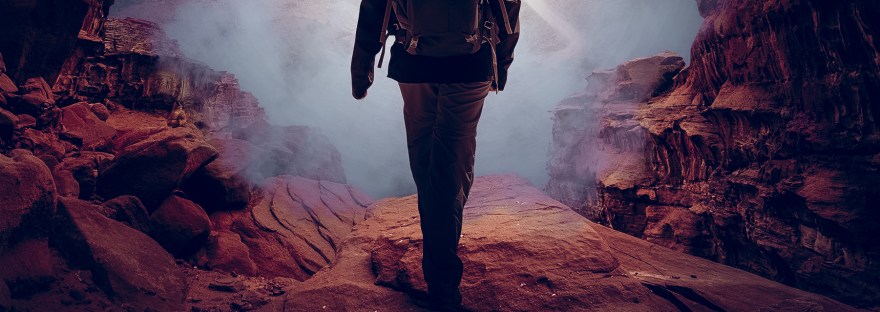
Cover image for The Ceaseless Way: An Anthology of Wanderers' Tales. Cover shows an androgynous figure with a backpack starting to walk onto a winding road that leads through a rocky desert.

Hello, all! I’m happy to report that after three years, our collaborative anthology, The Ceaseless Way, is now on sale in ebook and paperback formats. A lot of work has gone into this project, and though there have been bumps in the road, we’re really proud of the project we came out with.

This is a speculative fiction anthology (mostly science fiction and fantasy, with a little bit of horror), and each of the participating writers contributed two stories. Besides myself, the writers involved are Fraser Sherman, Ada Milenkovic Brown, Secily Luker, Allegra Gulino, Arden Brooks, and Rich Matrunick. “Wandering Grove Press” is the name we’ve given to what’s essentially an online writing co-op. The book is self-published, but a lot of time and work went into it.

The paperback version will be on sale for $9.99 until the new year, at which point it will go up to $12.99, so if you’re interested in purchasing a hard copy this is the best time to do it. The ebook version will remain at $5.99. If you’d like to follow our group for updates, you can find us on Facebook here or on Bluesky here.

I’m a little behind on my publicity posts, but check this space for the next couple of weeks for interviews with some fellow authors and a couple of insights into my own stories in the antho, “We Go Hiking” and “Jenny and the Fairy Queen.”


Cover image by GetCovers; original cover concept by Arden Brooks.

Public-domain image of a hand holding a pen, apparently writing, at a sunlit desk with papers and a white coffee mug on it. The sleeve of a cozy gray sweater is visible.
books, daily life, horror, professional life, reading, updates, writing

Updates January 2023

I’m working on a short story for an anthology my friend Sonya is putting together. It involves murder, ghosts and other spirits, romance, wind chimes, and a dark forest. I hope you’ll enjoy it when it comes out.

Anthologies are difficult in general. Some other friends and I were trying to put one together, but more than a year on it’s still in limbo because it was so difficult to allocate responsibility. I’m really proud of two stories of mine that were published in recent anthologies, but I’m not sure how they were received because neither book has gotten very many reviews. It can be a little discouraging. But then I realize that I myself haven’t read that many anthologies recently–I haven’t even finished reading the ones I was published in. So maybe everyone’s just busy.

Anyway, anthologies are an incredible way to discover new authors, and I haven’t been doing enough reading lately. Are there any collections you’d recommend?


On a completely different subject, I realized last night that the publication of “In the Nevergo” qualified me for an “Affiliate Writer” membership in the Horror Writers’ Association. I applied and was accepted today. I have a few more dark fantasy pieces in the works, so I’m hopeful that I might be able to upgrade to an “Active Writer” (i.e. full) membership before too long. I’ll see if there’s a badge or something I can put on my website. There aren’t a lot of concrete benefits to joining writers’ associations at this point in my career, but it’s a nice boost in a field where it’s hard to feel like a working professional.


(***I just checked and saw that under the updated membership requirements I also qualify for an Associate Membership in SFWA. I’m not quite ready to pay two sets of dues, though, so I’ll keep working towards a full membership there for now.)

books, fairy tales, fantasy, fiction, long stories, reading, Uncategorized, writing

Upcoming publication: “Serpents”: A romantic fairy tale retelling

When I was little, I spent a lot of time reading the books my mother had kept from her childhood. One of them was an abridged version of Andrew Lang’s Blue Fairy Book illustrated by Grace Dallas Clarke.

The book was illustrated in a colorful 1950s style (I don’t have a copy now, but you can see some illustrations here.) I read the book multiple times, but my favorite stories in it were “Felicia and the Pot of Pinks,” “The Princess on the Glass Hill,” and “Diamonds and Toads.”

For some reason I have a strong memory of reading this book on an airplane, though I would have been young and I’m not sure where we would have been going. Anyway, I had lots of time to pore over the illustrations. “Diamonds and Toads” particularly stuck with me. I can see the glitter of the falling diamonds from one sister’s mouth, the other sister’s sassy expression, her hands on her hips. Later, cursed for her rudeness, she looks bewildered and ashamed, turning away defensively as snakes and toads fall from her mouth.

“Diamonds and Toads” is a “good sister/bad sister” story, a motif so common in world literature that you could fill a decent-sized book just with versions of Cinderella. Lately I’m starting to think more about the bad sisters in these stories than the good ones. Some of them are cruel, but their cardinal sins are usually greed, laziness, rudeness, and pride. In return, they’re often maimed or killed. Cinderellas’ stepsisters lose their eyes in some versions of the story, and “The Two Caskets” ends with the stepsister (along with her mother) being burned alive. Sure, she was rude and lazy, but isn’t that a bit harsh?

“Diamonds and Toads” is a classic example of this story. There are two sisters–one pretty and good, one ugly and bad–and their mother, who is also ugly and bad and thus favors the girl who resembles her. She and her daughter are cruel to the pretty sister, making her do all the work and fetch the water every day at the well. (I made the sister a little more sympathetic in my story, but I hope I still captured the spirit of the original.) At the well, the good girl meets and is nice to a fairy, and is rewarded with a shower of diamonds and flowers falling from her mouth whenever she speaks. The bad sister is rude to the fairy, so she’s punished: for the rest of her life, toads and snakes will fall from her mouth whenever she speaks. Eventually “even the widow was sickened by her older daughter, and drove her out, and she died alone and miserable in the woods.”

Image source

When my friend Sonya Lano told me that Fiction-Atlas Press was calling for submissions for an anthology about fairy-tale villains getting their own happily-ever-after, my mind immediately went to “Diamonds and Toads.” I can get a bit gloomy, but I’m not a dark fantasy writer: I wasn’t sure I could write a romance about a child-murdering witch or any other serious villain. But everyone’s said something they regretted, and something about this story has always spoken to me. Plus, snakes are cool. So I decided to try it out.

Next, I needed to find a romance for my protagonist. My first idea was to have her meet up with the girl from “The Two Caskets”–terribly scarred from the fire, but still alive–and have them hit it off. But that seemed a bit too complicated for a short story or novelette, so I needed something simpler. Fortunately, Sonya suggested another possibility that was right up my alley, and I got really interested in the project. But in order for this fairy tale to work, I’d need to get my heroine on a more equal footing with her love interest, and that’s what this story is about.

“Serpents” is a novelette of about 10,700 words that follows Fan’s adventures after she’s kicked out of her family home. (The original character’s name is Fanchon, short for Francoise, so Fanny would be a more natural translation, but for obvious reasons I decided not to go with that. Frannie is my partner’s name, which would have been weird, and Fancy and Frances didn’t seem quite the vibe, so Fan it was.) Once I had the idea straight in my mind, the writing process was pretty straightforward because I was happy with the story and how it played out. I’m still happy with it, and I had a lot of fun with it, so I hope you’ll feel the same

Once Upon a Wicked Heart is a collaborative anthology from Fiction-Atlas Press. There are twelve total stories in the book, most quite a bit darker than mine from what I’ve heard but a few with happy endings. Sonya has a story there, too–a dark (less dark? haha) retelling of “The Juniper Tree”–and all the others look really interesting. There’s a universal buy page here where you can check it out, or you can look us up on Goodreads. We’re doing a pre-release sale price of 99 cents (the full price will be $2.99), so it’s a good idea to preorder if you’re interested. You can also visit us online at the anthology release party on November 19 (that’s this Saturday) on the group’s Facebook page. Sonya and I will be posting from 11 a.m. to 1 p.m. EST that day, so drop by and see us.

There are lots of other fairy tales I’d like to explore in more depth, so I hope to do more projects like this later. Is there any story that really stuck with you?

reading, Uncategorized

Brother and Sister

Last night I read the most beautiful story about giant robots. It’s “Metal Like Blood in the Dark,” by T. Kingfisher, aka Ursula Vernon, currently published by Uncanny Magazine. (Spoilers below.)

I’m not sure if I’d ever read anything of hers before now, but this story was so, so good. It’s clearly fairy-tale inspired, with elements of Hansel and Gretel and other stories, but is set on a burned-out mining planet and its asteroid belt somewhere in space. It features a kind old professor who makes two robot children but must leave them for the sake of his health. They go out on their own to wait for him to come back, but fall prey to another machine much more predatory and deceptive than they are. Sister (who becomes the viewpoint character) must learn to think differently and change parts of herself in order to save her brother and escape their captor.

This story is masterful. I am trying to learn the art of short fiction (as you may have noticed), but since I’ve always worked and thought mostly in novel form, it’s something I’m having to pick up in bits and pieces. One thing I really realized lately was that if you want your story to sell, you really need a sympathetic and well-drawn protagonist and a clear, winnable (or losable) conflict. A story without these elements can be impressive, but it won’t be loved. (And don’t we all want to be loved?)

Kingfisher’s Brother and Sister are massive machines who bore through the earth and fly through the sky like insects, looking for metals to eat, and they love their father very, very much. They care for each other, make sacrifices to protect each other, and learn life lessons through the course of the story. If automata can be imbued with that much humanity in the hands of a master, then any character can pull at the reader’s heartstrings if written with enough care.

The other thing is that the writing is just exquisite. Every phrase is cut like a gem, and every image sings. I had to stop and stare at the screen and marvel when I read the line “…while Brother drank starlight from Sister’s fingers.” Reading, I wondered glumly if I could ever get to that level, and how Vernon herself learned to write like that. Then I visited the author’s website and saw that she’s incredibly prolific, having written nineteen books for children, nineteen books for adults, and two different webcomics (one winning multiple awards), which she also illustrates. That’s not counting the short stories. So that’s how, I guess.

As one of the vast majority of fantasy writers who are 1) not prolific and 2) completely unknown beyond friends and family, it’s hard to avoid glum comparisons with writers like Kingfisher/Vernon, or Gaiman, or N.K. Jemisin, or any of the Hugo/Nebula regulars. I don’t know, it’s like an ambitious amateur baseball player looking wistfully at someone who got a major-league contract at nineteen: even if I could go back in time and do everything differently, I’d never be where they are. But there’s really nothing to do about this, and you can give up or keep writing whatever the result, so I guess I’ll (slowly) do the latter.

Anyway, this wasn’t actually meant to be a glumpost. I actually did want to recommend the story I just read, and to say I’m looking forward to reading more by this author. And if you like fairy tales and sweet stories set in space, then I recommend you check this story out, too.