
This is the first story I ever sold. It was published in 2018 in Gods & Services, an anthology of stories about a mysterious junk shop selling artifacts touched by the gods. I recently realized that the story was well past its exclusivity period, and the anthology itself had actually gone out of print. So I thought I’d upload it here. It’s a bit longer, and a bit less streamlined, than it would be if I were writing it today, but I still think it’s kind of cute. Hope you enjoy.
The rain had come up suddenly, putting a cap on Anna’s miserable day. If this shop didn’t have any umbrellas, she’d have to beg for a trash bag to cover her head until she got home. This was what she got for trying to do the right thing and use the buses. If she’d driven, she’d be home by now.
She looked around the musty shop, shivering as the air chilled her wet skin. The shelves were full of tumbled bric-a-brac, not particularly appealing from what she could see. There didn’t seem to be a central concept here. There were obvious antiques, like the rack of porcelain dishes with curiously intricate patterns; but there were also jumbled bins of clothing and other things that could barely be called “vintage.”
Anna didn’t usually come into places like this—she never knew what to look for. She’d noticed this shop before, but had always been too busy or too tired to come in. Of course, she might get fired tomorrow. Then she’d have lots of time.
A man sat behind the counter. He was sixty or seventy, bearded, with owlish glasses that matched his expression as he looked at her. “Young lady,” he said, “you appear to have had a terrible day. Is there anything I can help you with?”
Anna opened her mouth to ask about umbrellas. What came out instead was, ”Do you have any cures for total uselessness?”
He gave her a measuring look. “Oh, I’m sure you’re useful to somebody. What seems to be troubling you?”
Anna sighed. “Bombed a presentation. I forgot everything I was supposed to say—all my facts, all my talking points. I sounded like a sixth grader giving a report on a book I didn’t read. My boss was so embarrassed—I’m surprised he didn’t fire me on the spot.”
The man nodded. “Sounds like an unpleasant experience, but it doesn’t have to be world-ending. It sounds like what you really need is a little more erudition.”
“Sounds great,” Anna said dryly. “Got any for sale?”
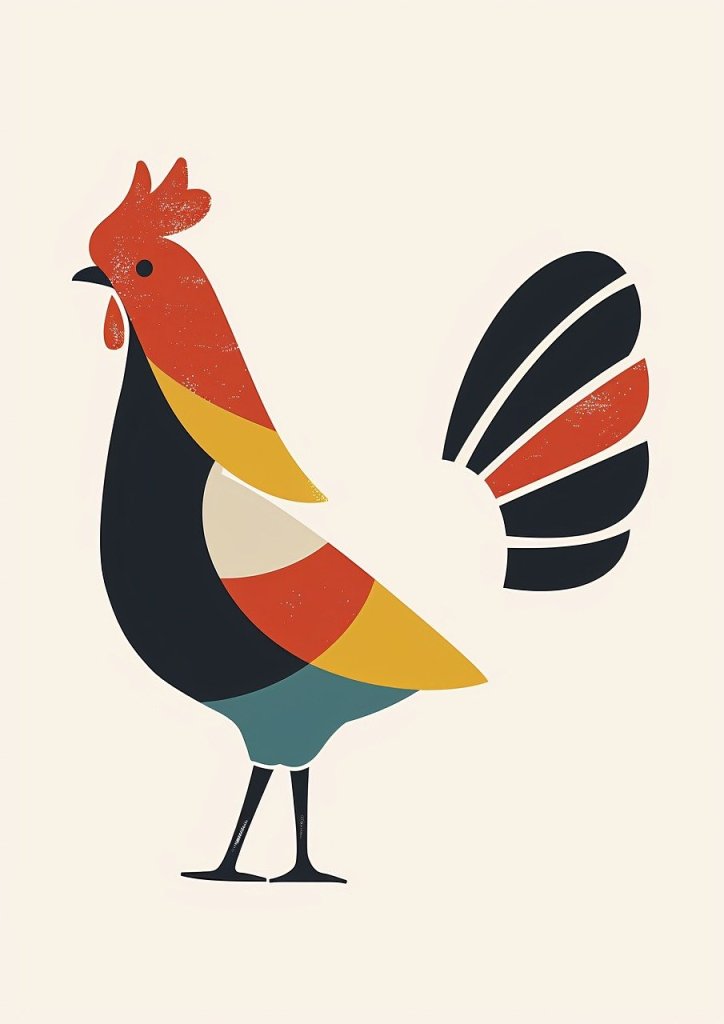
The shopkeeper looked thoughtful. “You know, a little confidence boost can go a long way toward improving your speaking skills. Even a nice, flashy accessory might give you the push you need to get over that stage fright.” He took something from a drawer behind the counter. “Perhaps something like this.” He passed Anna a little gold brooch shaped like a rooster, inlaid with colored stones.
Outside, the rain had stopped. In the silence, Anna studied the brooch. It was nothing special—her grandmother had plenty like it—but something about the deeply-colored stones made it hard to look away.
“Did you know that the rooster was sacred to Hermes?” the shopkeeper said. “Messengers, you know—the rooster is the herald of the morning.” He gestured to the brooch. “Why don’t you try it on?”
Feeling oddly transgressive, Anna pinned the brooch to her blouse. It had a comfortable weight, but not enough to pull the fabric down. The shopkeeper picked up a round bronze hand mirror and turned it to face her.
The brooch was definitely eye-catching, a pop of color on her plain white blouse. It wasn’t the kind of thing she usually wore—but it seemed like the kind of thing she could wear if she were a little more confident in herself.
“How much is it?” she said.
She could never remember the price afterwards, but always knew it had been a bargain.
She wore the brooch the next day, tucked against the collar of her favorite black blouse. It was much brighter than any of her usual jewelry. Stepping out into the bright sunlight, she felt self-conscious, but no one seemed to think the brooch looked strange. In fact, she caught a few admiring smiles on her way to work.
She hadn’t seen anyone since her disastrous presentation yesterday, and wasn’t sure what the fallout was going to be. Would everyone just quietly ignore what had happened, and simply never assign her any presentations again? Or would she be asked to pack her things as soon as she got inside? Ordinarily Anna would be having a panic attack over this, but today she felt strangely calm. If she got fired, she got fired. At least it would give her a chance to try other things. And if she didn’t get fired, then she’d have solid ground to improve from. Either way, it wouldn’t be the end of the world.
Mr. Bertram, the R&D Director she’d failed to impress yesterday, was on the elevator, was on the elevator when she got in. He smiled tightly when he saw her. Anna suddenly realized that it must have been awkward for him, too, to have to watch someone blow it so spectacularly. She greeted him as calmly as she could, and tried not to read too much into his vague mumble of acknowledgement.
Words came to her mind as the elevator began to rise, and she said them without thinking. ”Mr. Bertram, I’m actually really glad to see you. I was hoping I could talk to you for just a second.”
Mr. Bertram gestured curiously for her to continue. “Of course, Ms. Young. What did you want to talk about?”
“I just wanted to apologize for getting a little scrambled yesterday,” Anna said, “It was my first time doing such a big presentation—I think I got a little stage fright.”
Mr. Bertram laughed, appearing more relaxed. “That’s all right. It happens to everyone. Would you like to try again?” he added kindly.
Anna couldn’t have asked for a better opening. ”I just wanted to give you some of the numbers I missed yesterday.” She stepped aside for him as the elevator opened on his floor, and then followed him out. She worked two floors up, and this was going to make her late, but it seemed like it would be worth it. “It’s actually a really exciting project. It turns out that this newest product line has a much larger cross-market appeal than we’d thought, and the projected growth is phenomenal…”
Fifteen minutes later, they were drinking coffee outside Mr. Bertram’s office, and Anna was still talking. She’d gone through all her missed beats from yesterday, adding details no one had even thought of adding to the original presentation, and Mr. Bertram was still listening with avid attention.
“So after the main line is rolled out, when everyone’s got their ducks in a row and is used to working together, what we were thinking of doing next is—”
“Anna?” Her boss, Mr. Lewis, had approached without her noticing. “Someone told me they saw you down here. Hey, Bob.”
“Hey, Henry!” Mr. Bertram said. “I was just having a great conversation with your assistant here. She’s really got her stuff together! I think she’s answered just about every question I had yesterday, and a lot I wouldn’t have thought of asking. Everything sounds great—I’m really looking forward to this launch.” He offered Anna his hand. She shook it, feeling dazed. “So glad we had a chance to talk, Ms. Young. You’ll have to present for us again sometimes! I think now you’ve got this first one out of the way, you won’t have any more trouble.”
“Thank you very much, sir,” said Anna. “I hope so.”
“Well, all right.” Mr. Lewis looked between them with an odd mix of confusion and relief. “I’m glad to hear it. See, I told you, Bob, Anna was just having a rough day yesterday—really knows her stuff, actually. Did you, ah, have any more questions?”
“Nope.” Mr. Bertram opened his office door. “If I do, you can just send Ms. Young down again with an explanation. We might have to have her do some training videos, too—she’s got a great way of explaining things.”
“Thank you, Mr. Bertram,” said Anna again, avoiding her boss’s bewildered stare. “It was really great talking to you again.” To her surprise, she actually meant it.
The presentations got bigger. Other departments began asking Anna to present for them, too. She narrated training videos, gave quarterly reports, and emceed at company functions. Anna didn’t get it. She was speaking more or less as she usually did—just with a lot less hesitation. But even on subjects she barely knew, the message got across. For the first time in Anna’s life, people were saying that she had a way with words.
“You are really blossoming, Anna,” said one of the department heads after a quarterly meeting. “I remember you used to be so shy—it’s good to see you coming out of your shell. You’ve exceeded everyone’s expectations.”
“Thanks,” said Anna numbly. She was standing by a window, and the winking gold reflection of her rooster brooch flashed in the corner of her vision. “Just, you know, been practicing a lot.”
“Well, whatever it is, keep it up.”
“It’s not that you’re an amazing speaker, exactly,” said her friend one night, as they celebrated Anna’s latest bewildering success. “I mean, it’s not that you’re a bad speaker, Annie—you’re fine—but it’s not like you’re Winston Churchill or anything. It’s just… I don’t know, for some reason people really seem to want to listen to you.”
Anna laughed nervously, fingering her brooch. “Who knows?” she said.
Within a year, Anna had her own office. She’d gotten a generous raise, everyone treated her nicely, and her projects were getting more and more interesting. The more she came out of her shell, the more she saw that speaking was an art form—an interconnected dance of communication, to be practiced as often and as creatively as possible. It was bringing back memories of how she used to be before she became afraid of herself—how, as a child, she’d delivered speeches to audiences of stuffed animals, and given circus performances to her family in the living room.
She took classes now, sometimes, trying to augment her skills in case whatever odd boost the brooch was giving her wore off. She was the star of every class she took, and was invited to join several improv teams, but still couldn’t quite seem to trust it all.
How had she gotten here? Could no one see that she was an impostor? At Maia Corporation, only prodigies advanced this fast. Most people languished in the cubicles for a few years before moving on to other, better things. But no one seemed to find Anna’s advancement—or her new office—unusual. When she fished for comments, people just said she needed space for all the clients who were being shepherded in to talk to her. It was a nice office, anyway.
When she was walking back from lunch one day, Anna met a stranger.
She’d gone to her favorite cafe—now that she was making more, she could afford to eat out more often—and was cutting through the park on her way back to the office, with a bag of bagels for later, when she stopped short.
A man was sitting on top of a picnic table, playing an odd, sweet melody on an ocarina shaped like a turtle. He looked around thirty, handsome and athletic, with dark skin, black curls, and a full black beard. He wore a tight orange polo shirt and a rather tacky gold chain.
Seeing her, he lowered his ocarina. “Hello!” He had a slight accent Anna couldn’t place. “Out for a walk?”
Anna held up her bag. “Just lunch. That was a lovely tune you were playing.”
“Why, thank you!” The man looked her up and down like a bird examining its reflection. His smile brightened when he saw her rooster brooch. “What a nice brooch you’re wearing,” he said. “I’m very fond of roosters.”
“Thank you,” said Anna. “It seems to give me good luck.”
“Glad to hear it. Luck with what, if you don’t mind my asking?”
Anna found herself telling him everything: the presentation, the shop, what came after. It was as if she couldn’t stop talking: the man seemed to be a conduit for communication. He listened avidly, occasionally nodding. The rooster brooch on Anna’s blouse winked in the sunlight, as if nodding along.
“Good luck charms can have surprising power,” the man said, when Anna finally stopped talking. “I’m glad that this one has helped you.”
“Thanks,” said Anna. “It really has. It’s just that I’m not really sure where to go from here, you know? I don’t really know what I’m doing.”
“Where would you want to go?” the man said. “I suspect that you know more than you think— you probably have many options.”
A ridiculous dream popped into Anna’s mind. She tried to suppress it, but the conversation was so strange anyway that she found herself telling the truth. “This will sound a bit stupid,” she said, “but I’ve always sort of dreamed about being on TV. Not as an actor, but as an announcer or a talk show host or something like that. It just seemed like a cool job. I never could have done it before, but… I kind of feel like I’d be able to do it now.”
“Why not?” the stranger said thoughtfully. “Though it’s certainly different from your current job. How did you end up in this business, when your dreams were so different?”
Anna snorted. “I didn’t plan it. Who dreams of being a corporate drone? I just sort of fell into it. I guess that’s how most careers work.” She sighed. “Isn’t that sad? I bet not one percent of all the children in the world grow up to be what they want to be. How would they feel if they knew that?”
An odd light entered her listener’s eyes. “It is a terrible shame,” he said. “With all the possibilities of this world, it is tragic that mortals should restrict themselves to such a small collection of futures. We really should do something about that.”
Anna laughed. “What, change the world?”
“Why not?” The man began pacing, tossing his ocarina between his hands. “All it takes to change the world is one strong voice—and you have that, now.”
“I guess I do,” Anna said. “What would I do with it?”
“Just look for opportunities. When the time is right, you will know what you can do.”
She felt oddly inspired. “Thanks,” she said. “If I see a chance to change the world, I’ll jump for it.”
“That’s the spirit!” the man said. “Live your life while you can; that’s my motto.” He glanced at her lunch bag and smiled. “I suppose you’d better get going. Something in that bag smells wonderful.”
“Oh!” Anna had completely forgotten about the bag. “They’re just bagels. Would you like one?” she added impulsively.
His eyes crinkled, so that he looked quite a bit older for a moment. Then his expression smoothed and left him youthful again. “I’d love one,” he said. “What kind are they?”
“I’ve got blueberry and honey wheat.”
“Honey wheat, please!”
The man sounded so genuinely eager that Anna was glad to have offered. She wrapped a bagel in a napkin and handed it to him with a flourish.
He took it with a bow. “And now, I am afraid that I must go. It has been a true pleasure. Perhaps our paths will cross again.” With a wink at Anna, the stranger pocketed his ocarina and strode away. She watched him until he disappeared, wondering exactly what had just happened.
The next day, a local talk show invited Anna on as an expert speaker for a segment on small businesses. The invitation was the first of many, and soon she was well-known on the local networks. She was soon offered a regular spot on one of the networks, and then a full-time job.
Her program was called ‘Anna’s Hour.’ It was actually only fifteen minutes at first, but the segments got longer as her audience grew. Sometimes she went around to local businesses, interviewing their owners and doing brief features on their business models. She often thought of doing one on the curio shop where she’d bought the rooster brooch—she felt she owed the shopkeeper something, and at least wanted to thank him—but she’d never been able to find it again, and couldn’t for the life of her remember the name.
The features grew. Her focus gradually shifted away from business (which had never interested her much anyway) to human interest topics. Her ratings rose steadily, and soon she began receiving invitations to move to larger networks. One offer was too good to refuse, and Anna’s Hour went national.
Being a national media figure was not at all like running a fifteen-minute featurette on Channel 3. This was a sleeker, glitzier, sexier world—and the money, and the pressure, were correspondingly high.
People recognized Anna in public now. She wore designer clothes and had Opinions about shoes. Sometimes she was asked for sound bites about major news stories. Most importantly, she lived in New York City. Its weather, culture, and population density were staggeringly different from the city where she’d grown up. Her parents, though proud of Anna’s bewildering success, said they missed her. She definitely missed them.
Anna’s Hour was a full-fledged talk show now. Anna wasn’t exactly Ellen DeGeneres, but her fans were weirdly loyal. They stood outside the studio waving signs, and chanted her name as she came onstage: “An-na! An-na! An-na! An-na!” It was both exhilarating and terrifying: she didn’t want to disappoint them, and definitely didn’t want to steer them wrong.
She always wore the rooster brooch. She was terrified to take it off. Anna didn’t believe in magic, but the timing and circumstances of her success could not be ignored. What if she went onstage without the brooch and everyone suddenly realized that she had no real business being there? Crashing and burning would be a thousand times worse on this national stage than it would have been if she’d stayed back home.
Her colleagues were fine, but none were exactly friends. The jealous, catty watchfulness she’d noticed on the local circuits was much stronger here. As stunned as Anna was by her own success, these anchors—with their degrees in broadcast journalism and mass communications, their ten and twenty years of media experience—found it much more bizarre. There were many backhanded compliments about how well Anna was doing despite her total lack of qualifications. She knew that all of them were waiting to see it crash down.
On New Year’s Eve, the network hosted a black tie banquet for its broadcast staff. Anna attended, feeling a bit like Cinderella at the ball in her bronze silk evening gown. She still wore the rooster brooch, which luckily dressed up pretty well. A few of her colleagues had noticed and commented on it, but most had much better things to do than talk to Anna. At least the food was good.
She was lingering around the edges of the crowd, nervously munching canapés, when she saw someone who looked familiar: a dark-haired man with a neat black beard, wearing a beautiful tux with a golden waistcoat. He seemed to find the crowd amusing. When he saw Anna, he smiled and waved, and she realized at once where she knew him from.
“Hi,” she said, moving towards him, glad to find a friendly face. “You were at the park, right? A long time ago, in Raleigh?”
“I was,” he said. “So glad you remembered me.”
“I didn’t catch your name.” Anna held out her hand. “I’m Anna Young. It’s nice to see you again!”
“Hermes.” He took her hand and lifted it to his lips.
She laughed nervously. “Like the Greek god?” she said, retrieving her hand.
“Exactly like that.”
“Your family must be really into mythology.”
The man—Hermes—seemed to find this funny. “Deeply involved. My father’s name is Zeus.”
She couldn’t tell if he was joking or not.
Hermes saw her brooch, and his smile broadened. “And there’s your little friend. I’m so glad to see you still wearing him. People these days throw things away so quickly!”
“Yeah, he’s done a lot for me.” Anna patted the rooster. “I don’t go anywhere without him.” She glanced around. “And… are you in the broadcast industry?” Hermes wasn’t wearing any kind of name badge. His lapel pin was shaped like a caduceus, so maybe he was some kind of doctor, but she wasn’t sure what a doctor would be doing here.
“Oh, I move from job to job,” he said. “I have some contacts here, though, and I do love a good party. How’s the food?” he added, glancing at Anna’s plate.
“Pretty good.” She offered the plate. “Canapé?”
With a pleased look, Hermes selected a cocktail sausage wrapped in bacon. “What a polite young lady you are. I’m very glad to have met you.”
Young lady, Anna thought bemusedly. She wouldn’t have thought Hermes was out of his thirties. He must be older than he looked. “I don’t know if you heard,” she said, “but… I guess you can tell—I did end up on TV!”
“I did here,” said Hermes. “Congratulations. Is it all you dreamed it would be?”
“I guess so.” Following his lead, Anna moved away from the edge of the crowd, into an alcove with chairs and a small decorative fountain.
“You guess so?” Hermes sounded amused. “What’s missing now?”
“Oh, no, everything’s wonderful.” She indicated the crowd, the ballroom, her elegant gown. “I mean, can you believe it? How did my life turn out like this?”
She hesitated. Hermes waited, sympathetic and attentive. Once again, Anna found herself saying more than she’d meant to say. “Just… I still feel like an impostor. I don’t know how I got here. It seems like the other shoe’s about to drop, and everyone’s going to find out I’m a fraud.”
“Are you a fraud?” he said curiously. “Did you lie about your qualifications?”
“Well… no… everyone here knows I don’t really have any.”
“And yet they hired you anyway,” said Hermes. “Clearly the network, at least, thinks that you’re capable.”
“Yeah… I guess so. I just…”
“And you’re doing good work,” he went on. “I’ve read reviews of your program, testimonials from your fans. They all seem to find your honesty and down-to-earthness very refreshing. Some even say that you’ve given them the courage to transition into new careers. If you aren’t misrepresenting yourself, and what you do is helping people, then what could be the harm?”
“Nothing. It’s not the job,” said Anna. “The job is great. I love it. It’s just… the people…” She looked out into the ballroom, where her colleagues and competitors roamed like glittering sharks. “I just always feel like I should be watching my back—like they’re all going to turn on me if I make a single mistake. Have you ever felt like that?”
“A few times,” said Hermes gravely. “My family can be rather cutthroat. One must always keep at least one one step ahead of them.”
He studied Anna, and seemed to be evaluating her. Though she didn’t know what he was looking for, Anna found herself hoping not to disappoint him. At last, Hermes nodded with an air of finality. “Then you believe that this network will not be an appropriate long-term home for you?”
“It’s not that,” Anna said quickly. “Working here is a dream come true. It’s just… do you know the expression ‘sword of Damocles’?”
”I’m familiar with the story,” Hermes said dryly. “And I believe I see what you mean. But what would be the solution, Anna? Would it be easier for the sword to fall?”
Anna laughed. “I hope it doesn’t.” She offered Hermes the last of her canapés. “I’m just wondering what I’m going to do if it does.”
The sword didn’t fall for a while after that.
Anna left the party slightly drunk, with Hermes’ number tucked into the pocket of her evening coat. She looked for it later, but couldn’t find it, and sadly concluded she must have left it in the taxi.
Shortly afterward, her interviews began to take on a different tone.
It began subtly, with Jolena McCall, a popular home decorator, confiding to Anna onstage that she did not like the way modern society was trending.
“Everyone’s just feeding into this machine,” McCall mourned. “Like our lives don’t mean anything as long as someone’s making a profit off of us. Isn’t that depressing?”
“Uh,” Anna hedged, “shall we talk about that after we finish this centerpiece?” They were halfway through demonstrating how to make a paper flower arrangement from recycled wrapping paper, one of the projects in the new book McCall was supposed to be promoting.
The decorator gestured with her scissors. Anna ducked. “No, it’s just,” McCall said, “do you know what I wanted to be when I was little?”
“What?” said Anna warily.
“An astronaut. An astronaut! I wanted to be the first woman on Mars, Anna—it was the dream of my life. How do you go from that to paper flowers?”
Glancing off-camera, Anna saw Becky, the production manager, making furious cut motions with both hands. She nodded numbly and turned back to Jolena. “There are always unexpected twists in life,” she said. “You know, I used to be a junior marketing assistant. Now—”
McCall gently shoved Anna’s shoulder. “Yes, but yours was a good twist.” She picked up a paper flower and began shredding it. “Everyone’s read your interviews, Anna. You’re living the dream. And I…”
“You’re an inspiration,” Anna said firmly. She took McCall’s ruined flower, handed the decorator a scrap of wrapping paper to tear instead, and got back to work on the centerpiece. “You started your first decorating business at age nineteen. You’ve been called ‘one of the most original and versatile young artists in the field of interior design.’ Your fans adore you. And this book—”
McCall snorted. “I didn’t even write it. I mean, I came up with the projects—obviously—but all the copy was ghost-written.”
“At least you’re open about that!” said Anna desperately. “I’m sure I’d use a ghost-writer, too, if I had to write a book. Now, about these flowers—”
“Are they even important?” McCall picked up the flower Anna had just finished and began disassembling it. “Aren’t we just comforting ourselves with trifles while the world crumbles around us?”
Offstage, Becky appeared to have fallen into despair. Mark, the producer, was signing furiously, but Anna couldn’t understand the signals. The crew looked like they couldn’t decide whether to be amused or horrified.
Anna pressed on. “I’m sure we all feel like that sometimes. I’ve certainly felt that way.” She put another flower in the bowl. “But the only thing to do about it is… well, do something, Jolena. You’ve got a much bigger platform than most people. Why not use it? Use your designs to promote social consciousness or something. Hire underprivileged artists—use ethically sourced materials—you’d know better than me how to do it. But do something. It’s the only way out of the doldrums, I think.”
McCall stared at her. Anna stared back, worried both about the dead air and the growing likelihood that her guest was about to walk offstage abandon her with a table full of paper flowers. Mark and Becky watched from the wings in silent, wide-eyed horror.
Finally, McCall made a little sound like a creaking door. Then she threw her arms around Anna’s shoulders, nearly knocking over the centerpiece. “Thank you!” she sobbed. “That was exactly what I needed to hear. Of course, you’re right, Anna—you can’t go back, you can only go forward. And I have so much forward to go to!”
Sniffling loudly, she turned back to the audience. “As Anna said,” she said, “we’ve all got to do what we can, in our own lives, to make the world a better place. And I just wanted to tell you, folks, that I think recycling projects like this centerpiece are so, so important—getting a little more use out of our Christmas trash before we throw it away.” She brushed her hair back, looking more like herself. “But there are a lot of other things we can do for the world. We buy so many worthless consumer goods today that we really don’t need, and it’s such a terrible source of waste and pollution…”
McCall went on for another five minutes, covering everything from alternate gift ideas to desertification. The audience seemed politely supportive, but was clearly confused. “Thank you so much, Jolena,” said Anna finally, wincing as Mark pointed at the clock. “We’re almost out of time, but I really appreciate you coming to talk to me today. What do you think, folks, are you going to buy the book?”
The audience cheered weakly. Anna couldn’t blame them; they’d just been emphatically discouraged from buying anything new for the next year.
She turned to McCall. “Any ideas for your next book?” she said.
“Oh, yes.” McCall was holding a paper flowers, staring into it with fire in her eyes. “I have a lot of ideas.”
With a nervous laugh, Anna closed the segment. Mark smiled tightly as she passed him on her way offstage. Remembering how many of their sponsors were in the business of producing “worthless consumer goods,” Anna hoped she wouldn’t get in too much trouble for this.
As it turned out, Anna did not get in trouble for McCall’s rant, but only because the ratings afterward had been so good. She did receive coolly-worded emails from both Mark and Becky, asking her to keep future interviews a little more on topic—but she also received a great many glowing fan reviews.
I feel so inspired, one comment said. I’m always so lazy about activism, but watching this really made me feel like I should get off my butt and do something. Anna’s right—there’s always something you can do!
Anna’s always right, said another commenter. Anna for president.
Anna for queen, said a third.
Every major interview now led to an even bigger one. Soap opera stars became prime-time stars, which became pop stars and movie stars. When a former president left the set smiling, thanking Anna for “one of the best interviews I’ve ever had,” she had to retreat to a dark room and lie down.
She tried to keep her interviews tame, but they always seemed to wander into the brambles. A cooking demonstration turned into a debate between two chefs about the situation in Palestine. A singer promoting her new album suddenly came out as bisexual. Teenage actors from a superhero flick began comparing the movie’s premise to US international policy in frighteningly political terms.
And the ratings kept climbing. Anna’s Hour was moved to evening, then to late-night. The production team didn’t bother with scripts anymore; Mark just handed Anna some suggested talking points and asked that she please try not to start any wars. Everyone knew it wasn’t Anna’s fault that her interviews went off the rails—her behavior as host was always impeccable. It was the guests who seemed determined to doom themselves, and kept finding fresh and exciting ways to do it.
And then, one day, one of them found a way to help Anna doom herself.
It started as an ordinary interview. Her guest was Homer Bulsara, a renowned psychologist, who was plugging a new book he’d written on the psychology of religious belief. Anna had read and enjoyed most of the book as part of her preparation, and they’d had a rousing conversation about cults, deathbed rituals, religious art, and everything in between.
She was just beginning to wrap up when Bulsara suddenly said, “Anna, if it isn’t too forward to ask, I was wondering if you subscribed to any particular spirituality?”
“Me?” said Anna, surprised. “Um, I’m not really religious, but…”
She found herself touching her rooster brooch, remembering certain things that had happened to her over the past few years—coincidences she’d ignored at the time, moments of serendipity that had stayed with her although she’d consciously forgotten them. Her research for this interview had been very thorough, and at last she said, “Lately I’ve been looking into Greek mythology.”
“The Greek gods?” Bulsara looked delighted. “Do you mean Hellenistic paganism?”
“Not exactly,” she said, a little embarrassed. “Just the gods as archetypes. The stories are really fascinating. They’re all people like we are—they fight, fall in love, play pranks on each other, have children—everything humans do. I guess any polytheistic system is going to be like that, but the Greek pantheon was what caught my attention.”
“Any god in particular?” asked her guest.
Anna felt an odd sense of reversal, as if she were suddenly the one being interviewed. “Hermes,” she said slowly. “I met a man once who had that name, which got me interested. I’ve read all his myths. He’s a remarkable figure. We’re taught in school that he’s just the messenger god, so people think he’s just very fast. But Hermes was also a trickster—he invented the lyre, for example, and gave it to Apollo so his brother wouldn’t beat him up for stealing his cattle.” A few audience members laughed.
With an odd wave of fondness, Anna thought of Hermes the man at the party in his golden waistcoat—and before that, sitting on the picnic table in the park, playing his tortoise-shaped ocarina in the summer sun. “So he’s not just a messenger,” she went on. “He’s also associated with thieves, music, trade, travel, athletes—even sex. Any kind of movement and exchange.” She paused for another laugh as the audience associated those words with sex. “He’s known for helping mortals sometimes, apparently just because he liked them. He helped find lost things. He invented fire. He was even a psychopomp. He’s a tremendously important god—it’s a shame people only remember him for the winged sandals.”
“As a journalist,” Bulsara pressed, “the aspect of communication must be especially important for you.”
“Oh, yes!” Anna said. “Communication is really the root of all human progress. It’s the only reason we’re not constantly at war. I mean, it may seem like we are, but for a long time war was just sort of the natural state of human societies. It’s gotten much better since we’ve connected to each other more. It’s learning new languages, traveling, and generally understanding each other better that lets us see other people as human. In fact, I think it’s through communication—through cooperation—that we’re going to be able pull ourselves out of the mire of history and up into the stars.”
The audience was rapt. Offstage, Mark was staring at her. Anna came back to herself with a sudden start. “So, you know,” she said sheepishly, “the idea of a messenger god just really appeals to me.”
“You seem to be very into this,” said Bulsara, smiling. “Perhaps you could start your own Hermetic cult. There’s been a lot of interest in the old religions lately.”
Offstage, Mark pointed sharply at the clock. Anna realized she was on the verge of straying over her time. “I’m not sure that’s a great idea,” she said. “I probably shouldn’t be put in charge of any religions.” She grinned as her audience laughed again. “If someone did want to start a cult though, I think people used to sacrifice pigs and goats to Hermes—so you could probably buy him a plate of barbecue and he’d be happy.”
She ended the program with a few more light quips, and left the stage thinking she’d done fairly well. Mark, however, stopped her with a frown. “Try to leave out the weird religion stuff next time,” he said coldly. “We’ve got a lot of sponsors in the Bible Belt.”
Anna apologized, but didn’t think much more of it. As it turned out, she probably should have.
“I didn’t know it was going to turn out like this,” she said three weeks later, standing meekly in front of three of her bosses. “I really didn’t mean anything by it. I was just rambling.”
“Well, your rambling has lost us three sponsors just in the last week,” said the CEO, staring at a printout. “Anna, you should have known better.”
Anna looked out the window of the CEO’s dim office at the crowd waiting far below. Though the weather was cold, and it was drizzling slightly, it was the largest crowd her tapings had ever drawn. In addition to the usual signs—Anna for President, We ❤ Anna, and the recently introduced Go Your Own Way—there were many new posters bearing images of palm trees, tortoises, goats… and roosters. These signs bore slogans like Honk for Hermes, First Church of Hermes, Hermetic Barbecue Club, and simply Go Greek. Many of their owners wore togas. All were chanting loudly.
“They’re very well organized,” said the head of HR, who looked almost admiring. “Are you sure you weren’t involved in this before, Anna? I don’t really see how a movement like this could grow so fast on its own.”
Anna shook her head helplessly. “I wasn’t involved in it at all. I mean, I saw a couple of comments online, especially after that show was uploaded, but I’ve been busy. I haven’t participated in any discussions or anything. It’s just… one of those strange things.”
The Head of Creative Affairs looked out the window, sighing. “It’s just too weird, Anna. You know we respect you tremendously as a host, but this is not the image we’re trying to project. We’ve got to stay family-friendly—there are statues with penises out there!”
“Herms,” Anna said, nodding glumly. “Turns out Hermes was a fertility god, too.”
The HCA shook her head. “This is not something we can put back in the bag, Anna. I’m sorry.”
Anna’s stomach dropped. She’d always known this would eventually happen, but as the weeks and months and years had passed, she’d begun to wonder if she might actually get to keep the success she’d lucked into. “Are you saying…”
The CEO looked sympathetic, but firm. “We’d work it out if we could, but even before all this we’d had a lot of complaints about you from some of our more conservative sponsors. And now you’ve started a pagan religious movement? I mean, if you’d just gotten into Scientology or something, we could have played it off, but this is beyond the pale. I know you’re not fully responsible for how this has taken off, but we just can’t have you associated with the network anymore. You can finish out the season, Anna, and that’s going to have to be it.”
Anna nodded slowly, touching her rooster brooch. “Thank you for letting me know,” she said. “It’s been an honor working here. I’ll try and end things on a high note.” With a nod to all her bosses, she left the room.
She was walking down the stairs, cutting home a little early, when her phone began to ring. Answering, Anna was startled to see the name Hermes on the incoming call display. Had she put his number into her phone after all?
“Hello?” she said glumly.
“Anna!” Hermes’ voice was just as she remembered, rich and jovial, with that slight accent she couldn’t identify. “How are things going?”
Anna laughed. “I guess they could be worse.”
“Things can always get worse,” he agreed cheerfully. ”I just wanted to check in. I’ve seen your program. You seem to be doing very well!”
“Uh… Thanks. I guess so,” Anna said.
“I’m in the area, as it happens,” said Hermes, clearly unfazed by Anna’s gloominess. “Why don’t you have dinner with me? There’s a lovely-looking new barbecue place over in Midtown I’d like to try.”
Though she was in no mood to be social right now, Anna agreed anyway, and wrote down the name. Maybe a little company would cheer her up.
The restaurant was called the Palm and Myrtle. It was a fusion joint, “inspired by global grill cuisines,” with lots of fried kimchi and grilled fruits and honey glazes on the menu. It was within Anna’s current price range, though she realized she’d have to start economizing soon if she couldn’t find a new job. Judging by the aromas in the air as she walked in, it would be worth the price anyway.
She passed through the shady interior—blue and white tiles on white plaster, false friezes and artificial palms—and found Hermes waiting at a booth in the center of the restaurant. The moment she saw him, she knew.
”You’re him, aren’t you,” she said wearily, sitting down. “Hermes. The actual god. You’re… somehow… actually him.”
“Very good.” The god looked pleased. “I was afraid I’d have to convince you. Most mortals these days aren’t so easily persuaded. You must have a healthy imagination.”
“I… thanks.” Anna’s mind was spinning in circles, rejecting what she’d just learned. Was she dreaming? But then she must have been dreaming for the last few years.
Hermes waited patiently for her to recover. There was a sense of intense solidity—of realness—that Anna hadn’t noticed before. Or maybe she had, and that was what had drawn her to him. Somehow he seemed more clearly defined than his surroundings, as if he were a temporary visitor in a landscape that would soon turn to dust. For a god, that must be how it felt to visit the mortal world. Why was he wasting time with Anna, when nothing she did could have any real meaning for him?
“I guess you heard,” she said. “I’m losing my job.”
Hermes nodded. “For your sake, I am sorry. But it was time, Anna.”
She laughed shakily. “Time for what?”
“I think you know.”
“Time for me to lead the First Church of Hermes?” Anna shook her head. “I don’t think I’m quite ready for that.”
He smiled indulgently, like an adult listening to a small child. ”You’ve done admirably well so far. Why shouldn’t you continue to do so?”
“I’ve managed so far because I have this.” Anna tapped the rooster brooch, which felt slightly warm to her touch. “Thanks, by the way—I guess it’s yours.”
Hermes beamed. “You’re welcome.”
“But what happens if I take it off? Won’t I lose this whole… thing?”
He cocked his head. “Why don’t you try it? Take it off. I’ll hold it for you.”
Hesitantly, Anna removed the brooch. She felt a moment’s panic before she gave it to Hermes. What if he didn’t give it back? What if this was how he reclaimed it? But of course, if he’d wanted to take the brooch away, he wouldn’t have needed her help.
Finally, Anna dropped the brooch into his palm.
Instantly, she felt a deep sense of loss. She was about to ask for her treasure back, but just then the waiter came to their orders.
“I believe I’ll have the pulled pork,” said Hermes, “and, ah, the honey ale, I think. And you, Anna?”
“Ah, I’ll have the same,” Anna said weakly.
With a gracious nod, the waiter took the menus and left, obviously recognizing Anna but not saying a word about it. She made a mental note to come back here if she could.
“Now,” said Hermes, “without the brooch, why don’t you try to articulate exactly how you’re feeling right now?”
Anna considered. “Well, I’m a little disappointed that the show will be ending. Honestly, though, I think it’s as much because I’m afraid of being judged for failure as it is for the sake of the show itself, though of course I’ll miss it. And… at the same time, I feel liberated, in a way, because I’m going to have some free time again, and won’t have to schedule my whole life around producing the show. And I can say whatever I want after I leave. The network put a lot of restrictions on how I could express myself. Now I’ll truly be a private citizen, so I can speak much more freely.” She sighed. “Of course I’m a bit worried, too, because I’m going to have to start job-hunting soon. It’s really frightening to be without a job, so on one level I feel like I should be begging the network for a second chance. But I don’t think I will, because that would be an enormous blow to my pride. I have this strange feeling that I’m doing the right thing here, that I’m on the right track.” She looked at Hermes. “Does that all make sense?”
“I thought it was very well conveyed,” said the god. “You seem to have no trouble expressing yourself. Now, here’s your little friend back.” He handed her the rooster brooch, startling Anna somewhat—she’d forgotten she wasn’t wearing it.
“So the brooch was just a placebo?” she said, pinning it back onto her blouse. The thought was strangely disappointing.
“Oh, no,” said Hermes, “the effects were completely real. You can consider the brooch a set of training wheels, if you’d like. It kept you from failing while you were learning new oratory skills, as well as helping you to learn the skills themselves. Wearing it, and exercising your new talents, has made some new connections in your brain—improved your processing speed, so to speak, so that you’re never at a loss for words—and changed your brain’s chemical balance to reduce fear and encourage risk-taking. But you’re not going to revert if you don’t wear it. The changes are permanent. My gift to you.” He smiled. “You’re different now, Anna. You’re not who you were before.”
Anna felt a chill. Her family, too, had often said lately that Anna had changed so much they barely recognized her. ”What if I want to be who I was before?” she said.
“Do you?” said Hermes.
She paused. “No,” she said after a moment. “I love who I am now. I never want to go back to being scared all the time—it was so miserable and boring! I just wanted to know if it was possible—if I could go back if I wanted to.”
Hermes shrugged. “I suppose so, if that’s really what you want.” He leaned back as the waiter arrived with their food. “If you stop using your gifts,” he said, when the waiter was gone, “if you stay away from people, close yourself off entirely—I suppose that you’d revert more or less to the way you were before. But I don’t believe that’s what you want.”
“No,” said Anna quickly, picking up her sandwich. “I was never happy before. I was really glad to be able to change. Just… it’s scary, you know? Looking in the mirror and seeing a different person. Hearing a new voice when I talk. I know it’s me—the thoughts I’m expressing are mine—but at the same time I feel sometimes like there’s someone else in my head, telling me what to say.” She glanced at Hermes, who was devouring his sandwich with obvious satisfaction. “Why do you do it?” she said. “Why did you take the time to help me?”
”Oh, I like to help people out,” said Hermes. “I always have. You mortals are much more interesting than the people I hang around with. Your little dramas burn fast, but hot—I could eat them up like popcorn. And, well, you’re at a disadvantage, aren’t you, against the gods? So I like to help sometimes—especially when the mortal is deserving.” He gave her one of his bright golden smiles. “As you are, Anna.”
“Thank you,” Anna said, but her heart wasn’t in it. She’d read enough to know that altruism really wasn’t in Hermes’ character. He was a trickster: he never did anything without a reason, or at least without knowing it would benefit him in some way. So how would this benefit him?
And then she had it. “The movement,” she said, shaking her head. “The fans. That’s what you get out of it, isn’t it? Worshipers. A cult.”
Hermes winced. “Please don’t call them that. It has such negative connotations these days.”
“And what am I, your priestess or something?”
“Not if you don’t wish to be,” said Hermes. “Of course I would never press a mortal into involuntary servitude. But as far as I’m concerned… yes, if you’re happy with the job, I’m certainly happy to have you in it. It’s really been a real pleasure to see you come into your own. And there’s a good deal more work you could be doing, if you wanted to.”
Anna laughed a little hysterically. “Work? What kind of work? Did you see those people outside today? What am I supposed to do with them? I feel like they’re my responsibility.”
He shrugged. “Do as any cult leader does—use their money and labor to accomplish something interesting.”
“What? I can’t do that!” Anna said, shocked.
Hermes looked blank. “Whyever not?”
“Because it’s unethical, that’s why! I don’t want to take people’s money!”
For a moment, the god looked surprised. Then he sighed. “Oh,” he said glumly. “You’re one of those.”
“One of what?” said Anna, a little affronted.
“Moralists. Restrictivists. Trying to live your lives according to arbitrary rules. I’ll tell you, my dear, the rules do not apply in many situations. I promise you’ll have much more fun if you can manage to forget them.”
“But I don’t want to forget them,” said Anna. “I want to do the right thing. And I want to encourage other people to do the right thing, too. Otherwise, what’s the point?”
Hermes shrugged. “So do it. You have the pulpit. Use it. Your followers are eating out of your hand now. Encourage them to invest in, oh, I don’t know, green energy. Tell them to vote for less offensive political candidates. Have them begin to accumulate land and capital for when the revolution inevitably comes…”
Anna snorted. “I’m not sure that’s a great idea,” she said. ”There are already people calling for my head, you know.”
The god nodded. “They’ll do that. But it’s not necessarily a bad thing. Everything I have, you know, I got by making people angry and finding creative ways to mollify them. I suspect you’ll have to do the same.”
Anna nodded thoughtfully, taking another bite of her sandwich. It was actually very good—the meat spicy and tender, the sauce a combination of flavors she didn’t recognize. Swallowing, she said, “You know, it’s funny. Usually when you read about gods helping mortals, it’s stories like Prometheus…”
“Prometheus was a Titan,” said Hermes dismissively. “And irrationally fond of humans. You don’t need another gift like fire—you’ve all done more than enough damage with that. What I’ve given you is more in keeping with your species’ natural capacities—skills you might have developed yourself, had you grown up differently.”
He looked out across the restaurant, his gaze flicking across the waiters in their clean white shirts, the rainstorm brewing outside. “This world keeps trying to stitch itself together into one big Gordian knot of sickness and corruption and misery. If you can find a way to topple the monolith, Anna—to make people seek their own way, instead of living their lives by rote—you might bring a lot more happiness into the world.”
“So I’m supposed to be a force of disunity?” Anna said dryly. “I wasn’t expecting that.”
Hermes laughed. “Yes, it’s a bit of a swindle, I’ll admit. But swindles are my strong suit—I can guide a good swindle better than any crusade.”
“What if I die?” Anna said. “The network’s already gotten a couple of bomb threats over all this. There’s a very good chance that I’m going to end up dead if I keep working with this movement.”
“You may be overestimating the danger,” said Hermes. “I’ll still keep an eye on you now that the cat’s out of the bag—especially since you are my priestess.” He smiled almost fondly. “But if you do die, I can offer you a position in the afterlife. I certainly wouldn’t drop such a promising agent just for being postmortal.” He shrugged. “But of course it’s entirely your choice. If you find this too frightening, I’ll be on my way, and you may continue your life without any more of my interference—and, of course, you may keep the brooch.”
Anna stared into the amber bubbles rising through her beer. Part of her said that she should walk away now—go back to Raleigh, see her family, use what money she’d saved to start a small business or something.
But the thought of leaving this life behind was incredibly painful. She’d already begun to settle into the fabric of the city and the city was seeping into her bones as well. She would always miss it if she went home again. And being in front of a crowd—feeling them all hang on her every word, knowing what she’d said would stay with them long after she’d forgotten about them—she couldn’t give that up. This was the most interesting life she could have asked for. She couldn’t go back to anything else.
“All right,” she said, beginning to smile. “I’ll be your priestess. What did you have in mind?”
“That’s the spirit!” The god leaned forward, eyes bright as comets. “Well, then. Let’s get started.”
The final taping of Anna’s Hour drew the largest and most enthusiastic crowd ever. When Anna stood at the front of the stage and informed her audience that she would not be returning the next season, their cries and groans shook the ceiling. “I know,” she said, when their outrage had subsided to rebellious mutters. “I’m sad about it, too. But it doesn’t have to be the end for us. I’d like to take these last few minutes to talk to you about a new project I’ve been working on.”
She signaled to the production manager to press play.
A screen lowered from the ceiling, displaying a YouTube video with Anna’s face in the center. “Hello,” said the Anna on the screen. “Welcome to the first episode of Anna’s World. I’m Anna Young, and I think it’s time we talked about the future…”
Image by TylilJura







 Katherine Traylor